
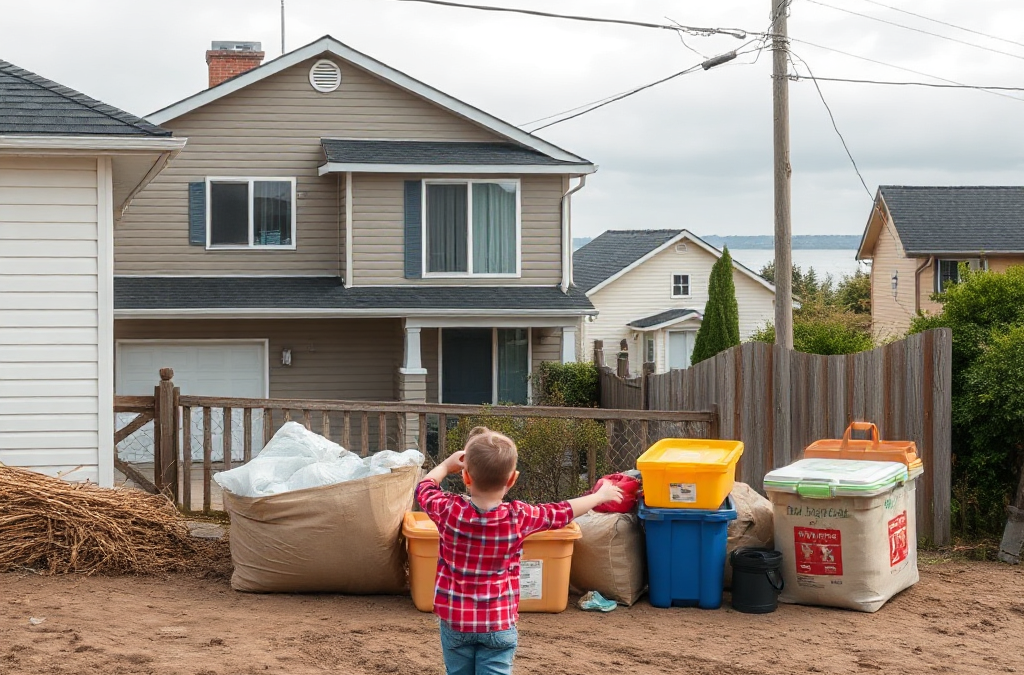
A tsunami preparedness plan for coastal households should identify natural warning signs, map a walking route to high ground or an approved inland refuge, assign family communication roles, and keep a portable supply kit ready for several hours away from home. Strong shaking, a sudden sea-level change, or an unusual ocean roar can signal a locally generated tsunami, so residents should evacuate immediately rather than wait for an official alert. Practice the route on foot, account for children, older adults, pets, and mobility needs, and keep vehicles from blocking evacuation corridors. Do not return after the first wave; official authorities must confirm that the danger has passed.
Recognize the Tsunami Threat and Local Warning Signs
A coastal household needs to distinguish between an official warning and a natural warning. Official alerts may arrive through sirens, mobile notifications, radio, television, or local emergency-management channels. Natural signs can occur first, especially when an earthquake near the coast leaves little time for a formal message. A strong or prolonged earthquake, sudden withdrawal or rise of the sea, and an unusual roaring sound from the ocean should be treated as reasons to move inland or uphill immediately.
The danger is not limited to the beach. Low-lying neighborhoods, bays, river mouths, harbors, and coastal roads may funnel water farther inland. A household that lives several blocks from the shoreline should check the local tsunami evacuation map rather than assume distance alone provides safety. Elevation, terrain, bridges, and the shape of the coastline often matter more than a simple mileage estimate.
Do not wait to see whether the water change is temporary. A retreating shoreline may expose the seabed, but the first wave can follow quickly, and later waves may be larger. An official warning can also be issued for a distant earthquake, giving more time but still requiring prompt attention. Subscribe to local alerts and identify the government emergency-management account, radio station, or warning system used in your area. A social-media rumor is not a substitute for those channels.
A common failure is treating an alert as a request to investigate. Household members should already know that a warning changes the task from checking information to leaving the hazard zone. If a person feels strong shaking while near the coast, the immediate sequence is simple: protect against falling objects during the earthquake, then move away from the shore once the shaking stops, using the safest available route. More information can be gathered from a safe location.

Use the Tsunami preparedness plan for coastal households as a written reference, but make the warning response familiar enough that nobody has to search for instructions under pressure.
Build an Evacuation Route That Works on Foot
The most valuable part of a household plan is a route that reaches a designated safe area without depending on a car. Choose the nearest mapped high-ground location or vertical-evacuation structure identified by local authorities, then mark a primary walking route and at least one alternative. The route should avoid beaches, waterfronts, low bridges, creek channels, and roads likely to be closed by debris or traffic.
Walking is often more dependable than driving because evacuation traffic can become congested and roads may be damaged by the earthquake that caused the tsunami. A vehicle may still be appropriate for a person with limited mobility or for transporting someone who cannot safely walk, but that decision should be made before an event. If driving is necessary, the household should know which roads local officials designate for evacuation and should never abandon a vehicle where it blocks emergency access.
Walk the route at different times of day. Note steep grades, stairs, locked gates, construction, poor lighting, loose slopes, and locations where a family member could become separated. A route that looks short on a map may be difficult for a young child, an older adult, or someone using a wheelchair. Ask local emergency managers about accessible routes and evacuation assistance rather than relying on an unverified shortcut.
For households in apartments, hotels, or dense coastal districts, identify exits that do not depend on elevators. An earthquake may disable power or make elevators unsafe. A vertical-evacuation building can be useful where high ground is too distant, but residents should confirm that the structure is officially designated and learn which entrance and upper level to use. Higher ground is not automatically safe if the path crosses a channel or remains inside the mapped inundation zone.
Post a simple route map near exits and store a copy with household documents. Include a meeting point outside the hazard area, such as a named public facility or relative’s property. Avoid choosing a meeting point beside the shoreline or near a major intersection where emergency vehicles need access. The plan should state what happens if one person is away at school, work, or an appointment: each person evacuates independently and reports to the agreed contact when communications function.
Prepare Household Communications, Supplies, and Special Needs
Communication planning should assume that local phone networks may be overloaded or unavailable. Select an out-of-area contact who can collect brief updates from separated family members, and teach everyone to send a short text when possible instead of making repeated calls. A paper card with names, phone numbers, meeting locations, medical information, and nearby contacts is useful when a phone battery is low or a child needs help explaining the plan.
Supplies should support evacuation and temporary shelter, not encourage a household to remain near the coast. Keep shoes, durable clothing, water, ready-to-eat food, essential medicines, a small first-aid kit, a flashlight, spare batteries, a portable charger, a battery or hand-crank radio, hygiene items, cash, copies of key documents, and a whistle where they can be grabbed quickly. Store supplies in a portable container near an exit, but not where falling objects or floodwater can easily block access.
Water and food choices should match the plan. Heavy containers may be unsuitable for a long walk, while individually packed water and compact foods are easier to carry. Medicines should be managed according to the person’s prescription needs; a household should ask a pharmacist or clinician how to maintain an emergency supply rather than improvising. Infants may need formula, diapers, and feeding supplies. Pets require leashes, carriers, food, water, and identification, and not every public shelter accepts animals.
Special-needs planning must be specific. A person who uses mobility equipment may need a buddy, an accessible transport arrangement, or a preidentified refuge. Someone who is deaf or hard of hearing may need visual alert options, while a person with a cognitive disability may respond better to a short practiced instruction than to a detailed explanation. Neighbors can be included with consent, but assistance should not depend on one unavailable person.
A frequent mistake is storing a large home cache while neglecting the first few minutes of evacuation. The priority order is movement, people, essential medication, and only then additional supplies. Do not delay departure to collect valuables, shut off utilities, or assemble a bag from scattered rooms. Utility shutoffs should be addressed only if local authorities or emergency guidance directs it and doing so does not slow evacuation. For more household planning detail, use the household preparedness reference alongside local evacuation instructions.
Practice, Maintain, and Improve the Plan
A tsunami plan becomes useful when household members can perform it without debate. Hold a short practice in which everyone hears the warning cue, puts on shoes, takes the designated supplies, and walks to the meeting point. The goal is not speed for its own sake; it is discovering obstacles before a real evacuation. Time the walk, but pay closer attention to whether people choose the correct turn, remain together when appropriate, and know where to go if the main route is closed.
Practice should include realistic variations. Try the plan when one adult is away, when a child is responsible for carrying the contact card, or when the primary road is unavailable. A household with pets should practice moving animals into carriers or attaching leashes. If a person cannot complete the route, test the backup transport arrangement. These exercises reveal hidden dependencies, such as a garage door requiring electricity, a key stored inside the home, or a phone number known only by one adult.
Review the plan after changes to the household or neighborhood. New construction can alter access, school or workplace locations can change, and a family member’s medical or mobility needs may develop gradually. Check batteries, medication dates, food packaging, chargers, radio operation, and document copies on a regular schedule. Replace items that have been used rather than assuming the kit is still complete.
Information quality also deserves a deliberate check. Confirm the evacuation map, official alert subscriptions, shelter guidance, and local terminology through the relevant emergency-management authority. Do not assume that an old map shows current road access. Conversely, do not let uncertainty about an unverified message delay evacuation after natural warning signs. Move first when the physical signs are clear, then verify details from a safe location.
The plan is working when every household member can answer four questions: what signals require immediate action, where is the first safe destination, which route will be used, and how will separated people reconnect? If anyone gives a different answer, revise the map and practice again. A concise written plan is easier to use than a long document, but it should contain enough detail to cover mobility, pets, medications, children, and communication failures.
Frequently Asked Questions
How quickly should a coastal household evacuate after strong shaking?
Once the shaking stops and it is safe to move, evacuate immediately if you are near the coast. Do not wait for a siren or phone alert when natural warning signs are present.
Should families drive or walk to safety?
Walking is usually preferable when the route is feasible because roads may be congested or damaged. Use a vehicle only when needed for mobility or another specific access requirement, following local routing instructions.
What should be in a tsunami evacuation kit?
Pack portable water, compact food, medicines, sturdy shoes, clothing, a flashlight, batteries, a radio, a phone charger, hygiene items, documents, cash, and supplies for children, pets, or mobility needs.
Is a high-rise building always safe during a tsunami?
No. Use vertical evacuation only in a structure officially identified for that purpose and follow its designated access instructions. A building’s height alone does not confirm its safety.
When can residents return home?
Return only after official authorities announce that the tsunami danger has passed. Multiple waves, flooding, debris, damaged utilities, and unstable structures can remain hazardous after the first wave.
Further Reading
Authoritative Sources
- Tsunami Safety
weather.govNational Weather Service guidance explains warning signs, evacuation behavior, and the danger of returning too soon
- Tsunamis
ready.govFederal preparedness information covers alerts, household planning, evacuation, and emergency supplies
- U.S. Tsunami Warning System
tsunami.govThe official portal provides current tsunami messages and explains the warning system used in the United States
- Tsunami Information
noaa.govNOAA resources provide background on tsunami hazards, monitoring, and risk information for coastal communities
Conclusion
A dependable coastal evacuation plan is built around immediate recognition, a practiced walking route, and clear household responsibilities. Map the nearest approved high-ground or vertical-evacuation destination, then test the route with the people, pets, mobility equipment, and supplies that will actually accompany you. Keep a compact kit accessible, maintain alternate communication methods, and update the plan whenever the household or neighborhood changes. Strong shaking, unusual sea behavior, or an ocean roar should prompt movement rather than investigation. The next practical step is to check your local tsunami map, choose a meeting point outside the inundation zone, and walk the route this week. Treat official return instructions as mandatory, because later waves and damaged infrastructure may remain dangerous long after the shoreline appears calm.
Related Content
- Emergency Plan for Rural Areas: Essential Steps and Resources for Effective Preparedness
- From Chaos to Control: Navigating Emergency Preparedness in Uncertain Times
- Disaster Preparedness: The Basics Of Emergency Situation Supplies
- The Ultimate Family Guide to Emergency Readiness and Safety
- How Prepared Are You for a Hurricane?




