
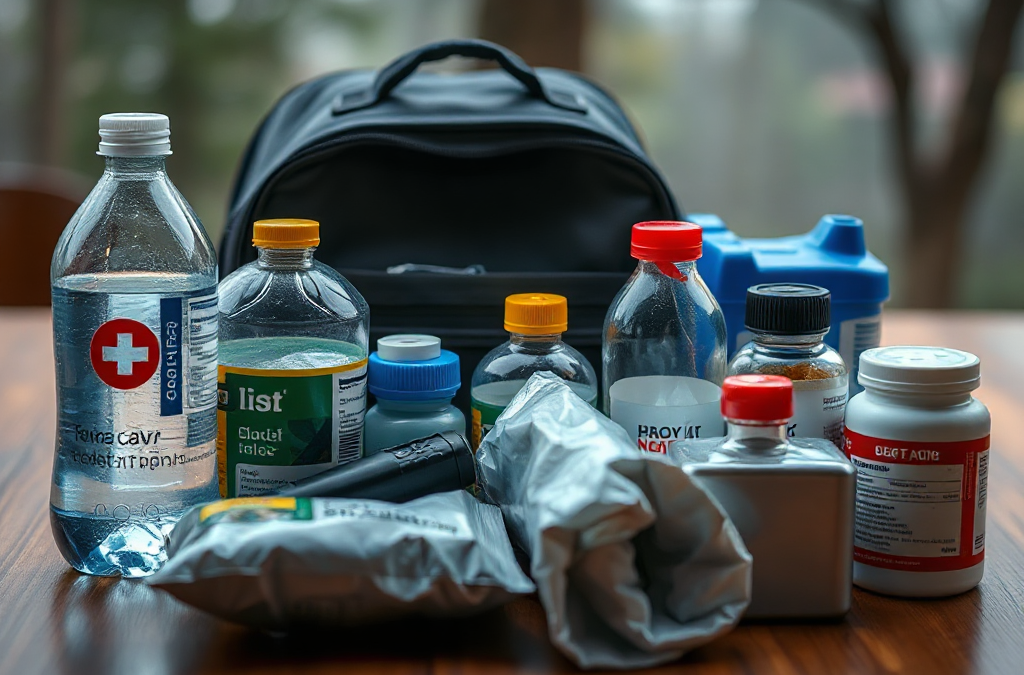
An hour kit checklist for first-time preppers should cover immediate water, ready-to-eat food, light, communication, first aid, medications, and basic sanitation for the first 60 minutes of a disruption. Pack items in a small, labeled container so they can be reached without searching, and include spare batteries, a charging cable or power bank, cash, identification copies, and a written contact card. Choose familiar foods that need no cooking, account for children or medical needs, and test every device at home. Avoid filling the kit with bulky long-term supplies; its job is to bridge the first hour until you can assess conditions and move to a larger household plan.
What An Hour Kit Must Do
An hour kit is a compact set of supplies for the first 60 minutes after a power outage, severe weather alert, water interruption, household accident, or unexpected need to leave a room or building. It is not a substitute for a multi-day emergency supply or an evacuation bag. Its value comes from reducing delays while you determine what has happened and what action is safe.
The first hour often creates small but consequential problems. A dark hallway makes it harder to find medication. A dead phone prevents access to contact information. A person who has not eaten may make poor decisions, while a lack of water becomes especially inconvenient if stores are closed or travel is restricted. A useful kit keeps these immediate needs together instead of scattering them across drawers, vehicles, and kitchen cabinets.
Prioritize supplies by function rather than by novelty. Water and essential medication outrank extra tools; a dependable flashlight outranks a large collection of gadgets. A phone power bank is useful only if it is charged and paired with the correct cable. Likewise, a radio is worth packing when someone in the household knows how to operate it and understands that broadcasts may not provide detailed local instructions.
Consider two scenarios. During a short outage, the kit may provide light, phone power, and a snack while you check breakers and weather updates. During a sudden departure, the same container may offer identification copies, medication information, cash, and a small amount of food while a larger bag is collected. The mistake is expecting one small kit to handle every emergency. A narrow purpose makes the kit lighter, faster to use, and easier to maintain.

Use the hour kit checklist for first-time preppers as a starting point, then adapt it to the location. A kit kept beside the bed should emphasize light, shoes, and medication access. A kitchen kit can include water, food, and sanitation supplies. The best placement is the place where the first problem is likely to be noticed, not necessarily the place with the most empty storage space.
The Practical Hour Kit Checklist
A first-time prepper can build a useful hour kit with a small container, pouch, or backpack. Select compact items that work without mains power, internet access, or a special skill. Store supplies in a clear or brightly labeled container, but do not rely on the label alone; every household member should know where it is.
- Water: Include a bottle for each person who may use the kit. A sealed bottle is simple for short-term use, while a collapsible bottle saves space but should be checked for leaks.
- Food: Choose shelf-stable, ready-to-eat foods such as nut-free snack bars, crackers, applesauce pouches, dried fruit, or other familiar items. Account for allergies and swallowing or dietary restrictions.
- Light: Pack a reliable flashlight or headlamp with spare batteries stored separately to reduce accidental drain. A headlamp leaves both hands free for stairs, doors, or first aid.
- Communication: Add a charged power bank, the cables used by household phones, a written contact card, and a small battery radio if local alerts are a regular part of your area’s risk picture.
- Health: Include essential prescription medication according to the person’s safe storage and refill arrangements, plus a basic first-aid supply, glasses, hearing-aid batteries, and relevant medical information.
- Sanitation and comfort: Pack tissues, hand sanitizer, masks if appropriate for the household, menstrual supplies, wipes, and a warm layer or emergency blanket where temperatures make exposure a concern.
- Practical backup items: Add cash in small denominations, a pen, paper, spare keys if appropriate, and copies of identification or critical phone numbers protected in a sealable sleeve.
The list should be adjusted to the kit’s location. A car-based hour kit needs water that tolerates temperature swings, while a bedside pouch may need sturdy footwear and a whistle more than canned food. A kit for an apartment should avoid items that create unnecessary weight on stairs. A family with an infant may need formula, feeding supplies, and diapers; those items cannot be replaced by generic “family” equipment.
Do not confuse quantity with usefulness. One familiar snack and one bottle of water may be adequate for a short wait, whereas a large food supply adds bulk without solving the immediate problem. If a household member has diabetes, severe allergies, or a time-sensitive prescription, that need changes the priority order. A general checklist is a framework, not permission to omit a person’s essential care items.
Choosing Supplies For Real Household Needs
Personalization determines whether an hour kit works under stress. Start with the people, pets, and spaces involved rather than shopping for a preassembled package. Commercial kits may provide a convenient container, but they often contain unfamiliar food, weak lights, generic first-aid pieces, or tools no one has practiced using. A smaller custom kit can be more useful than a larger sealed box.
Food deserves more attention than its size suggests. Pick products that can be opened quickly, do not require heating, and are acceptable to the person who will eat them. A bar containing peanuts is unsuitable for a household with a serious nut allergy, even if it has a long shelf life. For a young child, a familiar pouch may work better than dry emergency rations. For an older adult, packaging that requires strong grip or sharp tools may be a poor choice.
Medication planning also requires restraint. Do not transfer medicines into unmarked bags or store temperature-sensitive products in a hot vehicle without following the product’s storage instructions. Instead, keep a current medication list with names, strengths, schedules, allergies, and prescriber or pharmacy details. Ask a pharmacist or clinician about safe ways to maintain an emergency reserve when a prescription is essential.
Household hazards shape the right equipment. People who live in earthquake-prone areas may need sturdy shoes and gloves near the kit, but gloves should not be treated as protection against every hazard. A flashlight helps locate a safe route; it does not make damaged structures safe to enter. In wildfire or severe-weather areas, the kit may support a quick move to a safer location, but official instructions and a larger evacuation arrangement remain more important than any single item.
Pets need deliberate planning as well. A small packet of pet food, a collapsible bowl, leash information, waste bags, and a photo or identification detail may be more useful than another human snack. Keep in mind that water needs rise with heat and exertion. The same principle applies to mobility devices, communication aids, and sensory needs: pack the accessory that makes the primary device usable, such as a charger, spare battery, or protective case.
The hour kit checklist for first-time preppers should therefore be divided into “everyone needs” and “specific person needs.” This prevents a common failure mode: a kit appears complete on paper but lacks the one item that allows a household member to function safely.
Packing, Testing, And Avoiding Common Mistakes
Pack the kit so the first-use items are visible and reachable. Put the flashlight, water, phone cable, and contact card near the top. Keep medications and personal care items in a clearly marked pouch, with storage instructions respected. Use zip bags to separate liquids from electronics, but do not seal anything so tightly that it cannot be opened without scissors.
Test the kit at home rather than assuming new products work. Turn on the flashlight in a dark room, connect the power bank to the correct phone, open every food package, and check whether the written contact card is legible. Have another household member locate the kit without assistance. If they cannot find it or do not know what the radio controls mean, the problem is the system, not the person.
Maintenance is simple when tied to ordinary routines. Check batteries, expiration dates, medication information, clothing sizes, and phone cables on a recurring schedule. Replace food after it has been exposed to heat, moisture, or rough handling. Recharge the power bank after use. A kit that has not been opened for years may look reassuring while containing dead batteries, outdated numbers, or clothing that no longer fits.
Several common mistakes are avoidable. Overpacking makes the container difficult to carry and encourages people to leave it behind. Storing it in a locked room defeats its purpose if the key is unavailable. Relying only on a smartphone fails when the phone is damaged or its battery is empty. Packing candles without considering fire risk can create a new hazard, particularly during an outage. Choosing cheap equipment without testing it may produce a false sense of readiness.
Use a short review sequence: locate the kit, confirm access, inspect light and power, verify water and food, check personal items, then practice retrieving it in low light. If the kit takes several minutes to assemble before it can be used, reorganize it. If one person’s needs dominate the container, create a second small pouch rather than making the primary kit unwieldy. The target is not a perfect inventory; it is dependable access to the supplies that buy time for a calm assessment.
For broader household preparation, connect this small kit with an hour kit checklist for first-time preppers, a larger water-and-food reserve, and a communication arrangement. Each layer has a different job. Keeping those jobs distinct prevents the first-hour container from becoming an overloaded substitute for a complete preparedness plan.
Frequently Asked Questions
What is an hour kit?
An hour kit is a compact supply container intended to cover immediate needs for roughly the first 60 minutes of a disruption, including light, water, communication, health items, and basic sanitation.
Should an hour kit include food?
Yes, but keep the amount modest. Choose familiar, ready-to-eat food that matches allergies, age, medical needs, and the likely short duration of use.
Where should a first-time prepper store the kit?
Store it where the first problem is likely to occur and where every household member can reach it without a key. Many homes benefit from a bedside pouch plus a main kit near a commonly used exit.
How often should the kit be checked?
Review it on a regular household schedule and after every use. Check batteries, power-bank charge, food condition, medication information, contact details, and clothing or personal items.
Is a preassembled emergency kit enough?
Not by itself. A commercial kit can supply a container and basic tools, but it should be tested and supplemented with household-specific medication, food, chargers, documents, pet supplies, and accessibility items.
Conclusion
A dependable hour kit is deliberately small, easy to find, and matched to the people who may use it. Put immediate priorities first: water, safe light, ready-to-eat food, phone power, essential health information, medication needs, and sanitation. Then test the kit in realistic conditions, including low light and a dead-phone scenario. Remove bulky items that duplicate supplies stored elsewhere, and replace anything that has expired, leaked, stopped charging, or no longer fits the household. Once the first-hour container works, connect it to larger water, food, evacuation, and communication arrangements. That layered approach gives first-time preppers a practical starting point without pretending that one bag can solve every emergency.




