
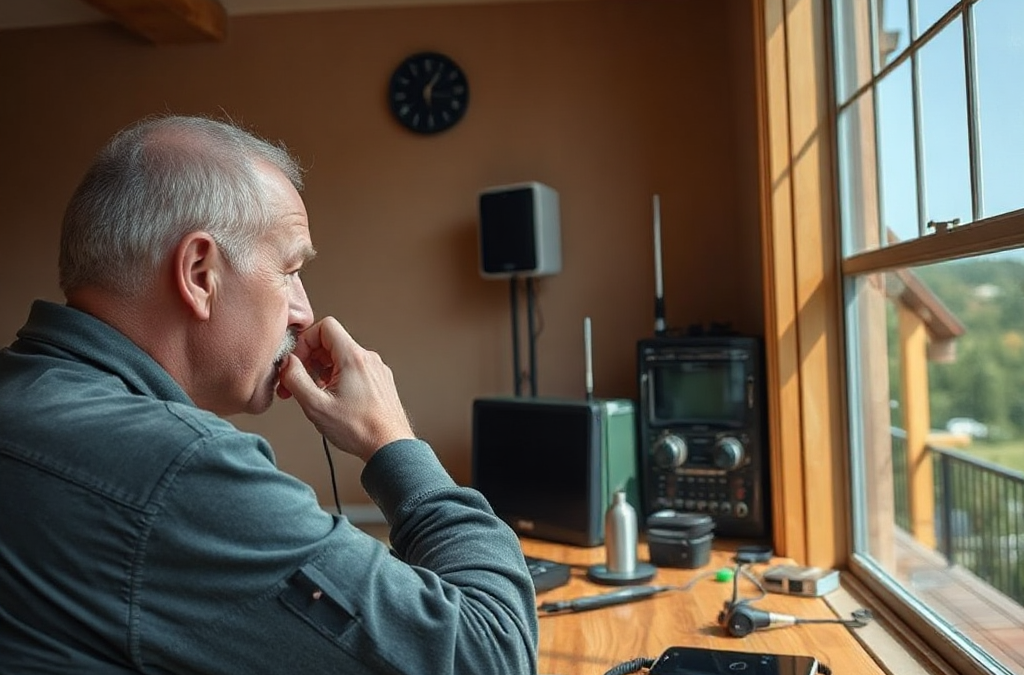
Testing radio reception from inside a shielded building requires a controlled comparison of stations, antenna positions, and building locations rather than a single listening check. Record reception near the center, exterior walls, doors, windows, and any approved cable or antenna entry point, while noting frequency, audio quality, time, and interference. Reinforced concrete, steel framing, metal roofing, foil insulation, and underground placement can weaken or block radio-frequency energy. Keep the radio in the same mode and volume during each trial, move the antenna in small increments, and compare results with an outdoor reading. A strong signal in one room does not prove dependable coverage throughout the building.
Why Shielded Buildings Change Radio Reception
A shielded building reduces radio reception because conductive materials reflect, absorb, or redirect portions of the incoming radio-frequency signal. Steel reinforcement, metal siding, foil-backed insulation, metal roofing, elevator structures, and below-grade concrete can create a much harder path for broadcast energy. The effect is not always uniform: one room may receive understandable audio while another produces noise, fading, or no usable signal.
The building’s electrical environment matters as well. LED drivers, battery chargers, inverters, computer power supplies, ventilation controls, and other electronic equipment may add locally generated interference. That interference can mask a weak station even when the building itself is not completely blocking the signal. A useful test therefore separates two conditions: poor signal strength from outside and noise created inside.
Frequency also changes the result. AM signals may respond strongly to the radio’s orientation and nearby metal, while FM reception can be affected by wall construction, window placement, and reflections that create multipath distortion. Weather-band reception may vary with transmitter distance and terrain. A result from one band should not be treated as proof that every other band will perform similarly.
Begin by identifying the services that actually matter to your household or facility. Record several known local stations rather than relying on one favorite frequency. A station that is loud but carries no relevant information is less useful than a weaker station with dependable local coverage. For broader planning, the same observations can inform testing radio reception from inside a shielded building across normal and contingency conditions.

A Controlled Reception Test That Produces Useful Results
A reliable test changes one variable at a time. Use the same radio, batteries or power source, antenna configuration, tuning mode, and volume for every location. Write down the frequency and location, then rate the result using a simple scale such as clear audio, understandable with noise, intermittent, or unusable. A written record prevents a brief lucky signal from being mistaken for consistent coverage.
Take an outdoor or near-entry reading first when it is safe and practical. That reference shows what the radio can hear before the building alters the signal. Repeat the measurement at the main occupied room, a central interior location, a room beside an exterior wall, and areas near doors or windows. If the structure has more than one floor, include the lowest and highest practical positions. Keep the radio still for long enough to notice fading rather than judging it from a few seconds of audio.
Test at more than one time of day. Local electrical loads can change, and some stations may be easier to receive at certain times because of propagation conditions. The purpose is not to create a laboratory measurement; it is to learn whether reception is stable enough for the intended use. A station that works only when a charger is unplugged may be technically receivable but operationally unreliable.
A compact test record can include:
- Station frequency, band, and program identification.
- Room, floor, and distance from doors, windows, and metal equipment.
- Antenna position, radio orientation, and power source.
- Audio clarity, fading, static, hum, and whether speech remains understandable.
- Time, weather if relevant, and nearby devices that were switched on or off.
Do not change the radio’s volume to judge signal quality. Volume changes make weak audio seem better without improving reception. Instead, listen for missing syllables, repeated dropouts, distortion, and whether the station can be reacquired after the radio is moved. A second radio can be useful as a comparison, but different receivers and antennas should be documented rather than treated as interchangeable.
Antenna Placement, Building Openings, And Equipment Choices
Antenna placement often produces the largest improvement available without modifying the building. Move a telescoping antenna slowly through different orientations and positions, allowing the receiver to settle at each point. Near a window or exterior door may outperform the geometric center of the room, but that position is not automatically safe or convenient for routine use. Metal frames, security screens, ductwork, and wiring can create sharp differences over a small distance.
For AM reception, rotate the radio itself as well as its internal ferrite-bar antenna. A quarter-turn can reduce interference or strengthen a station. For FM and weather-band signals, the telescoping antenna’s length and angle may matter more. Extending it fully is a reasonable starting point, but not a universal solution; reflections inside a reinforced structure can make a slightly different position work better.
External antennas may help when the building permits an approved installation, but they introduce tradeoffs. A properly installed feed line can bring a signal indoors while keeping the receiver in a convenient location. Long cable runs, poor connectors, damaged coaxial cable, and unsuitable adapters can offset the gain. Routing a cable through an unapproved opening can compromise the building’s shielding, weather resistance, fire separation, or security. Follow the building owner’s requirements and equipment documentation instead of improvising a penetration.
Active or amplified antennas deserve particular caution. An amplifier cannot restore information that the antenna never received, and it may amplify interference or overload the receiver near a strong transmitter. A passive antenna placed well is often a better first experiment. Compare the same station with the radio’s built-in antenna and with the proposed external setup, using identical notes and positions.
Portable radios should be tested with fresh batteries and, where possible, a known-good power adapter. A weak battery can cause distortion or unstable operation that looks like a reception problem. Keep chargers, inverters, and power banks away from the radio during part of the test, then reconnect them to identify noise sources. This practical comparison is more informative than assuming the building alone explains every failure.
Interpreting Results And Correcting Weak Coverage
The useful result is not the strongest isolated signal; it is the location and setup that produce understandable, repeatable audio under realistic conditions. If reception improves near a window but disappears when the window is closed, the opening may be acting as the effective signal path. If moving the radio changes the result dramatically, reflections or local interference are likely involved. If every tested location fails while an outdoor radio works, the structure is probably imposing substantial attenuation.
Separate coverage problems from information problems. A radio may receive a station clearly but still be unsuitable if the station does not serve the relevant area, changes programming, or lacks the information needed for the situation. Test the stations you would actually monitor and write down their identifying details. Mark a dependable room and antenna position so another household member can reproduce the result without repeating the entire investigation.
Common mistakes include testing only beside a window, using automatic scanning as the sole method, overlooking internal electronics, and assuming a digital display means a stable signal. Automatic scanning can skip a weak but usable frequency, while a locked digital readout may remain displayed during unintelligible audio. Evaluate speech or program content directly. When possible, have a second person listen without being told which location is expected to perform better.
Choose the next correction according to the failure pattern:
- Noise changes when equipment is unplugged: identify the offending device, increase separation, or test another power arrangement.
- Reception improves at one repeatable wall or opening: document that position and consider an approved antenna solution.
- Audio fades as the radio is held or moved: investigate orientation, contact with metal, and antenna clearance.
- Only one station works: test additional frequencies before deciding the building has adequate coverage.
Do not assume an antenna fix makes every room reliable. A building can contain reception pockets, and a cable may serve one receiver without improving handheld use elsewhere. Recheck the setup after furniture, equipment, generators, or power systems change. The most useful outcome is a repeatable operating procedure: which radio, which station, which room, which antenna position, and which backup location should be used.
A documented location can be paired with a broader reception test record that includes seasonal or time-of-day observations. Keep the notes with the radio rather than on a device that may be unavailable when power or connectivity is limited. Repeating the test periodically reveals whether new electronics or construction changes have altered performance.
Making The Test Useful For Real-World Communication
Reception testing becomes more valuable when it reflects how the radio will actually be used. Practice tuning the selected station from the documented position, adjusting the antenna without losing the signal, and identifying the difference between station audio and electrical noise. If several people may operate the radio, each person should be able to reproduce the setup. A technically excellent result that only one person can find is a weak operational solution.
Plan for degraded conditions rather than a perfect listening environment. Test with the lights on, likely chargers connected, ventilation operating, and any permitted backup power equipment running. Then repeat with those sources off to see what improvement is available. This comparison identifies whether the priority is a different room, a different antenna, a cleaner power source, or simply greater separation from a noisy device.
Keep expectations realistic. Shielding may be intentional and substantial, especially in secure, industrial, underground, or heavily reinforced spaces. A handheld receiver may never perform like an outdoor antenna system. The goal is dependable access to selected information, not maximum signal strength everywhere. A fallback such as a second tested location, another receiver, or an approved external feed can reduce dependence on one fragile arrangement.
For a final check, have someone who did not conduct the original test follow the written instructions. If that person cannot locate the station or distinguish usable speech from static, revise the instructions. The best radio reception testing produces decisions that remain clear when lighting, time, and attention are limited.
For technical background, consult receiver manuals, antenna manufacturer documentation, building-owner requirements, and publications from recognized radio engineering organizations. Those sources can clarify connector limits, antenna installation practices, receiver specifications, and any restrictions on modifying a shielded structure. Use documentation specific to the radio and building rather than relying on a generic signal-strength claim.
Frequently Asked Questions
Can a radio work inside a fully shielded building?
It may, but reception depends on the shielding materials, openings, frequency, transmitter distance, and internal interference. Test actual stations in several locations.
Should the radio be tested near a window?
Yes, as one comparison point. A window may provide a better signal path, but it may not represent reception in the room where the radio will normally be used.
Does an amplifier solve weak indoor reception?
Not necessarily. An amplifier can raise interference and overload the receiver. First test antenna placement, receiver orientation, cable quality, and nearby electronics.
How should reception quality be recorded?
Note the frequency, location, antenna position, time, power source, audio clarity, fading, and nearby devices. Repeat the same test so results can be compared.
Why does moving a radio only a few inches change reception?
Reflections from metal and reinforced surfaces can create small areas of stronger or weaker signal. Orientation and local electrical noise can produce the same effect.
Further Reading
Authoritative Sources
- Academy of Nutrition and Dietetics
eatright.orgProfessional nutrition guidance, healthy eating resources, and practical dietitian-reviewed advice.
- U.S. Department of Agriculture
usda.govOfficial food, nutrition, agriculture, and consumer guidance from the USDA.
- NIH Office of Dietary Supplements
ods.od.nih.govResearch-based fact sheets on nutrients, supplements, dietary intake, and safety considerations.
- International Society of Sports Nutrition
sportsnutritionsociety.orgEvidence-informed sports nutrition resources and position stands for active people and athletes.
Conclusion
Testing reception inside a shielded building should produce a repeatable operating choice, not merely a momentary indication on a display. Compare an outdoor or entry reference with several indoor locations, record multiple relevant stations, and keep the radio configuration consistent. Pay close attention to antenna orientation, openings, metal surfaces, power supplies, and electronic devices that may generate interference. A passive placement change may be enough, while an external antenna requires approved installation and careful cable evaluation. Mark the most dependable room and a fallback position, then retest after equipment or building changes. Clear notes allow other users to reproduce the result and reveal whether the actual problem is shielding, interference, equipment condition, or an unsuitable station.
Related Content
- Prepping Your Home: Essential Steps for Effective Safety and Readiness
- Don’t Wait for the Worst: How to Build Your Emergency Preparedness Plan
- 10 Effective Urban Survival Skills to Master in 2025: The Ultimate Guide
- Survival Skills: Handling Aggressive Wildlife
- The Importance of Situational Awareness in Disaster Planning: Key Strategies and Real-World Applications




