
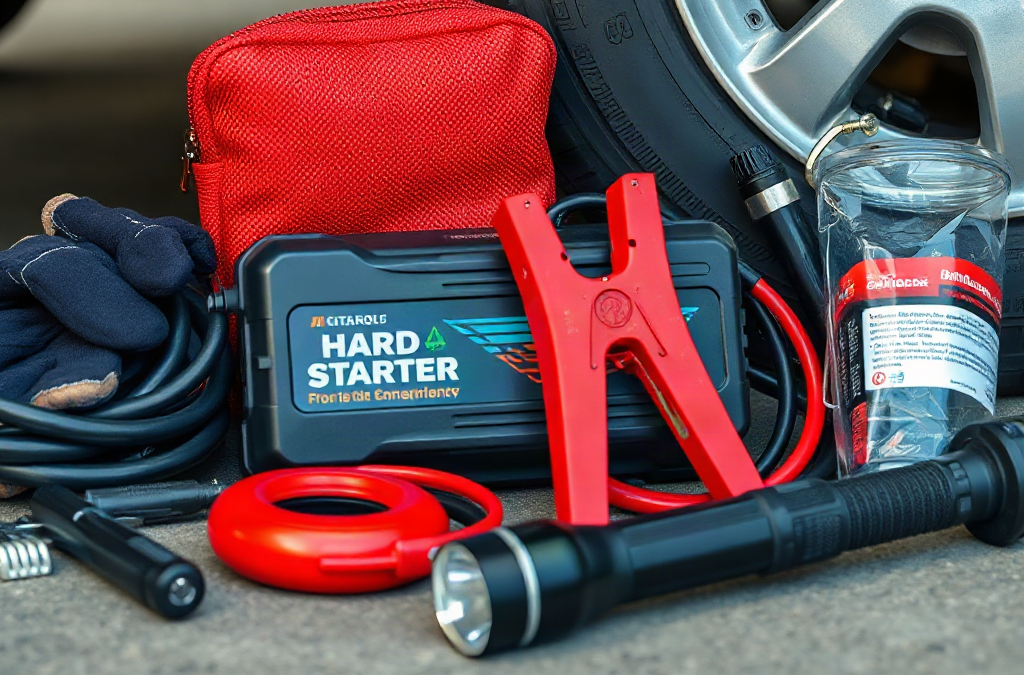
Hard-start kit contents for a vehicle emergency should include a correctly rated jump starter, heavy-duty jumper cables, a tire inflator, basic hand tools, a flashlight, gloves, reflective warning gear, and a phone charging method. The jump starter addresses a weak battery, while a multimeter or test light can help distinguish low voltage from a loose connection, failed starter, or fuel problem. Choose cables and a power pack that match the vehicle’s engine size, and keep them protected from heat and moisture. A hard-start kit cannot repair a dead alternator or damaged starter, so persistent clicking, smoke, fuel odor, or repeated failure means stopping attempts and arranging professional help.
Power Equipment for a Difficult Start
A vehicle emergency kit needs a dependable way to restore starting power before it needs extra accessories. A compact lithium jump starter is usually the most practical primary item because it can start a vehicle without another car. Select a unit whose instructions cover the engine type and displacement of the vehicle; a small pack intended for a compact gasoline engine may be a poor choice for a large truck, diesel, or vehicle with a deeply discharged battery.
Jumper cables remain useful, particularly when another vehicle is available, but cable quality matters. Thin, short cables may become hot or deliver too little current when the battery is weak. Look for sturdy clamps with clean contact surfaces and enough length to reach between battery locations. The vehicle owner’s manual should control the connection sequence, since some cars use designated jump points rather than direct battery terminals. Hybrid and electric vehicles require special caution: a conventional 12-volt system may power accessories, but the high-voltage drive battery is not a roadside jump-start target.
A 12-volt battery charger or maintainer can be valuable at home, yet it is not a substitute for roadside equipment. A charger generally needs access to mains power and time, while a jump pack is designed for immediate starting assistance. A spare vehicle battery is also an awkward emergency choice: it is heavy, needs secure storage, and can deteriorate if neglected. For most drivers, the better combination is a tested jump starter, compatible cables, and a small battery terminal brush.
Keep the power equipment away from the engine compartment when stored. Heat can shorten battery-pack life, and a discharged jump starter is no more useful than an empty fuel can. Add a charging cable that fits the pack, then inspect its charge indicator periodically. The Hard-start kit contents for a vehicle emergency should reflect the actual vehicle, not a generic shopping list copied from a smaller car.

Tools That Separate a Weak Battery From a Fault
Starting trouble is not always a battery problem. A hard-start kit becomes more useful when it includes simple diagnostic tools that prevent repeated, unproductive cranking. A digital multimeter can show battery voltage before and after an attempted start, although readings must be interpreted carefully. A low resting reading may indicate a discharged battery, while a normal reading does not prove that the battery can deliver sufficient current under load.
A basic test light, terminal brush, small socket set, adjustable wrench, insulated screwdriver, and pliers can address minor connection issues. Loose or corroded terminals create resistance, so the starter receives less usable power even when the battery appears charged. A driver may hear a single click, rapid clicking, or no response at all. Those sounds provide clues, but they do not identify every failure. Cleaning a terminal may help a poor connection; it will not repair a failed starter motor.
Fuel-related hard starts call for a different response. If the engine cranks at normal speed but does not fire, a jump pack may not solve the problem. A kit can include a vehicle-specific spare fuse assortment, but replacing a fuse with the wrong rating is unsafe and can damage wiring. Fuel additives and starting fluid deserve restraint. Starting fluid can be inappropriate for some engines, and spraying anything into an intake without following the manufacturer’s guidance creates avoidable risk.
A useful diagnostic sequence is simple: observe whether the engine cranks, note the sound and speed, inspect visible battery connections, and try one correctly performed jump-start attempt if low power is plausible. If the engine cranks normally without starting, shift attention away from the battery. If the cables become hot, the connection sparks heavily, or the jump pack reports a fault, stop rather than escalating the attempt. A vehicle emergency hard-start kit should reduce guesswork, not encourage repeated forceful starting attempts.
Safety and Visibility Items for Roadside Work
Roadside positioning is often more dangerous than the mechanical task. A flashlight or headlamp, reflective vest, warning triangles, and work gloves deserve space beside the starting equipment. Choose lighting with a spare battery or a separately charged backup, because a phone flashlight may be needed for communication and navigation. Reflective gear makes the person working near the vehicle easier for approaching drivers to see, especially at night, in rain, or on a shoulder with limited width.
Gloves protect against grime, sharp battery brackets, and hot surfaces, but they do not make an electrical system harmless. Avoid rings, bracelets, and loose clothing near belts or fans. Keep metal tools from bridging battery terminals. Eye protection is sensible when working around a damaged or leaking battery. A battery with a cracked case, bulging sides, strong odor, or visible leakage should not be jump-started casually; move away from the vehicle and request assistance.
Other useful items include a charged phone power bank, a weather-resistant pouch for documents, a compact rain shell, and a small absorbent cloth for handling grime. A tire inflator may not start the engine, but it can address a separate roadside problem and may prevent a driver from standing near traffic while waiting for help. A tow strap is not automatically useful: towing arrangements depend on the vehicle’s drivetrain, transmission, recovery points, and local conditions. Incorrect towing can cause expensive damage.
Do not place warning devices where they create a new hazard, and never stand in a live traffic lane to deploy them. If the shoulder is narrow, visibility is poor, or traffic is moving quickly, remaining inside the locked vehicle with a seat belt may be safer than attempting roadside diagnosis. The kit should support a safe decision to stop, not pressure the driver to use every item. Emergency supplies are valuable only when their use does not expose someone to greater danger than the original breakdown.
How to Pack, Test, and Use the Kit
A hard-start kit works best when its contents are organized around the first five minutes of a breakdown. Store the jump pack, cables, light, gloves, and vehicle manual together so the driver does not empty the entire cargo area beside traffic. Put tools in a closed pouch, separate sharp objects from electrical leads, and use a waterproof container for moisture-sensitive equipment.
Testing should happen at home. Charge the jump starter according to its instructions, inspect clamps for damaged insulation, confirm that the multimeter has working leads, and replace corroded batteries in the flashlight. Check the expiration or condition of chemical items such as fuses and batteries. A short practice session can reveal a major problem: some drivers discover that the battery is under a seat, that the positive jump point is remote, or that the hood release is difficult to operate.
Use the vehicle manual’s procedure rather than relying on a remembered cable order. Park the assisting vehicle as directed, switch off unnecessary electrical loads, and ensure both vehicles are secure before connecting anything. Keep clamps from touching each other. Once connected, allow only the interval specified by the equipment or vehicle instructions before attempting the start. If the engine starts, disconnect in the prescribed order and let the vehicle operate only as long as needed to reach a safe location or obtain a proper battery charge; idling is not guaranteed to restore a severely depleted battery.
Prioritize the contents this way when space or budget is limited:
- First: compatible jump starter or quality cables, gloves, flashlight, and the vehicle manual.
- Next: reflective warning gear, phone power bank, terminal brush, and basic tools.
- Then: multimeter, tire inflator, spare fuses, and weather protection based on the vehicle and travel area.
A commercial all-in-one kit may save packing time, but its cable gauge, battery capacity, and tool quality vary. Building the kit individually takes longer yet makes it easier to match a diesel, motorcycle, classic car, or vehicle with unusual battery access. Review the hard-start kit contents after changing vehicles, because compatibility assumptions often survive longer than the equipment itself.
When a Hard Start Needs More Than Supplies
A jump-start is appropriate only when low electrical power is a reasonable explanation. Slow cranking, dim interior lights, a clicking relay, or electrical accessories that weaken during starting can point toward a discharged battery or poor connection. A normal cranking speed with no ignition suggests a different category of fault, such as fuel delivery, ignition, immobilizer, or engine-control trouble. The kit can provide observations and limited assistance, but it cannot replace a diagnosis.
Stop attempting to start the vehicle when there is smoke, burning insulation, repeated heavy sparking, a fuel smell, fluid leakage, a damaged battery, or a power pack warning. Repeated cranking can drain the battery further and heat the starter. If the engine turns unusually slowly after a correct connection, the battery may be internally damaged, the cables may be inadequate, or the engine may have a mechanical issue. A second jump attempt is not automatically better than the first.
Consider the situation rather than the tool inventory. A driver on a rural road in freezing weather may need roadside assistance sooner because battery capacity is affected by cold and waiting conditions are harsher. A driver in a safe driveway can test voltage, clean a terminal, and arrange a battery replacement. A vehicle that starts after a jump but fails again shortly afterward may have a charging-system problem, so driving far from help could increase the risk of another stop.
The most useful next step after a successful start is to have the battery and charging system checked, especially if the battery is old, the warning lamp remains illuminated, or the vehicle needed repeated assistance. Record what happened—slow crank, clicking, normal crank with no start, and any warning lights—because those details help a technician work faster. Supplies can bridge a short interruption; they should not disguise a defect that needs repair.
Frequently Asked Questions
What is the most important item in a hard-start kit?
A compatible, fully charged jump starter is usually the most useful single item because it does not require another vehicle. Quality jumper cables are a strong alternative when assistance is available.
Can a jump starter fix a bad alternator?
No. It may provide enough power to start the vehicle, but a failed alternator may leave the battery unable to recharge. Arrange testing and avoid relying on the vehicle for a long trip.
Should the kit include a multimeter?
A multimeter is useful for drivers who know how to measure battery voltage safely. It can reveal clues about low charge or connections, but it cannot perform a complete battery or starter test.
Are jumper cables enough for every vehicle?
No. Cable length, conductor size, engine size, battery location, and manufacturer instructions all matter. Hybrid and electric vehicles may have specific 12-volt jump points and procedures.
When should I stop trying to start the vehicle?
Stop for smoke, burning smells, heavy sparking, fuel odor, a leaking or damaged battery, repeated failed attempts, or a power-pack warning. Move to safety and request roadside assistance.
Conclusion
A useful hard-start kit combines starting power with the tools and visibility equipment that make a roadside decision safer. Match the jump starter or cables to the vehicle, keep the pack charged, and store the manual with the equipment. Add a flashlight, gloves, reflective warning gear, terminal brush, basic tools, and a phone power bank before expanding into diagnostic items such as a multimeter or tire inflator.
Use the kit for a likely low-power event, then reassess the result. A slow crank that improves after a correct connection supports a battery or connection theory; normal cranking without ignition points elsewhere. Smoke, fuel odor, damaged electrical parts, or repeated failure are reasons to stop, not to try a stronger jump. Test the battery and charging system after any recurring incident, and replace or recharge kit components after use.




