
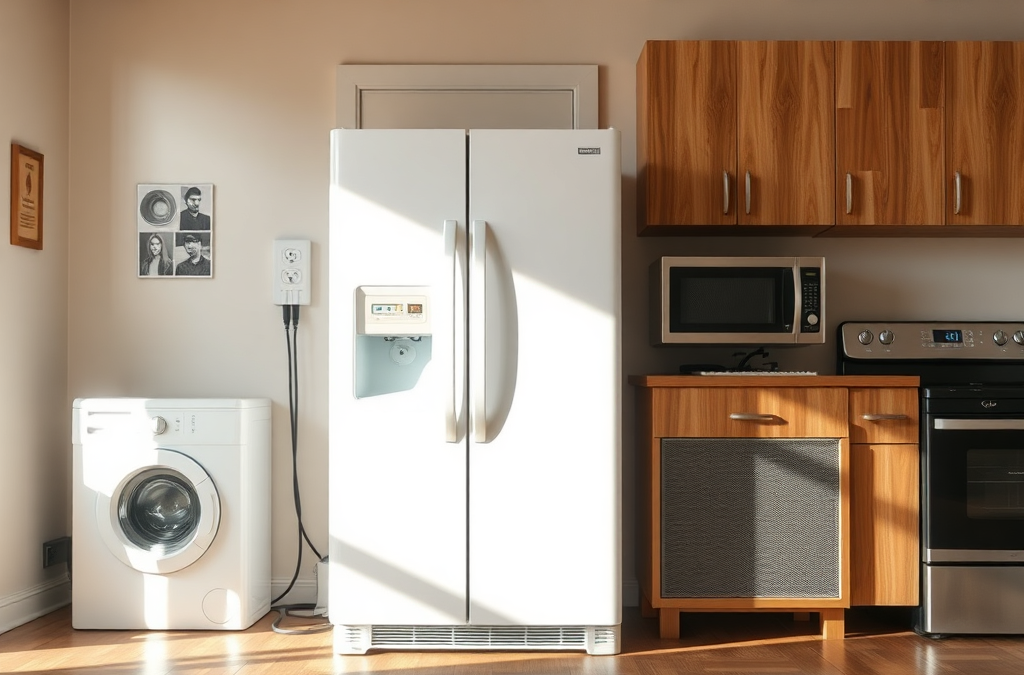
A post-outage inspection before restoring household appliances should verify the home’s electrical system, appliance cords, outlets, ventilation, and signs of water or heat damage before anything is switched on. Begin by checking for utility hazards, standing water, burning odors, scorched plugs, tripped breakers, and visible damage; then disconnect questionable appliances and restore circuits gradually rather than all at once. Refrigerators, freezers, heating equipment, and high-load appliances deserve separate checks because compressors and heating elements can draw substantial current after an interruption. Stop immediately if a breaker trips again, an outlet sparks, or an appliance hums, smokes, overheats, or behaves unusually, and arrange qualified electrical or appliance service.
Inspect the Home Before Reconnecting Anything
A household should be assessed as an electrical and environmental system before appliances are returned to service. An outage may leave more than a dark room: water from a damaged pipe, rain entering through a roof or window, a failed sump pump, a shifted appliance, or heat buildup around refrigeration equipment can create hazards that are not obvious at the wall switch. Walk through the property with a flashlight rather than relying on candles, and do not enter areas with standing water near outlets, panels, extension cords, or appliances.
Look first for conditions that require stopping the inspection. A fallen service line, damaged meter equipment, sparking utility hardware, smoke, active flooding, or a strong gas odor calls for distance and professional or utility assistance. Do not operate the main panel if the panel area is wet or visibly damaged. If a gas appliance was affected by flooding, has a damaged supply connection, or smells of gas, avoid switches and flames and contact the gas utility or a qualified professional.
Once the immediate area is safe, identify which circuits were off and whether the outage followed a storm, flooding, a utility fault, or an internal breaker trip. The cause changes the inspection priority. A brief utility interruption with no weather damage may call for a visual electrical check, while a flooded basement requires treating every submerged electrical component as suspect. A portable generator or inverter adds another concern: improper connection can energize wiring in ways that endanger occupants and utility workers.
Appliances should remain unplugged while you inspect their surroundings. Check beneath and behind refrigerators, washing machines, dishwashers, water heaters, and freezers for moisture, displaced hoses, cracked fittings, or insulation that has been pulled against a motor or vent. A dry front panel does not prove that the rear compressor, terminal block, or wiring compartment is dry. Prioritize the main electrical panel, wet locations, high-load equipment, and any appliance exposed to abnormal heat or water.

Check Cords, Outlets, and Appliance Damage
Visible condition is the most useful first filter for deciding whether an appliance can be reconnected. Examine the plug blades, cord jacket, strain relief, outlet face, power strip, and nearby wall for melting, discoloration, cracking, soot, looseness, or a burnt smell. A cord that was pinched under a cabinet or pulled when furniture shifted may have internal damage even if its outer insulation looks intact. Do not tape over a cut cord or continue using a plug that fits loosely in the receptacle.
Water exposure deserves a conservative decision. An appliance that was submerged, splashed internally, or left in a damp area should not be tested by simply plugging it in. Moisture can remain around switches, motors, control boards, heating elements, and insulation; energizing those parts may cause shock, shorting, corrosion, or later failure. Drying the exterior is not the same as evaluating the appliance. Manufacturer service instructions or a qualified technician are more appropriate for equipment with internal water exposure.
Inspect outlets without removing their covers. A warm, cracked, loose, or darkened receptacle is not a normal result of restoration. Ground-fault protection may have tripped in kitchens, bathrooms, garages, laundry areas, or outdoor circuits, so identify whether a GFCI receptacle or breaker has opened. Resetting a protective device once may be reasonable only when the area is dry and there is no visible damage; repeated tripping is a stop signal, not an invitation to keep resetting it.
Consider the appliance’s load and operating mechanism. A lamp or small charger may reveal that a circuit is live, but it does not prove that a refrigerator compressor, clothes dryer, range, air conditioner, or water heater is safe. Motors can draw a higher current at startup, and heating appliances produce substantial heat during normal operation. Conversely, a refrigerator may remain quiet for a period after power returns because its thermostat has not called for cooling. Silence alone is not a fault, while a repeated clicking or struggling hum deserves attention.
Use a simple inspection record for each questionable item:
- Condition: note water, impact, heat, odor, corrosion, or visible electrical damage.
- Connection: identify the outlet, breaker, surge device, or extension cord involved.
- Behavior: record tripping, sparks, unusual noise, smoke, overheating, or failure to start.
- Decision: mark the appliance for normal reconnection, isolation, or professional evaluation.
This process is slower than reconnecting everything at once, but it separates an appliance fault from a circuit fault. That distinction matters if a breaker trips: the cause could be one damaged appliance, several simultaneous startup loads, a wet receptacle, or a problem upstream.
Restore Circuits and Appliances in a Controlled Order
Gradual restoration reduces confusion and limits the consequences of a hidden fault. After the home has passed the visual inspection, unplug or switch off appliances before re-energizing circuits. Follow any instructions from the electric utility, building manager, manufacturer, or emergency authorities, especially if the property experienced flooding or service damage. If the main disconnect was turned off because of a hazard, do not assume it is ready for reactivation without confirmation from the appropriate professional.
Restore the least complicated circuits first, then observe the panel and rooms for several minutes. A circuit that remains stable with lights and ordinary low-load equipment gives more useful information than a whole-house restart. Reconnect appliances one at a time, allowing a short observation period between them. The purpose is not to prove that every device works immediately; it is to identify which connection produces a symptom.
High-load and motor-driven appliances should be treated separately. Refrigerators and freezers may need to resume cooling, but their compressors can have a demanding startup. Air conditioners, pumps, dryers, electric ranges, and space heaters can place heavy loads on a circuit, particularly if several are started together. Choose the correct dedicated outlet and avoid daisy-chained power strips or lightweight extension cords. A portable generator must be used only through an appropriate connection method; plugging a generator into a household outlet can backfeed the electrical system.
A practical sequence is to reconnect essential refrigeration first if the unit is dry and undamaged, followed by basic lighting and communications equipment, then other appliances according to household need. Delay optional high-load equipment until the system has remained stable. This approach trades speed for diagnostic clarity. Reconnecting everything immediately may restore comfort faster, but it can cause nuisance trips, overload a temporary power source, or make it difficult to identify a damaged device.
Observe what happens after each reconnection. A refrigerator should eventually show normal cooling behavior rather than repeated clicking, a pump should start without burning odor or unusual vibration, and a washer should not leak or trip protection when its motor begins. A breaker that trips once after a known startup event still deserves investigation if it trips again. Never defeat a breaker, remove a grounding pin, bypass GFCI protection, or substitute a fuse with a higher rating.
Readers managing several rooms can use the post-outage inspection before restoring household appliances as a room-by-room record, but the inspection should follow the actual circuit layout rather than the convenience of the floor plan. One circuit may serve outlets in multiple rooms, and a single damaged device can affect more than its immediate location.
Recognize Failure Signs and Document the Recovery
Abnormal behavior after restoration is evidence to investigate, not a nuisance to ignore. Stop using an appliance if it emits smoke, produces a burning or plastic odor, sparks, shocks the user, becomes unusually hot, leaks, makes repeated clicking or grinding sounds, or causes a breaker or GFCI to trip again. Unusual behavior may reflect moisture, insulation damage, a failed control board, a locked motor, a damaged heating element, or an overloaded circuit. The visible symptom does not reliably identify the failed component.
Separate appliance symptoms from supply symptoms. If several devices flicker, dim, reset, or behave erratically on different circuits, the problem may involve the service, utility connection, generator, or transfer equipment rather than one appliance. If only one outlet is affected, isolate that outlet and its connected equipment. If one appliance trips protection while other devices operate normally, leave that appliance disconnected and have it evaluated instead of moving it to another outlet as a test.
Refrigeration requires particular judgment. A refrigerator or freezer may appear to run while still failing to maintain a safe internal temperature, especially after a prolonged outage or repeated cycling. Use the appliance’s temperature display if it is reliable, and follow food-safety guidance from a recognized public-health or food-safety authority for decisions about stored food. Do not use the appliance’s exterior warmth, a single cooling sensation, or an assumption that the compressor is running as the only test.
Document photographs of damaged cords, outlets, water lines, labels, and panel conditions before moving equipment. Record the time power returned, the circuits restored, appliances tested, and any protective devices that tripped. This information helps an electrician or appliance technician diagnose intermittent problems and may support an insurance claim. Keep model and serial information available, but do not remove covers or attempt internal repairs unless you are qualified to do so.
A common mistake is treating successful startup as proof of safety. Electrical damage can worsen with heat, vibration, moisture migration, or repeated operation. Another mistake is assuming a newer appliance is automatically protected from abnormal voltage or water exposure. Manufacturer instructions, utility notices, and qualified inspection should override convenience when those sources identify a specific hazard. For additional context, compare each device’s condition with the broader post-outage inspection before restoring household appliances record rather than judging it in isolation.
Frequently Asked Questions
Should I unplug appliances before power returns?
Unplug or switch off appliances that may start automatically, especially high-load equipment. Leave questionable or water-exposed devices disconnected until they are evaluated.
Can I reset a tripped breaker after an outage?
Only consider a single reset when the panel and surrounding area are dry and there is no visible damage or burning odor. If it trips again, leave it off and seek qualified help.
Is an appliance safe if it turns on normally?
Not necessarily. Watch for overheating, unusual sounds, odor, leaks, flickering, or later protective-device trips, and treat internal water exposure as a professional-evaluation issue.
Which appliances should be restored first?
After safety checks, restore essential refrigeration and basic lighting before optional high-load devices. Reconnect equipment individually so a fault can be traced.
What should I do if an outlet sparks?
Stop using the outlet, keep clear of moisture, and do not repeatedly reset protection. If safe to do so, isolate the circuit and arrange inspection by a qualified electrician.
Further Reading
Authoritative Sources
- Academy of Nutrition and Dietetics
eatright.orgProfessional nutrition guidance, healthy eating resources, and practical dietitian-reviewed advice.
- U.S. Department of Agriculture
usda.govOfficial food, nutrition, agriculture, and consumer guidance from the USDA.
- NIH Office of Dietary Supplements
ods.od.nih.govResearch-based fact sheets on nutrients, supplements, dietary intake, and safety considerations.
- International Society of Sports Nutrition
sportsnutritionsociety.orgEvidence-informed sports nutrition resources and position stands for active people and athletes.
Conclusion
Restoring household appliances after an outage is safer when inspection comes before convenience. Check the property for flooding, utility damage, burning odors, and unsafe panel conditions, then examine each cord, plug, outlet, hose, vent, and appliance exterior. Treat submerged or internally damp equipment as unfit for casual testing. Re-energize circuits gradually and reconnect appliances one at a time, giving priority to essential refrigeration while delaying heavy loads until the system is stable. A repeated trip, spark, smell, shock, leak, or unusual motor sound is a reason to stop, isolate the equipment, and obtain qualified assistance. Written notes and photographs make later diagnosis easier and prevent a brief return of power from being mistaken for a complete recovery.
Related Content
- The Importance of Testing Your Emergency Gear Regularly: Ensuring Reliability and Safety
- 5 Essential Steps to Disaster Preparedness: Are You Ready
- The Risks of Unbalanced Prepper Supply Lists: Common Mistakes and Consequences
- How to Gauge the Effectiveness of Your Emergency Plan: Key Indicators and Testing Methods
- Determining The Real Expense Of Catastrophe Readiness




