
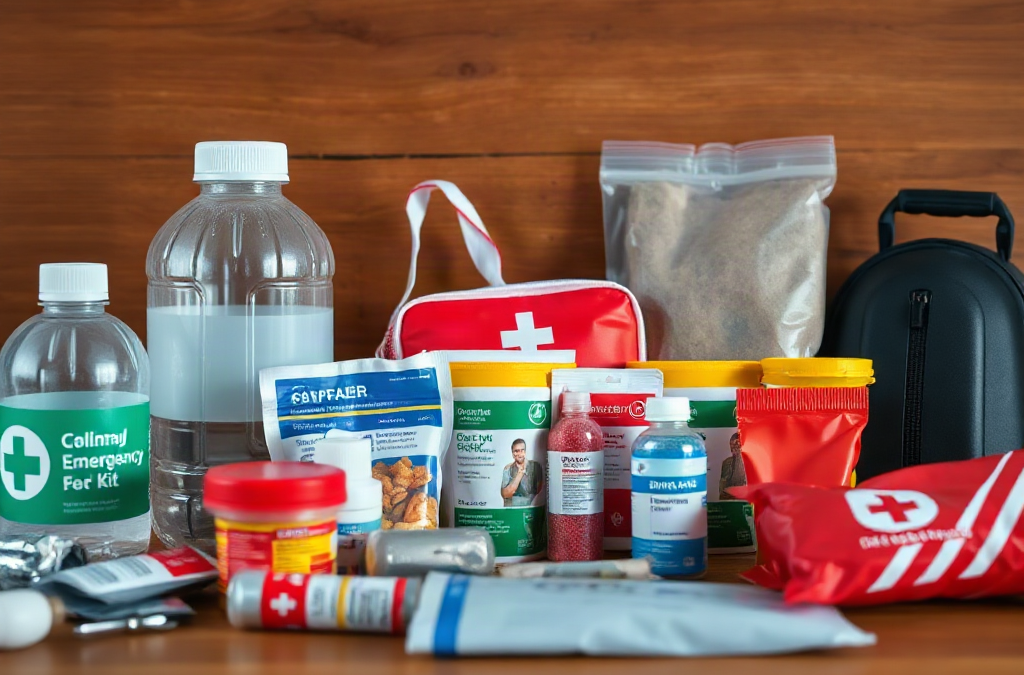
Emergency kits for people without storage space work best when they combine compact water, food, communication, first-aid, lighting, and sanitation supplies in a small, regularly rotated container. Choose multipurpose items, flat packaging, and supplies sized for the first day rather than trying to duplicate a large household stockpile. A backpack, under-bed box, closet shelf, or small rolling case can hold a useful core kit without blocking living space. Prioritize medications, identification copies, phone power, water treatment, shelf-stable calories, and a light before adding bulky comfort items. The main mistake is buying dense gear that cannot be reached quickly or checking it so rarely that batteries, food, and prescriptions expire.
Build Around the First 24 Hours, Not a Large Stockpile
Limited storage changes the objective from collecting everything to covering the earliest, most disruptive needs. A compact kit should help one person manage a short interruption in power, water access, transportation, communication, or shelter. That usually means choosing a small core load that can be carried or moved quickly, then storing a few household-specific items elsewhere when space allows.
Water deserves early attention because it is difficult to compress and often cannot be replaced by a gadget. Store some drinking water if your space permits, but do not let a large container crowd out medications, phone power, or sanitation supplies. A collapsible bottle can save space when empty, while purification tablets or a compact filter may provide an additional option. These tools have different limitations: treatment products may require clear instructions and a filter may not address every contaminant. Follow the product label rather than assuming one method works for every water source.
Food selection should favor ready-to-eat items that tolerate room temperature and do not require cooking. Small nut or seed packets, shelf-stable nutrition bars, crackers, canned fish with a pull tab, and single-serve fruit can provide variety without a large cooking setup. Check allergy, medical, and cultural requirements before buying a generic assortment. A compact kit filled with foods nobody can eat is less useful than a smaller kit matched to the person carrying it.
Use Emergency kits for people without storage space as a starting point, then remove anything that duplicates an item already carried daily. The first working version might fit in a commuter backpack: water container, food, light, power bank, charging cable, basic first aid, hygiene items, copies of key information, and a small communication aid. The common failure is trying to create a miniature warehouse. A deliberately limited first-day kit is easier to store, move, inspect, and actually use.

Choose Supplies by Volume, Weight, and Multiple Uses
Every item in a small emergency kit should earn its space through frequency, consequence, or versatility. A headlamp, for example, provides hands-free light while a person carries water, unlocks a door, or manages a minor injury. A phone power bank supports communication, navigation, alerts, and access to digital records. Multipurpose choices reduce volume, but only when their primary function remains reliable.
Start with a simple priority test. Ask what problem the item addresses, whether another item already covers it, whether it needs batteries or maintenance, and whether a lighter alternative exists. A small pair of scissors may be more useful than a bulky multitool for some users, while a multitool may suit someone who routinely needs pliers or screwdrivers. Neither is automatically better; the choice depends on likely tasks and the user’s ability to handle it safely.
Flat and soft packaging can make a meaningful difference in a studio apartment or shared room. Resealable pouches, compact soap sheets, folded masks, travel tissues, and a small towel occupy less irregular space than rigid kits. Keep critical supplies visible and grouped rather than scattering them through drawers. A zippered pouch inside a backpack can hold first aid and medication information, while a separate outer pocket can hold the light and phone cable for quick access.
Do not confuse high density with usefulness. A compressed blanket may occupy little room but does not replace warm clothing, and a tiny first-aid pouch may contain dressings too small for the injuries it claims to address. Compare a “survival gadget” against ordinary items already owned: a spare eyeglasses case, durable socks, a whistle, or a sealable bag may solve a specific problem more simply. Include written instructions for unfamiliar equipment. An item that requires internet access, a special battery, or complex assembly may fail precisely when the kit is needed.
Make a compact checklist that reflects the person rather than a catalog:
- Communication: charged power bank, cable, contact card, and a small radio when appropriate.
- Light and navigation: headlamp or flashlight, spare batteries if required, and a paper address or route note.
- Health: essential medication information, prescribed supplies, glasses, basic first aid, and protective gloves.
- Water, food, and sanitation: refillable container, treatment option, ready-to-eat food, wipes, tissues, and waste bags.
That list is a decision aid, not a fixed shopping order. Someone with diabetes, mobility limitations, pets, or an infant will need to allocate space differently and should not remove medically necessary supplies to preserve a minimalist aesthetic.
Use Small-Space Storage Locations Without Creating New Problems
The best storage location is compact, accessible, and protected from heat, moisture, and accidental disposal. Under-bed space, the back of a closet, a coat pocket, a desk drawer, or the area beside an exit can work better than a high cabinet. The correct choice depends on the building and the person’s routine. A kit hidden behind seasonal boxes may technically exist but be unavailable during a nighttime evacuation or power failure.
Use containers that match the space rather than forcing every item into one large bin. A backpack is useful when the kit may need to leave with its owner. A shallow lidded box suits a bed frame or shelf, while a soft organizer can fit in a narrow closet. In a shared home, label the container clearly and tell everyone where it is. In a dormitory, shared housing, or small apartment, avoid blocking hallways, exits, heaters, electrical panels, or building equipment.
Storage conditions affect reliability. Heat can damage some medications, batteries, adhesives, and food; dampness can ruin paper records, cardboard packaging, and metal tools. Keep documents in a sealed sleeve, but avoid sealing items that need ventilation or are prone to condensation. Inspect the container after moving furniture or changing rooms. A formerly convenient spot may become inaccessible once luggage, a bicycle, or a new appliance occupies the same area.
Consider a two-layer arrangement instead of one oversized kit. The first layer is a grab-and-go pouch with light, phone power, identification copies, medication details, glasses, and keys. The second layer is a compact reserve with food, water treatment, sanitation items, clothing, and extra medical supplies. This approach suits a person who cannot store a large tote but still needs more than can fit in a coat pocket. The tradeoff is that separate layers can be forgotten or divided between roommates, so both locations should be labeled and checked together.
Common storage mistakes include placing batteries loose beside metal objects, keeping food where pests can reach it, and storing the kit in a vehicle without considering temperature swings. A vehicle may be a useful supplemental location for certain durable items, but it should not be the only place for medication, identification, or supplies needed immediately at home. Test whether you can retrieve the kit in low light and with one hand occupied; that practical test reveals problems a tidy shelf arrangement can hide.
Rotate, Test, and Adapt the Kit to Your Situation
A small kit stays useful through short, repeatable checks rather than a once-a-year shopping session. Set a calendar reminder every few months to inspect expiration dates, battery condition, water containers, food packaging, medication needs, and the fit of clothing or protective equipment. Replace items before they become unusable, and use suitable food in ordinary meals when possible so rotation does not create waste.
Test equipment under ordinary conditions. Turn on the flashlight, connect the power bank to the intended phone, check that the cable fits, read the water-treatment directions, and confirm that the radio or other communication device functions as expected. If a light flickers, a battery leaks, a cable is missing, or a device has an unfamiliar interface, the problem is easier to solve at home than during an outage.
Personal changes should trigger an update. New prescriptions, a change in eyesight, a move to another building, a new pet, or a different commute can alter priorities. A person who works from home may need less commuting equipment but more power and printed contact information. Someone who spends long periods outside may prioritize weather protection. A resident on an upper floor may need a different carrying method than someone who can leave directly at street level.
Keep a short record of what was used during drills or minor disruptions. If the phone cable was difficult to find, move it to the outer pouch. If the food required a can opener, replace it with pull-tab packaging or add a compact opener. If the backpack was too heavy, remove duplicates before purchasing lighter versions. Signs the approach is working include quick retrieval, familiar equipment, intact packaging, and a load the user can carry comfortably. Signs it is failing include forgotten contents, expired supplies, inaccessible storage, or a bag so bulky that it is left behind.
Use official emergency-management guidance for hazards specific to your location, since flood, wildfire smoke, winter weather, earthquake, and building evacuation needs differ. The compact kit should support those plans, not replace them. Add only items tied to a credible local need or a clear personal requirement; space is too limited for impressive-looking objects that do not solve a likely problem.
Frequently Asked Questions
What container works best when storage space is extremely limited?
A backpack or shallow lidded box is usually practical because it protects supplies while remaining easy to move. Choose the container based on where it will live and whether you may need to carry it.
How much water should a compact kit include?
Store as much safe drinking water as your space and local guidance allow, while adding a refillable container and an appropriate treatment option. Do not assume a filter or tablet solves every water-quality problem.
Which items should be prioritized over bulky emergency gear?
Prioritize prescribed medications and health information, light, phone power, water, ready-to-eat food, sanitation supplies, identification copies, and weather-appropriate protection before specialized gadgets.
Can a car serve as the main storage location?
A vehicle can supplement a home kit with durable items, but temperature extremes and distance may make it unreliable. Keep medication, documents, and immediately needed supplies accessible where you live.
How often should a small emergency kit be checked?
Check it every few months and whenever prescriptions, household members, pets, seasons, or living arrangements change. Test lights, power banks, packaging, and other equipment instead of checking dates alone.
Further Reading
Authoritative Sources
- Build a Kit
ready.govProvides official guidance for selecting supplies and adapting an emergency kit to household needs
- Survival Kit Supplies
redcross.orgOffers practical supply categories that can be scaled for small homes and individual situations
- Food Safety and Emergency Preparedness Resources
cdc.govHelps readers evaluate food, water, medication, and sanitation concerns during disruptions
Conclusion
People with little storage space do not need to imitate a large household stockpile. A compact, reachable kit should cover the first day’s most consequential needs: communication, light, water, food, sanitation, health supplies, and essential information. Use a backpack, shallow box, or divided pouch system; select items that are flat, durable, familiar, and useful for more than one task when that does not compromise reliability. Keep the kit away from heat and moisture, test equipment, and rotate food, batteries, and personal supplies on a calendar. Reassess it after a move, prescription change, seasonal shift, or local hazard warning. The strongest small kit is not the one with the most gadgets; it is the one a person can find, carry, understand, and maintain.
Related Content
- From Planning to Action: A Comprehensive Approach to Disaster Readiness
- How to Build a Disaster Kit for Any Emergency Situation
- Empower Yourself: A Step-by-Step Guide on How to Prepare for Civil Unrest and Protect Your Community
- What You Need for Survival: Essential Items for Emergency Preparedness
- Stay Ahead of the Storm: A Comprehensive Approach to Disaster Readiness




