
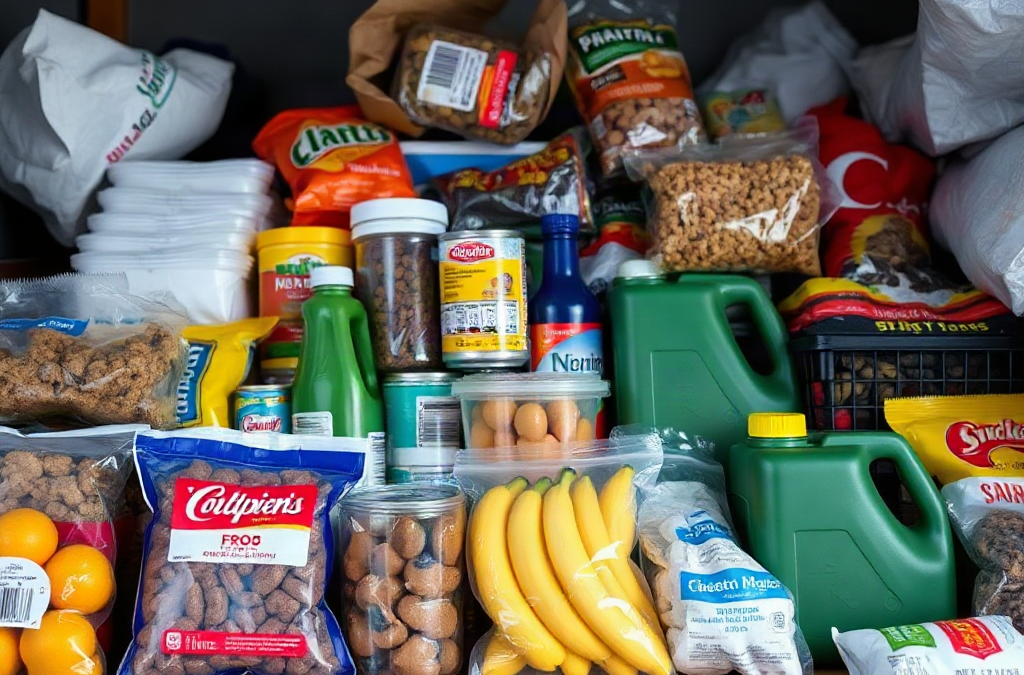
Stockpile rotation methods for preventing expired supplies work best when older items are placed in front, purchases are dated and logged, and storage conditions are checked alongside package dates. A practical system groups food, water, medicine, batteries, and hygiene products by replacement interval rather than treating the entire stockpile as one category. Use manufacturer dates as a planning signal, inspect packaging for damage or heat exposure, and move approaching items into ordinary household use before quality declines. The main failure is buying replacements without removing older inventory, which creates hidden duplicates and forgotten shelves. A short monthly inspection, paired with a deeper seasonal review, keeps the cache usable without requiring a complicated inventory app.
Build a Rotation System Around Use and Replacement Dates
A reliable stockpile rotation system begins with a complete inventory, not with a new shelving unit. Record each item, quantity, purchase date, printed date, and storage location. The printed date may describe quality rather than an automatic safety cutoff, and its meaning varies by product, but it remains useful for deciding which supplies deserve earlier attention. Items with clear manufacturer expiration dates, such as some medicines, should be managed more conservatively than unopened dry staples whose quality may change gradually.
Separate the stockpile into practical groups: everyday foods, long-term foods, water, first-aid and medicines, cleaning supplies, batteries, and personal-care products. Each group has a different rotation rhythm. Canned beans used regularly may enter the household meal plan every few weeks, while spare batteries might only need inspection for leakage and corrosion. Treating every item as though it needs the same monthly action wastes time and makes the system harder to maintain.
The simplest method is first in, first out. Place the newest purchase behind matching older items, then take from the front. For products with several date formats or multiple lots, add a removable month-and-year label to the shelf edge. A spreadsheet can help when quantities are large, but a handwritten shelf card may be more durable during a power outage. The best system is the one that matches how the household actually shops and cooks.
For example, if a household adds six cans of tomatoes each month, it should use the front cans for pasta sauce, soup, or chili and place the new cans behind them. If the household rarely eats canned tomatoes, buying more may be the wrong response to a perceived preparedness gap. Rotation exposes that mismatch: supplies that never enter normal use are likely to become forgotten, duplicated, or unsuitable for the household’s preferences.

Use Stockpile rotation methods for preventing expired supplies as an operating routine rather than a one-time cleanup. At the first setup, prioritize items with the shortest remaining date, duplicate packages, damaged labels, and goods stored in hot or damp locations. That sequence produces a quick reduction in risk before you spend time cataloging low-risk items.
Arrange Shelves So Older Supplies Move First
Physical arrangement determines whether rotation happens naturally or depends on memory. Store identical products together, keep labels facing outward, and leave enough space to slide older packages forward. A crowded shelf encourages people to pull from the easiest visible position, which is often the newest item. That behavior quietly reverses the intended order.
Use separate zones for active household use and reserve stock. The active zone contains products currently being consumed; the reserve zone holds additional units. When an active-zone item is used, replace it from the reserve before buying more. When new stock arrives, place it at the back of the reserve group. This two-zone approach is often easier than trying to maintain a single deep shelf where every package is difficult to see.
Storage conditions matter as much as shelf order. Heat, humidity, sunlight, pests, and repeated temperature swings can shorten useful life or damage packaging before a printed date arrives. Keep dry foods in a cool, dry, dark area; protect paper goods from moisture; and avoid placing cans directly on a concrete floor where condensation can contribute to rust. Follow product-specific instructions for medicines, chemicals, and batteries rather than assuming a pantry is suitable for everything.
A basement shelf illustrates the tradeoff. It may provide convenient space for canned goods, but a damp basement can damage labels, encourage corrosion, and make an inventory difficult to inspect. A smaller indoor cabinet may hold less but provide better visibility and more stable conditions. Capacity is not the only measure of a useful stockpile; accessibility and inspectability determine whether the contents will actually be used.
Do not keep damaged cans merely because their dates look acceptable. Bulging, leaking, severe rust, broken seals, swollen packaging, unusual odors, or signs of pests warrant caution. Do not taste questionable food to test it. When an item is unsuitable, remove it from the inventory immediately and record the replacement need. Leaving it on the shelf creates false confidence and forces the same decision during the next review.
Handle Different Supply Types and Storage Risks
Food, water, medicine, batteries, and hygiene products should not share one uniform rotation rule. Food rotation usually depends on household consumption, package condition, and quality dates. Water storage depends on the container, treatment approach, storage environment, and the guidance associated with the specific product. Medicines require particular attention to labeled expiration dates, storage instructions, and changes in appearance. Batteries need checks for leakage, corrosion, and compatibility with the devices in which they are kept.
Dry staples such as rice, pasta, oats, and flour are easy to overlook because they may appear stable. Their risks include moisture, insects, rancidity in higher-fat products, and gradual quality loss after opening. Store smaller quantities in containers that can be closed securely, and mark the opening date when the original package is transferred. A bulk package is not automatically a better value if the household cannot use it before quality declines.
Canned foods are generally easy to stack and rotate, but stacking too high can hide older cans and make inspection difficult. Group cans by type and use the shortest-date group first. For foods with a best-by date, assess the package and product according to applicable food-safety guidance rather than treating every date as identical. When doubt involves a damaged container or questionable seal, discard the item instead of trying to recover its value.
Nonfood supplies create different failure points. Alkaline batteries can leak when left for long periods in equipment, so store them according to manufacturer guidance and inspect devices separately. Adhesives, disinfectants, sunscreen, and some personal-care products can lose performance or change texture over time. A stockpile that contains plenty of products but lacks working batteries, usable tape, or effective cleaning supplies is not fully functional.
Choose rotation priority by consequence as well as age. A slightly stale snack may be inconvenient, while an out-of-date prescription medicine or compromised water container may create a more serious problem. Keep medicines and chemicals separated from food, and follow professional or official disposal guidance for unwanted medicines and hazardous products. The rotation record should identify these high-consequence items clearly so they do not disappear among ordinary pantry checks.
Run Monthly Checks Without Creating Excess Work
A sustainable inspection routine has a short monthly check and a more deliberate seasonal review. The monthly check should confirm that older products remain accessible, newly purchased items were placed behind existing stock, and any visible damage or date issue has been recorded. It does not need to involve counting every packet if the system is organized by defined shelf zones and standard quantities.
During a seasonal review, remove items from deep shelves, clean the storage area, check for moisture or pests, and compare actual quantities with the household’s intended reserve. Review whether the stockpile still reflects current diets, household size, allergies, medical needs, and available storage. A change in living arrangements may make a formerly sensible quantity excessive or inadequate.
Use a simple decision sequence:
- Use soon: Move approaching-date items into normal meals or daily household use.
- Inspect: Check seals, swelling, corrosion, leakage, odor, texture, and storage conditions.
- Relocate: Bring older matching items forward and put replacements behind them.
- Remove: Dispose of compromised or unsuitable supplies through appropriate channels.
- Rebuy selectively: Replace only what the household uses and genuinely needs.
Calendar reminders work better when linked to an existing event, such as the first weekend of each month or a regular grocery trip. A printed checklist on the storage door can outperform an app that nobody opens. If several adults use the stockpile, label the system plainly: “front items first,” “new stock behind,” and “record removals.” Shared visibility prevents rotation from becoming one person’s hidden responsibility.
Common failure occurs after a large shopping trip or donation. New cases are stacked in the most convenient space, older cases remain behind them, and the inventory no longer reflects reality. Correct that immediately by dating the new purchase, moving older units forward, and adjusting the count. A rotation method is working when older supplies are regularly consumed, missing items are noticed quickly, and the reserve remains easy to audit without emptying the entire room.
Match Stockpile Size to Household Consumption
The most effective stockpile is sized for realistic consumption rather than an aspirational shopping list. Review several ordinary grocery cycles and identify foods, drinks, hygiene products, and household consumables that are already used consistently. Those items are natural rotation candidates because they can leave reserve storage through normal routines instead of requiring special projects.
Preference matters. A household that does not eat canned fish will not reliably rotate it, even if it has a long stated shelf life. A person who uses a particular soap, coffee, or infant-care product may rotate those supplies quickly and notice changes in packaging or availability. Substitution is possible, but it should be tested before an item becomes part of the reserve. Buying unfamiliar foods only because they are inexpensive often produces waste and weakens confidence in the system.
Budget and space also shape the right approach. Limited space favors compact, frequently used items and smaller quantities reviewed often. A larger storage area may support deeper reserves, but it increases the burden of labeling, environmental control, and inspection. The extra capacity is worthwhile only if the household can maintain visibility and afford replacements before older goods become unusable.
Linking rotation to meal planning is a practical compromise. Select one or two reserve items for ordinary meals each week, then replace what was consumed during the next shopping trip. Keep a small “use next” basket for items nearing their preferred-use date, but do not use it as a holding area for damaged products or goods requiring special storage. The basket should reduce forgotten inventory, not postpone a disposal decision.
For more detailed household organization, connect this routine with Stockpile rotation methods for preventing expired supplies and review the system whenever the household’s needs change. The goal is not to preserve every package indefinitely. It is to maintain a clean, known, usable reserve whose contents match actual needs and whose oldest items have a clear path into regular use.
Frequently Asked Questions
What is the simplest stockpile rotation method?
Use first in, first out: place newly purchased matching items behind older ones, keep labels visible, and consume the front items first.
How often should a household inspect its stockpile?
A brief monthly check is suitable for shelf order, damage, and obvious date issues; conduct a deeper seasonal review for storage conditions and quantities.
Should every expired food item be thrown away?
Not every date label has the same meaning, but damaged packaging, swelling, leakage, severe rust, or questionable seals should be treated as disposal concerns. Follow applicable food-safety guidance.
How can I rotate supplies in a small apartment?
Use shallow, labeled zones and keep reserves limited to products the household already consumes. Smaller quantities with frequent review are safer than inaccessible bulk storage.
What should be checked besides expiration dates?
Inspect seals, swelling, corrosion, leaks, pests, moisture, odors, texture changes, battery leakage, and whether medicines or chemicals were stored according to their instructions.
Further Reading
Authoritative Sources
- Food Product Dating
fsis.usda.govExplains how date labels on foods should be interpreted and why product dating does not mean every label has the same purpose
- Don’t Be Tempted to Use Expired Medicines
fda.govProvides safety-focused information for deciding how to handle medicines beyond their labeled expiration dates
Conclusion
Preventing expired supplies is mainly an organization and consumption problem, not a shopping problem. Record what enters storage, place older matching items where they will be used first, and separate food from products with different handling requirements. Monthly shelf checks catch misplaced purchases and visible damage, while seasonal reviews expose moisture, pests, changing household needs, and quantities that no longer make sense. Prioritize medicines, water, damaged containers, and heat- or moisture-sensitive goods according to their specific instructions. For food, build the reserve around meals the household already eats so rotation happens naturally. A smaller, visible stockpile that is routinely used and replenished is more dependable than a larger cache hidden behind newer purchases.
Related Content
- Homemade Survival Gear You Can Make Today
- Creating Calm: Essential Emergency Supplies for Kids to Ensure Safety and Security
- How to Get Disaster Ready: Essential Steps for Personal and Family Preparedness
- The Ultimate Emergency Preparedness Guide (2025) with 10 Powerful Tips to Stay Safe
- The Ultimate Guide to Creating a Family Emergency Plan




