
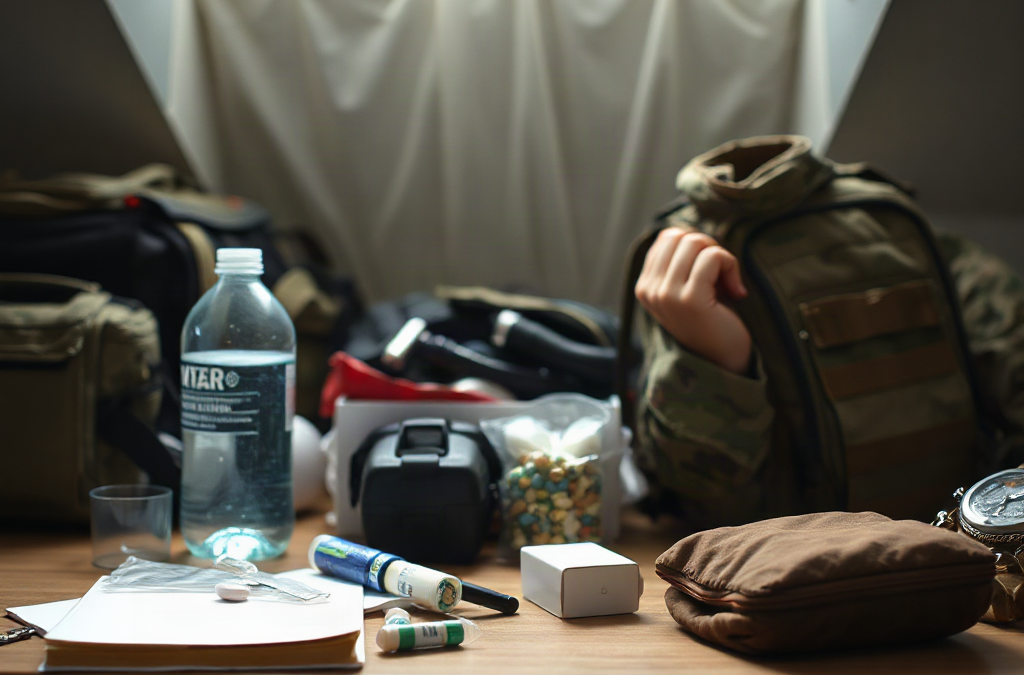
A civilian emergency deployment packing list should cover 72 hours of movement or sheltering with water, ready-to-eat food, medications, documents, lighting, communication tools, protective clothing, and sanitation supplies. Pack by function rather than copying a military loadout: divide essentials into a carried bag, vehicle reserve, and home cache so one lost container does not remove every capability. Favor familiar, durable items that work without mains power, and account for prescription schedules, mobility needs, weather, pets, and local hazards. Test the packed load by walking with it, replace expired supplies, and avoid the common mistake of carrying heavy duplicates while missing water treatment, spare batteries, or identification.
Convert Deployment Logic Into Civilian Priorities
A deployment-style packing list works for civilian emergencies when its central idea is retained: every item should serve a clear function, remain usable under disrupted services, and earn its space and weight. A household evacuation, apartment fire, flood, extended outage, or sudden relocation may require different equipment, but all can punish disorganized packing. The useful adaptation is not a uniform or tactical appearance; it is disciplined prioritization.
Military or field packing often assumes shared equipment, resupply, specialist training, and a known mission. A civilian may have none of those advantages. Your bag must therefore support basic self-care while leaving room for changing instructions. Water, medicines, identification, communication, and weather protection generally outrank gadgets. A compact radio may be useful, but it cannot replace prescription medication or a way to carry drinking water.
Separate supplies into three layers. The carry layer stays light enough for walking and contains items needed during the first several hours. The vehicle layer adds bulkier food, charging equipment, blankets, and tools when a car is available. The home layer supports staying in place and should not be treated as a substitute for an evacuation bag. This structure limits the damage if a vehicle is inaccessible or a single pack is lost.
- Immediate: identification, medications, water, food, light, phone power, and basic first aid.
- Functional: clothing, sanitation, shelter support, eye protection, gloves, and simple repair items.
- Conditional: tools or specialty equipment selected for local weather, terrain, transport, and household needs.
A common failure is copying a generic field list without considering the civilian mission. Heavy cutting tools, excess cookware, or duplicate containers may feel capable but reduce mobility. A better test is simple: if the item does not help you drink, eat, move, communicate, stay warm and dry, manage a health need, or comply with an official instruction, it probably belongs in a lower-priority layer. The civilian packing list should reflect your actual route and household rather than an imagined expedition.

Build the 72-Hour Carry Kit
The carry kit should be organized around the first 72 hours, but that period is a planning window rather than a promise that assistance or utilities will return on schedule. Pack in waterproof bags inside a durable backpack, using small pouches for medication, documents, food, and electronics. Label contents plainly so another household member can find them under stress.
Water deserves special attention because it is heavy, essential, and difficult to improvise. Carry a practical amount for your route and physical capacity, then add a compact treatment option appropriate for the kind of contamination authorities may warn about. A filter, tablets, or boiling method has different limitations; none should be assumed to make every source safe. Keep drinking containers accessible rather than buried beneath clothing.
Food should be edible without refrigeration, cooking, or extensive cleanup. Familiar items such as shelf-stable nutrition bars, nut butter packets, crackers, dried fruit, canned fish with a pull tab, or other foods tolerated by the household are more useful than impressive but unfamiliar ration products. Include a manual opener if any package requires one. People with allergies, diabetes, swallowing difficulties, or infant-feeding needs need dedicated supplies rather than a generic substitution.
Pack medicines in original labeled containers when possible, along with a written medication list and relevant contact details. A small first-aid kit can address minor cuts, blisters, and routine wound covering, but it is not a replacement for urgent medical care. Keep copies of identification, insurance information, emergency contacts, and essential household instructions in a sealed pouch. Digital copies can supplement paper copies, not replace them when devices or networks fail.
Lighting and communication equipment should be tested together. A headlamp leaves both hands free, while a small flashlight provides a backup. Store spare batteries correctly or use a rechargeable light with a power bank, but check connector compatibility before packing. Phone charging gear is valuable only if the cable, battery, and phone work as a system. The usual mistake is adding multiple electronic devices while omitting a written contact card and a way to signal or read information when the network is unavailable.
Pack for Shelter, Travel, and Personal Needs
Clothing in an emergency pack is a protection system, not a fashion change. Choose layers suited to the season: a moisture-managing base layer, insulating layer, and weather-resistant outer layer when conditions warrant. Add sturdy footwear or keep it immediately available, plus spare socks, work gloves, and eye protection if debris, smoke, or broken materials are plausible. Avoid packing a single bulky garment that becomes useless if wet; several adaptable layers usually provide better control.
Shelter supplies should match the likely decision. A person evacuating by car may need blankets, a tarp, and a change of clothes, while someone walking through crowded streets benefits more from a compact poncho and low-profile insulation. A sleeping bag can be helpful in cold conditions but may be excessive for a short indoor relocation. Space and climate change the answer. Test the packed load in the clothing you may actually wear, because a comfortable bag indoors can become awkward on stairs or uneven ground.
Sanitation prevents small problems from becoming barriers to travel or sheltering. Pack toilet paper in a sealed bag, hand sanitizer, soap sheets or a small soap container, menstrual products, toothbrush supplies, waste bags, tissues, and any continence supplies. Include a small towel or absorbent cloth. These items are inexpensive but frequently omitted because they seem less dramatic than tools. In a crowded shelter, personal hygiene supplies also reduce dependence on uncertain availability.
Personal circumstances should change the list more than internet checklists do. A child may need comfort items, spare clothing, and food that can be eaten safely. A person with limited mobility may require transfer aids, extra batteries for equipment, or a route-specific transport arrangement. Pets need food, water containers, medication, identification, a leash or carrier, and waste supplies. Keep copies of care instructions so another person can help if family members become separated.
Do not confuse defensive equipment with general preparedness. Knives, weapons, or specialized protective gear may create legal, safety, or transport problems and require training that a packing list cannot provide. Prioritize visibility, footwear, communication, and avoiding hazards. A frequent misconception is that more tools create more security; in civilian travel, excess weight and unfamiliar equipment can slow movement, invite loss, or distract from official evacuation directions.
Test, Stage, and Maintain the Load
A packed bag is only useful if its owner can carry it, identify its contents, and use the equipment without instruction. Conduct a short walk on stairs and ordinary pavement with the intended load. Check whether straps rub, footwear causes hot spots, or the bag blocks access to medication and water. If the pack is too heavy, remove duplicates and low-probability tools before removing core health, hydration, or weather items.
Run a household drill that begins with a realistic prompt: a building alarm, a local evacuation notice, or a multi-day outage. Have each person retrieve their own bag, secure pets, collect phones and glasses, and leave by the intended route. The exercise often reveals practical defects that shopping cannot: a child cannot open the food, a charger uses the wrong connector, documents are stored in a locked drawer, or the chosen shoes are not near the exit.
Stage supplies where the hazard allows. Keep the carry bag near an exit but not where smoke, floodwater, or falling objects are most likely to block access. Store vehicle supplies in a way that does not become a projectile and avoid leaving heat-sensitive medicines or batteries in extreme temperatures. If evacuation may involve public transport, favor a compact soft-sided arrangement over several loose containers.
Maintenance should follow use and seasons. Replace consumed food, inspect seals, rotate batteries, update contact information, and review medication needs with the appropriate clinician or pharmacist. Recheck clothing as children grow and as weather changes. A simple inventory can record item, quantity, expiration or inspection date, and location. The point is not perfect readiness; it is preventing a known failure from recurring.
Use the packing list as a decision tool after every drill. If a component was difficult to access, unsafe, uncomfortable, or irrelevant to the scenario, revise it. Keep a written route and meeting arrangement, but follow current instructions from local emergency officials when they conflict with an old household assumption. The strongest kit is not the largest one; it is the one that remains usable when time, information, and carrying capacity are limited.
Frequently Asked Questions
How much should a civilian emergency bag weigh?
Keep it light enough for the least mobile intended user to carry over the planned route. Test the actual load and shift bulky items to a vehicle or home cache.
Should food be packed for three full days?
Pack ready-to-eat food for the people and pets who may rely on the bag, while recognizing that local conditions, evacuation timing, and access to shelter can change the required amount.
What matters most if there is little room?
Prioritize medications, water, identification, phone power, light, weather protection, essential food, and sanitation. Remove duplicates before removing these functions.
Should every family member carry the same items?
No. Share heavy items where practical, but give each person essential identification, medication access, water, and age-appropriate comfort or communication items.
How often should the bag be checked?
Review it after every use, before seasonal weather changes, and whenever medications, contact details, clothing sizes, pets, or household mobility needs change.
Further Reading
Authoritative Sources
- Build an Emergency Kit
ready.govProvides federal guidance on core household supplies and adapting them to personal needs
- Survival Kit Supplies
redcross.orgOffers practical suggestions for assembling supplies for evacuation and sheltering
- Emergency Water Information
cdc.govExplains safer responses when drinking-water service or quality is uncertain
Conclusion
A civilian adaptation of a deployment packing list should make movement and short-term sheltering more manageable without pretending that a backpack can solve every emergency. Build separate carry, vehicle, and home layers; put health, water, identification, food, lighting, communication, clothing, and sanitation ahead of novelty tools; then tailor the result to route, climate, mobility, pets, and medical needs. Test the bag on foot, practice retrieving it under a realistic prompt, and correct failures while they are still inexpensive to fix. A smaller load that the household understands and can use is more valuable than a heavier collection of supplies left unopened or forgotten.




