
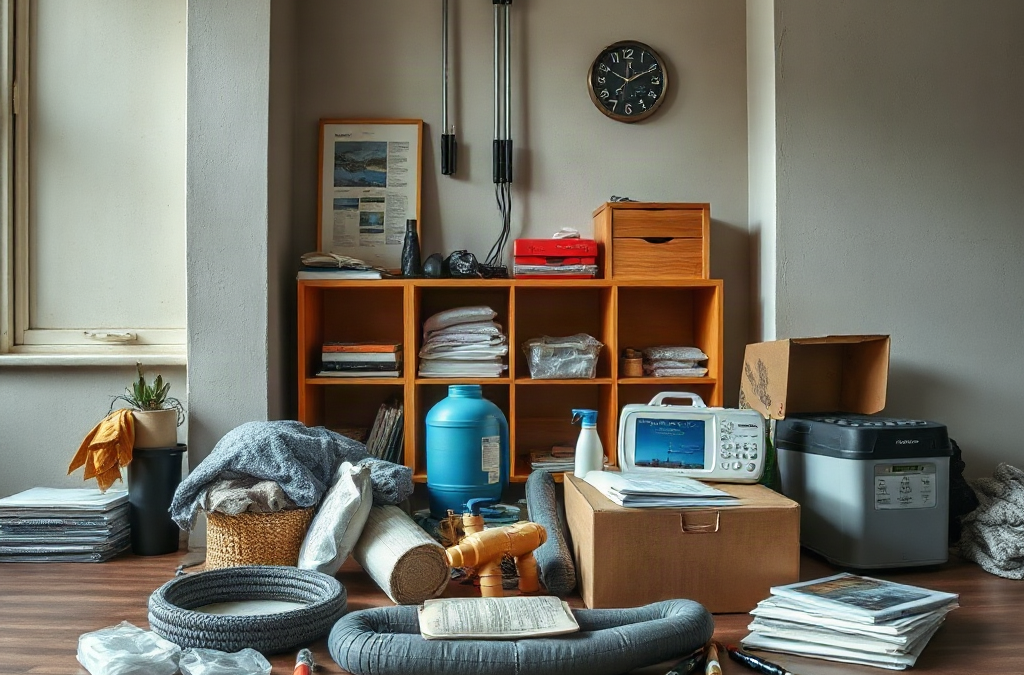
Earthquake planning for apartments without gas shutoffs should focus on securing hazards, controlling electrical and water risks, and coordinating with building management because residents may not control shared utilities. Anchor furniture, keep shoes and a flashlight beside the bed, store water in portable containers, and learn where apartment breakers and water valves are located without operating equipment you are not authorized to use. After shaking stops, check for fire, smoke, damaged wiring, flooding, and structural warning signs before reentering or using utilities. A missing gas shutoff changes the response sequence; it does not remove the need for fire prevention, evacuation readiness, communication, sanitation, and a building-specific recovery plan.
Map Apartment Hazards and Shared Utilities
An apartment earthquake plan begins with understanding which decisions belong to the resident and which belong to the building owner, utility provider, or emergency services. In a detached home, a person may know exactly where the gas meter and main shutoff are located. In an apartment, gas equipment may be outside the unit, locked away, absent altogether, or controlled by a central system. Treating a breaker panel or valve as if it were yours to operate can create safety, access, or liability problems.
Walk through the unit and identify hazards rather than simply labeling rooms as safe or unsafe. Note tall furniture, glass, mirrors, hanging fixtures, water heaters, appliances, overloaded outlets, and items stored above head height. Pay special attention to the kitchen, where broken glass, spilled liquids, and shifted appliances can make an ordinary exit dangerous. A balcony, stairwell, hallway, or exterior wall may also contain falling material that is not visible from inside the apartment.
Ask management or maintenance specific questions in writing. Find out whether the building has a central gas system, where authorized utility controls are located, whether residents can access electrical breakers, and how water damage should be reported after hours. Ask which alarms, sprinklers, elevators, and emergency lighting are connected to backup power. The goal is not to perform building maintenance; it is to know whom to contact and what not to touch.
A common mistake is assuming that no gas shutoff means there is no fire-related utility risk. Electrical arcing, damaged extension cords, ruptured water lines, and battery failures can still create hazards. Conversely, another mistake is rushing to manipulate unfamiliar controls after shaking. Mark locations, save management and utility contacts, and follow posted building instructions unless immediate life safety requires evacuation.

Secure Rooms for Shaking and Falling Objects
Most apartment preparation begins with reducing what can fall, slide, shatter, or block an exit. The objective is not to make every object immovable. It is to keep heavy items from landing on occupants and preserve a usable path from sleeping areas to the outside. Furniture anchored to a stud or suitable structural point is generally more dependable than furniture merely placed against a wall.
Secure bookcases, televisions, tall cabinets, and freestanding shelves with hardware appropriate for the wall construction. Do not assume that drywall alone will support a heavy cabinet. Place heavy objects low, latch cabinets that hold breakable items, and move glassware away from beds and frequently used seating. Window coverings can reduce contact with broken glass, but they do not replace distance from windows during shaking.
Bedrooms deserve special attention because people are often there when an earthquake begins. Keep sturdy footwear, a flashlight, essential medication, and a way to make a phone call within reach of the bed. Shoes matter because broken glass and damaged flooring may make bare feet unsafe. A flashlight is preferable to using a candle or open flame when wiring, appliances, or unknown fumes may be involved.
Practice the protective action that fits the space: drop, cover, and hold on under a sturdy table or desk when available, or protect the head and neck away from windows and unstable objects. Do not run down stairs while the building is moving, and do not use an elevator during or immediately after shaking. A useful comparison is speed versus survivability: reaching the hallway first is not an advantage if falling objects or stair movement create greater exposure.
Check the plan from the perspective of a child, older adult, person with a disability, and pet owner. A blocked route that is manageable for one resident may be unusable for another. Rearrange storage, add a second route where possible, and identify which doors may jam if the frame shifts. Do not store emergency supplies in a locked closet that requires a key kept elsewhere.
Build Supplies Around Water, Power, and Sanitation
Without a resident-controlled gas shutoff, supplies should support sheltering, inspection, communication, and sanitation rather than only cooking. Water service may stop or become unsafe, elevators may be unavailable, and a damaged electrical system may make normal lighting and charging unreliable. Apartment storage is limited, so portable, stackable supplies usually outperform bulky equipment that is difficult to move through stairs.
Store drinking water in several manageable containers instead of one large vessel. Smaller containers are easier to carry, share, and move if a leak develops. Add shelf-stable foods that can be eaten without cooking, a manual can opener, personal medications, hygiene items, gloves, dust protection, basic first aid materials, a battery or hand-crank radio, spare batteries, charging cables, and a power bank. Keep copies of identification, lease information, emergency contacts, and relevant prescriptions in a water-resistant pouch.
Lighting and sanitation deserve equal priority with food. A headlamp leaves both hands available for opening doors or helping someone, while a lantern can illuminate a shared room. Have heavy-duty bags, toilet paper, hand sanitizer, wipes, and a plan for separating waste from living areas if plumbing is unavailable. Never improvise indoor cooking or heating with charcoal, gasoline equipment, or appliances designed for outdoor use; carbon monoxide can accumulate without an obvious odor.
Supplies should be divided into a bedside or grab location, a main apartment cache, and a small evacuation bag. The bedside set addresses immediate injury and darkness. The main cache supports staying put if the unit is safe. The evacuation bag supports a rapid departure and should not be so heavy that it prevents stair travel. This layered approach is more practical than keeping everything in a single container that may be inaccessible after furniture shifts.
- First: shoes, light, medication, phone, and a way to open the exit.
- Next: water, ready-to-eat food, sanitation supplies, first aid, and communications.
- Then: documents, clothing, pet supplies, tools, and replacement batteries.
A frequent failure mode is buying supplies without testing them. Open the food packaging, charge the power bank, check medication expiration dates, and carry the packed bag up a flight of stairs. If the setup is too heavy, too complicated, or stored behind a blocked door, revise it before an earthquake exposes the weakness.
Use a Building-Specific Response Sequence
After the shaking stops, pause before moving through the apartment. Protect yourself from glass and debris, look for immediate fire or smoke, listen for alarms, and check whether anyone needs urgent assistance. If the building shows serious damage, fire, a strong chemical odor, flooding, or unstable ceilings, leave by the safest available stairs and follow emergency instructions. Do not assume that a familiar hallway remains safe simply because it was safe yesterday.
The absence of a gas shutoff changes what residents should inspect first. Do not spend critical time searching for a valve you cannot access. Instead, look for sparks, burning smells, damaged cords, hot outlets, water near electrical equipment, and active leaks. If a local breaker can be reached safely and residents are authorized to operate it, follow building guidance; otherwise report the condition and keep clear. A water leak can spread quickly through floors, so notify management while also protecting people from electrical contact.
Remain outside if officials or building personnel direct residents not to reenter. Elevators may be trapped, disabled, or stopped between floors, so stairs are the normal evacuation option when they are visibly usable. Take only the evacuation bag if leaving is necessary. Returning for extra belongings can expose residents to aftershocks, falling materials, smoke, or doors that no longer open normally.
Use a simple decision sequence:
- Check people, fire, smoke, fumes, major leaks, and visible structural damage.
- Move away from immediate hazards and use stairs rather than elevators.
- Report the apartment number, floor, injuries, fire, flooding, or utility damage clearly.
- Use text messages when calls are congested, and monitor official instructions.
- Do not reenter or restore utilities based only on a visual guess.
A weak assumption is that the apartment is safe because the building is still standing. Nonstructural damage can injure residents or start fires even when the main structure appears intact. Another weak assumption is that a phone battery will last through repeated updates. Reduce screen use, carry a backup power source, and agree in advance on an out-of-area contact and meeting location.
Coordinate With Management and Neighbors
Apartment readiness works better when residents understand the building’s communication and access arrangements before an earthquake. Management may have procedures for elevator shutdowns, water isolation, fire alarms, inspection, pets, and temporary relocation. Those procedures can vary by building design, so generic household advice cannot replace the property’s own instructions.
Ask whether there is a resident emergency contact tree, a designated assembly area, and a process for reporting units that need welfare checks. Share only appropriate information, but let trusted neighbors know if someone may need help with stairs, medication, hearing alarms, or moving a mobility device. A neighbor who knows the need exists can respond more effectively than one who discovers it during a noisy evacuation.
Residents should also clarify who has authority to enter units, shut down systems, post notices, or arrange inspections. Do not block fire doors, wedge security doors open, or place supplies in corridors. A personal cache in a hallway may become an obstruction during evacuation. If an item must be stored outside the unit, obtain building approval and keep it out of egress paths.
Consider two scenarios. If the apartment is intact but water service is interrupted, residents may be able to shelter while using stored supplies and receiving building updates. If a neighboring unit has a fire or a stairwell is damaged, the priority shifts immediately to evacuation and accountability. A plan that only covers staying home fails in the second scenario; a plan that assumes everyone must leave may waste resources when the building is safe enough to shelter.
Review the arrangement twice a year and after any move, renovation, new appliance, medication change, or household change. Walk the stairs, test communication methods, replace depleted batteries, and confirm that management contact details still work. For broader Earthquake planning for apartments without gas shutoffs, connect the apartment checklist to neighborhood hazards and local alerts. A building-specific Earthquake planning for apartments without gas shutoffs approach is strongest when residents know both their personal limits and the building’s responsibilities.
Frequently Asked Questions
Should apartment residents shut off the gas after an earthquake?
Only if the shutoff is accessible, residents are authorized to use it, and building or utility instructions support doing so. Never search in a dangerous area or operate unfamiliar equipment; report suspected damage instead.
What should residents do if there is no gas service?
Focus on electrical hazards, fire, water leaks, evacuation routes, communication, and sanitation. No gas system removes one hazard but does not make the apartment automatically safe.
Where should earthquake supplies be stored in an apartment?
Keep a small immediate-use kit beside the bed, a main cache in an accessible interior location, and a lightweight bag near an exit. Avoid closets or corridors that could become blocked.
Is it safe to use an elevator after an earthquake?
Do not use an elevator during shaking or when evacuation is advised. Use a visibly usable stairway and follow officials or building personnel, since elevators may lose power or stop between floors.
How can neighbors support residents who cannot use stairs?
Coordinate before an earthquake, identify trusted helpers, and tell management about accessibility needs. Never carry someone down stairs without suitable training or an approved evacuation procedure.
Further Reading
Authoritative Sources
- Earthquakes
ready.govFederal preparedness information covering protective actions, supplies, alerts, and recovery decisions for earthquake households
- Earthquake Hazards Program
usgs.govExplains earthquake hazards, aftershocks, shaking, and risk information that can inform apartment-level decisions
- Earthquake Safety and Preparedness
fema.govProvides government guidance on reducing household hazards and responding safely after an earthquake
Conclusion
Apartment earthquake readiness is less about owning a gas wrench and more about controlling the hazards you can actually influence. Secure furniture and glass, protect sleeping areas, store portable water and sanitation supplies, and keep a lightweight evacuation bag where it remains reachable. Learn the building’s utility boundaries, emergency contacts, stair routes, inspection process, and communication system before shaking occurs. Afterward, look for fire, smoke, damaged wiring, flooding, and structural warning signs rather than assuming a standing building is safe. Coordinate with management and neighbors, especially when mobility, medical, or pet needs affect evacuation. Review the setup after household changes and practice the route once or twice a year so the plan remains usable under real apartment constraints.




