
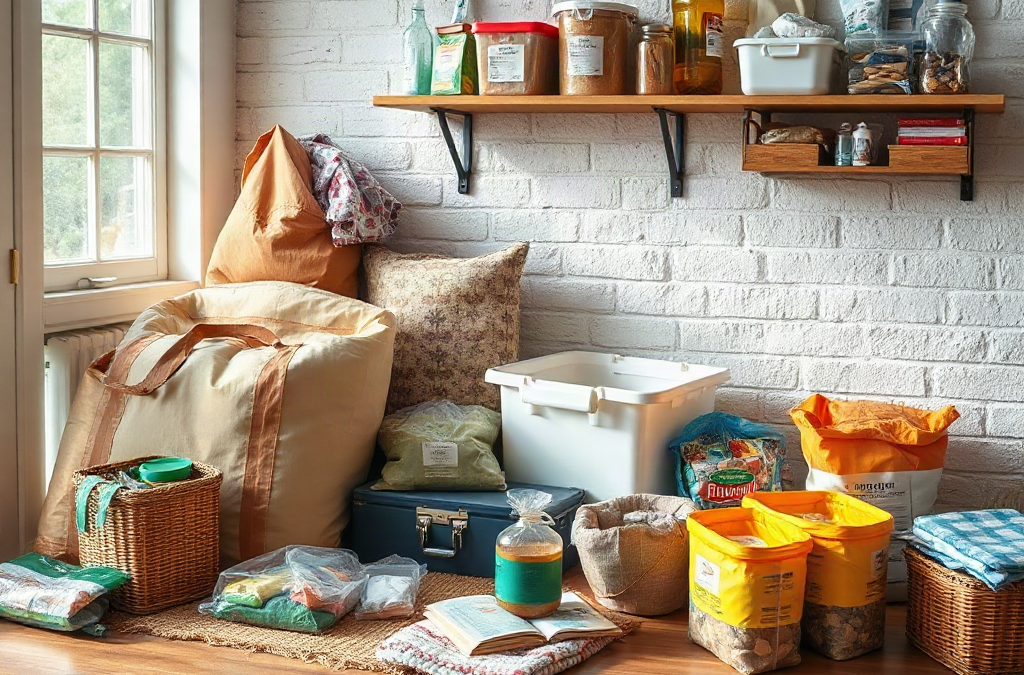
Emergency supply lists using minimum quantity thresholds work best when each person, pet, and critical need receives a measurable baseline rather than a vague item count. Set separate minimums for drinking water, ready-to-eat food, medications, sanitation, lighting, and communication, then adjust for heat, medical needs, storage limits, and likely outage length. A threshold is a floor, not a complete plan: falling below it signals an immediate gap, while exceeding it may create waste or crowd out higher-priority items. Recheck expiration dates, battery compatibility, container condition, and actual household consumption so the list reflects what people can use under stress.
Set Minimums by Person, Need, and Time
A useful emergency list begins with a threshold table, not a shopping spree. Each line should identify who needs the item, how long the supply must last, and what quantity marks the minimum acceptable level. A household of four should not use the same baseline as a single adult, and a list that works for a brief power interruption may fail during a longer evacuation or water-service disruption.
Separate universal needs from individual requirements. Drinking water, shelf-stable meals, light, sanitation materials, and a way to receive information belong on the shared list. Prescription medicines, infant feeding supplies, mobility aids, pet food, and allergy-safe foods require person- or animal-specific calculations. The distinction prevents a common failure: counting one communal package as though it automatically covers every household member.
Use a simple formula for each category: people or animals × daily minimum × planned days + a small practical margin. The margin should account for spills, awkward packaging, visitors, or a longer wait, but it should not disguise an arbitrary stockpile. If storage space is tight, protect the minimum for the first period before buying optional conveniences. The emergency supply list thresholds should make shortages visible at a glance.
Time also changes the meaning of “minimum.” A short interruption may require only supplies that need no refrigeration or cooking. A longer disruption raises the importance of fuel, waste management, food variety, medication continuity, and battery replacement. An evacuation plan has different constraints again: heavy water containers and glass jars may be less useful than portable packaging, even when the total quantity is similar.

A practical first pass can rank each line as critical, necessary, or optional. Critical items protect immediate safety or ongoing medical needs. Necessary items preserve basic function, such as food, lighting, and hygiene. Optional items add comfort but should not consume the budget before the first two groups are complete. The mistake to avoid is treating every desirable product as equal to water, medication, or a reliable light source.
Calculate Water, Food, and Medical Baselines
Water deserves its own calculation because it supports more than drinking. A threshold should distinguish drinking and food preparation from extra water for hygiene, cleaning, or special medical routines. Local conditions, age, activity, heat, pregnancy, illness, and official instructions can change needs, so a generic household number should be treated as a starting point rather than a universal rule.
Food quantities should be measured in usable servings, not package counts. A box may contain several servings on its label but provide little practical value if it requires refrigeration, extensive cooking, or ingredients that are not stored. Choose foods that household members will actually eat, then check preparation needs, allergies, texture preferences, and the tools available during an outage. Ready-to-eat items can be more useful than dry staples when water or fuel is limited, while dry foods may offer better storage efficiency when cooking is reliable.
For example, a household may discover that its “three-day food supply” consists mainly of uncooked grains and canned ingredients without a manual opener. The list looks full but falls below the functional threshold. A better audit records portions, opening tools, cooking requirements, and waste. Pair canned or ready-to-eat food with a manual opener, utensils, and a plan for packaging that cannot be refrigerated after opening.
Medical supplies need an individual review rather than a generic quantity. Record prescription names, dosing schedules, refill timing, storage conditions, and backup contacts, while following the prescribing clinician and pharmacist’s instructions. Do not alter doses or store medicines under unsuitable conditions simply to create a larger reserve. Include spare glasses, hearing-device batteries, mobility equipment supplies, and basic first-aid materials when the household depends on them.
Thresholds also expose tradeoffs. Buying large quantities of one food may reduce cost but create menu fatigue, dietary gaps, or concentrated expiration risk. A smaller rotation of foods with different preparation methods may be more resilient. The same principle applies to water containers: one large vessel may be efficient for storage, while several smaller containers may be easier to carry and allocate during a move. Use the quantity planning checklist to compare usable capacity rather than advertised capacity.
Cover Sanitation, Light, and Communication Gaps
Sanitation thresholds prevent a supply list from ending at food and water. Waste bags, toilet paper, soap, hand-cleaning supplies, menstrual products, diapers, cleaning materials, and gloves may become difficult to replace when services or transport are disrupted. The amount needed depends on household habits, medical conditions, available toilets, and whether water service remains functional.
Count sanitation supplies by use where possible. Estimate toilet use, hand cleaning, infant changes, menstrual products, and cleanup tasks over the planned period. A household with an infant, a person with incontinence, or a member who needs sterile handling may reach its minimum much faster than a generic list suggests. Store these materials where they can be reached without unpacking food or medical supplies.
Lighting should be tested as a system rather than counted as a number of devices. A flashlight with dead batteries, an incompatible charger, or a switch that is difficult to operate offers little practical coverage. Keep at least one dependable light source accessible without searching in darkness, and check the battery type, charging cable, and spare power method. Headlamps can leave both hands free, while lanterns may illuminate a shared room; neither automatically replaces the other.
Communication supplies have a similar constraint. A radio is useful only if household members know how to power and operate it, and a phone is not a complete communication plan when charging depends on the electrical grid. Record emergency contacts on paper, identify an out-of-area contact if appropriate, and keep charging equipment with the devices it supports. Official local alerts remain more useful than unverified social media updates during a developing incident.
A common mistake is buying specialized equipment before closing ordinary gaps. A sophisticated power station cannot compensate for missing sanitation materials or an inaccessible medication. Use a short priority check: can the household drink safely, eat without unavailable equipment, manage waste, maintain essential care, see at night, and receive reliable information? If any answer is no, direct the next purchase there before adding comfort items.
Test, Rotate, and Adapt the List
A minimum threshold is reliable only when the household can use the supplies under realistic conditions. Run a small test before an emergency: prepare one stored meal using the intended utensils and fuel, locate every light source in a dark room, open containers without electricity, and verify that key items fit the available storage or transport method.
Testing reveals failures that inventory software cannot. A food package may require more water than expected, a battery may leak, a child may reject the available texture, or a mobility aid may not fit beside the packed containers. Treat each failure as a list correction. The goal is not to simulate every disaster; it is to identify friction that would matter when time, light, and attention are limited.
Use a rotation schedule tied to ordinary shopping. Put older food and water containers where they will be noticed, label purchase dates, and replace damaged packaging or expired products according to manufacturer instructions. Batteries, fuel, medicines, and temperature-sensitive items need their own checks. Avoid assuming that an unopened package is automatically suitable after poor storage conditions.
Review the thresholds after changes in household composition, health, pets, housing, climate, or transportation. A move to an apartment may reduce storage and increase the value of compact, portable containers. A new infant, medication, or pet may require entirely new lines on the list. Seasonal review can identify heat-related water demands, cold-weather clothing needs, or changes in evacuation routes.
Keep the final document operational. List the item, minimum quantity, current quantity, expiry or review date, storage location, and person responsible for checking it. A compact table or spreadsheet works well, but a printed copy is useful if devices cannot be charged. The threshold-based preparation plan should show the next action clearly: buy, rotate, test, relocate, or confirm.
Frequently Asked Questions
What does a minimum quantity threshold mean?
It is the lowest quantity that still supports a defined person, need, and time period. Falling below it identifies a priority gap; exceeding it is optional until higher-priority gaps are closed.
Should every household use the same emergency quantities?
No. Household size, ages, medical needs, pets, climate, storage, and evacuation plans can change the practical minimum for each category.
How should food be counted on an emergency list?
Count usable servings and preparation requirements, not just cans or packages. Include opening tools, water, fuel, utensils, and dietary restrictions in the calculation.
Why should sanitation supplies have their own threshold?
Water and food do not address waste, hand cleaning, diapers, menstrual care, or household cleanup. Service interruptions can make these products difficult to replace quickly.
When should an emergency supply list be updated?
Review it after household, health, housing, seasonal, or transportation changes, and routinely check expiration dates, battery condition, packaging, and actual usability.
Conclusion
A strong emergency supply list is a measurement tool, not a catalog of everything a household might want. Set a defensible floor for each person, pet, and essential function, then check whether the stored items remain usable without normal power, water service, refrigeration, or shopping access. Give priority to drinking water, workable food, required medicines, sanitation, light, and reliable information before adding convenience gear. Test one meal, one light setup, and one communication method so hidden failures appear early. Record quantities, storage locations, review dates, and the next action for every shortfall. Revisit the list when household needs or living conditions change, because a threshold that matched last year’s situation may no longer protect the people relying on it.
Related Content
- How can I build a community of like-minded, self-reliant people?
- The Importance of Practicing Emergency Drills: Key Steps and Benefits for Safety
- Guide to Stockpiling Medications for Long-Term Emergencies
- Essential Bushcraft Skills for Outdoor Survival
- 5 Essential Steps to Disaster Preparedness: Are You Ready




