
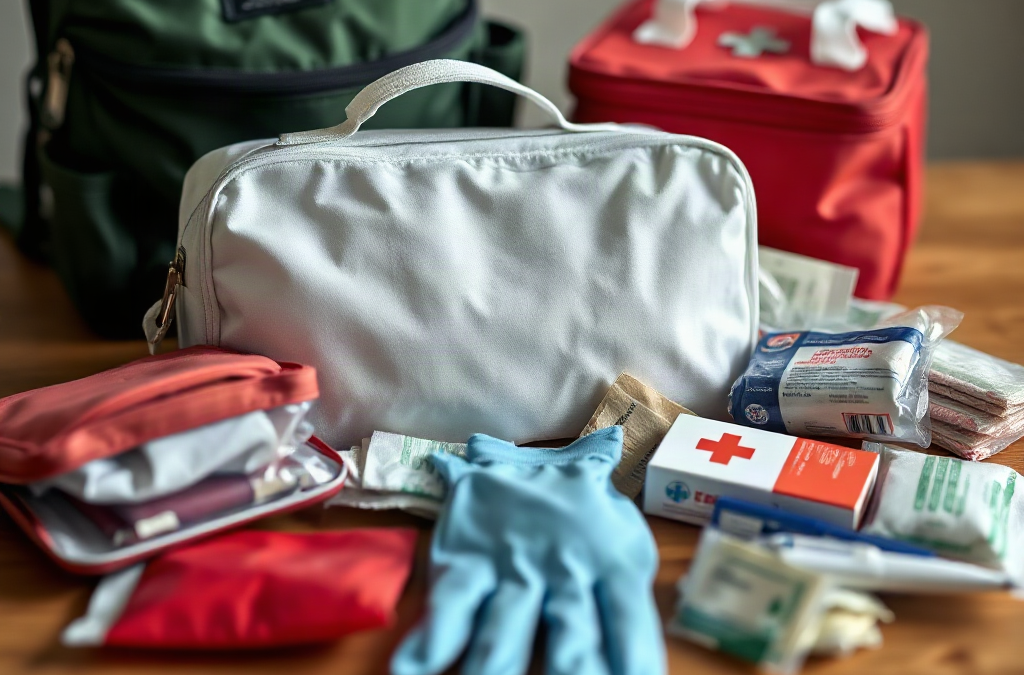
First aid equipment ready to run during emergencies should be organized, accessible, intact, and matched to likely injuries, with bleeding-control supplies, gloves, wound dressings, a thermometer, emergency blankets, and essential medications checked before use. Store the kit where people can reach it quickly, not locked inside a vehicle or buried under seasonal gear. Inspect expiration dates, damaged packaging, depleted batteries, and missing instructions on a scheduled rotation. Separate everyday minor-injury items from supplies intended for severe bleeding or evacuation, and replace anything contaminated or unfamiliar. Equipment cannot substitute for emergency medical care, so call local emergency services for life-threatening bleeding, breathing trouble, shock, or serious burns while providing appropriate first aid.
What a Ready First Aid Kit Must Do
A first aid kit is ready for use when its contents can be identified, reached, and used safely under pressure. A large container filled with miscellaneous products may look well supplied but still fail if sterile dressings are buried, gloves have degraded, or nobody knows which items are intended for serious bleeding. Readiness is an operational condition, not a shopping-list total.
Build the kit around three needs: protecting the responder, controlling immediate threats, and supporting care until professional help arrives. Nitrile gloves, hand sanitizer, barrier protection for rescue breathing when appropriate, gauze, adhesive dressings, medical tape, bandages, antiseptic supplies, scissors, tweezers, and a digital thermometer cover common minor injuries. Trauma-focused additions may include pressure dressings, wound-packing gauze, a commercial tourniquet, and a marker for recording key information. A flashlight, spare batteries, emergency blanket, and written emergency contacts can matter when power or visibility is poor.
The best contents depend on location and users. A home kit for children may need child-appropriate medication guidance and burn supplies, while a hiking kit must stay compact and tolerate moisture. A workplace kit may need several pairs of gloves and supplies for multiple people. Avoid assuming that a larger kit is automatically safer; excess packaging can slow access and encourage storage in a place nobody checks.
A common failure is mixing first aid equipment with unrelated household items. If pain relievers, sewing materials, expired creams, and loose batteries fill the same pouch, a person responding to a cut may waste time searching. Keep the core kit limited to recognizable supplies, label unusual items, and place a short emergency instruction card on top. The related first aid equipment readiness checklist should be treated as a living inventory rather than a one-time purchase.

How to Organize Supplies for Fast Access
Organization should follow the order in which a responder is likely to act. Put gloves and a face covering in an exterior pocket or clearly marked top compartment, followed by bleeding-control materials and large dressings. Minor wound care, medications, cold packs, and comfort items can occupy separate sections. This arrangement reduces the need to empty the entire container while someone is bleeding.
Use transparent pouches or strong labels such as “Bleeding,” “Burns,” “Wounds,” and “Medication.” Color coding can help, but labels should remain readable in low light and should not depend on a phone or electronic inventory. Keep scissors, tape, and a flashlight in fixed locations. If several people share the kit, every regular user should be able to return items to the same compartment.
Consider the difference between a grab-and-go kit and a household supply cabinet. A portable kit should contain the minimum equipment needed to leave quickly: gloves, dressings, tape, trauma supplies, a light, identification information, and essential personal medications where appropriate. A larger reserve can hold replacement dressings, extra water, sanitation supplies, and additional protective equipment. Combining both roles in one oversized box creates a tradeoff: it increases stock but decreases portability and search speed.
Test the layout with a simple timed rehearsal. Ask someone unfamiliar with the kit to locate gloves, gauze, a pressure dressing, and the flashlight without coaching. If that person opens every pouch or cannot distinguish sterile from non-sterile material, the system needs revision. A frequent misconception is that memorizing the contents is enough; visible placement and consistent labeling are more dependable when stress narrows attention.
- Top or outer pocket: gloves, barrier protection, emergency contacts, and a light.
- Immediate-care compartment: gauze, pressure dressings, tape, bandages, and burn coverings.
- Support compartment: thermometer, cold pack, tweezers, scissors, blanket, and spare batteries.
- Separate reserve: replacement stock and items that are not needed for the first response.
Inspection, Replacement, and Storage Checks
Readiness deteriorates through expiration, heat, moisture, contamination, and ordinary use. Inspect the kit on a recurring schedule and after every incident. Check that sterile wrappers are sealed, adhesive products still stick, elastic materials have not become brittle, and liquids have not leaked. Batteries should be tested in the device they power rather than assumed usable because they are present.
Storage conditions affect equipment differently. Adhesives and medications may degrade in hot vehicles; fabric dressings can become damp in poorly sealed containers; plastic packaging can crack when repeatedly crushed. A cool, dry, clearly marked location near an exit or common living area is usually more useful than a hidden “secure” location that nobody can access quickly. Keep supplies away from children unless the container is secured in a way responsible adults can still open promptly.
Medication storage requires extra caution. Do not transfer tablets into unmarked bags, and do not rely on a general medicine supply for someone else’s prescription. Retain original labels, follow package directions, and consider allergies, age, pregnancy, and existing conditions. A first aid kit should support basic care, not encourage improvised prescribing. If a medication has changed color, texture, smell, or packaging condition, replace it according to the manufacturer’s guidance.
Use an inventory card with the date checked, items used, items nearing expiration, and the person responsible for restocking. Rotate consumables before they expire rather than waiting for a crisis. The most common inspection mistake is counting products without opening the case. A kit can contain ten rolls of gauze and still be functionally unavailable if they are wet, unsealed, or packed beneath heavy equipment. For more detailed planning, compare the storage approach with your emergency supply setup and identify which items must remain portable.
Matching Equipment to Real Emergency Scenarios
Equipment choices should reflect the injuries and conditions most plausible in the setting. A kitchen requires burn coverings, clean dressings, gloves, and supplies for cuts. A garage or workshop may justify stronger eye-protection support, larger dressings, and bleeding-control equipment. Outdoor travel adds weather exposure, blisters, insect-related concerns, and the need to carry the kit without damaging it.
For severe bleeding, the priority is immediate pressure and rapid contact with emergency services. Gloves protect the responder, while gauze or a pressure dressing can support sustained compression. A commercial tourniquet may be appropriate for life-threatening limb bleeding when the user has suitable training, but it should not be treated as a universal substitute for direct pressure or professional guidance. Supplies should be stored together so the responder does not lose time deciding which compartment contains trauma materials.
For burns, clean cool running water is often more useful initially than a crowded collection of creams. Dressings should not be applied in a way that traps heat or adheres to damaged tissue, and severe burns require urgent medical assessment. For suspected fractures or spinal injury, the kit cannot replace evaluation; improvised movement may worsen harm. A flashlight, blanket, and phone power bank may be more useful than another small adhesive strip when an incident occurs outdoors after dark.
Scenario testing exposes weak assumptions. Imagine a cyclist with road rash, a child with a deep cut, or an adult who becomes faint after an injury. Ask what the first responder needs within thirty seconds, what can wait, and which symptom requires escalation. A kit designed only for paper cuts may be inadequate for a remote location, while a trauma-heavy kit in a supervised office may be unnecessarily complex. Choose equipment by exposure, distance from medical care, number of users, and responder skill.
Using a Kit Without Delaying Professional Care
First aid equipment supports immediate actions while help is being arranged; it does not diagnose serious illness or replace emergency treatment. Call local emergency services for uncontrolled bleeding, breathing difficulty, loss of consciousness, chest pain, serious allergic symptoms, major burns, suspected stroke, or severe injury. The person calling can often remain on speaker while another responder retrieves the kit.
Use protective barriers first when blood or other body fluids are present. Apply only procedures you understand, follow instructions supplied with unfamiliar equipment, and monitor the injured person rather than focusing exclusively on the wound. Note the time of major actions, such as applying a tourniquet or giving an authorized medication, so that information can be passed accurately to responders. Do not remove an embedded object simply because the kit contains tweezers.
Training changes the value of equipment. A pressure dressing is more useful when the user has practiced opening the package and applying firm pressure; a tourniquet can create confusion when it is bought but never handled. Consider a recognized first aid or CPR course for household members, caregivers, and workplace responders. Training should include when to stop self-care and seek urgent assistance, because overconfidence can be more dangerous than a modestly stocked kit.
After an incident, isolate contaminated materials, replace used supplies, clean reusable equipment according to its instructions, and document what happened while details are fresh. If symptoms worsen, bleeding resumes, the person becomes confused, or normal breathing is absent, escalate immediately. A reliable kit is therefore part of a larger response: clear communication, protective behavior, appropriate first aid, and timely medical care work together.
Frequently Asked Questions
What should be checked first in an emergency kit?
Check gloves, bleeding-control supplies, dressings, the flashlight, and any item needed for the immediate injury. Confirm that packaging is sealed and equipment is reachable.
How often should first aid equipment be inspected?
Inspect it on a recurring household or workplace schedule, after every use, and after exposure to heat, moisture, flooding, or rough transport. Review expiration dates during each inspection.
Is a larger first aid kit always better?
No. A larger reserve can provide useful replacements, but an overloaded kit may be difficult to carry or search. Keep immediate-use supplies compact and store reserve stock separately.
Should a first aid kit include prescription medication?
Keep personal prescriptions in their original labeled containers and follow the prescribing instructions. Do not share prescription medication or place unidentified tablets in a communal kit.
When should first aid give way to emergency medical care?
Seek urgent help for uncontrolled bleeding, breathing problems, unconsciousness, severe burns, chest pain, serious allergic symptoms, suspected stroke, or any rapidly worsening condition.
Further Reading
Authoritative Sources
- American Red Cross First Aid
redcross.orgProvides recognized first aid education and guidance on responding to common injuries while arranging professional care
- Build a Kit
ready.govExplains how emergency supply kits can be assembled, stored, and adapted for household needs
- Medical Services and First Aid
osha.govOffers workplace-oriented information about first aid supplies, access, and emergency response arrangements
- Drug Expiration Dates
fda.govClarifies why expiration dates and storage conditions matter when medications are kept in an emergency kit
Conclusion
Reliable first aid equipment is defined by access, condition, organization, and fit for the setting. Put protective gear and bleeding-control supplies where they can be reached immediately, separate them from minor-injury items, and test the layout with someone who did not pack the kit. Inspect seals, batteries, medications, adhesives, and moisture damage on a recurring schedule, then restock after every use. Match the kit to likely hazards, travel distance, weather, and the skill level of the people expected to use it. Pair supplies with basic first aid training and a clear decision to call emergency services when symptoms are severe or worsening. A smaller, maintained kit that people can use confidently is more valuable than a larger box that is inaccessible or outdated.
Related Content
- Preparedness During Crisis: Essential Actions and Resources for Effective Response
- Best Practices for Organizing a Community Disaster Response Team
- Preparation Call to Action: 7 Proven Strategies for Success in 2025
- How to Get Prepared: 7 Effective Strategies to Succeed in 2025
- The Challenges of Storing Large Quantities of Prepper Supplies: Space, Organization, and Preservation Strategies




