
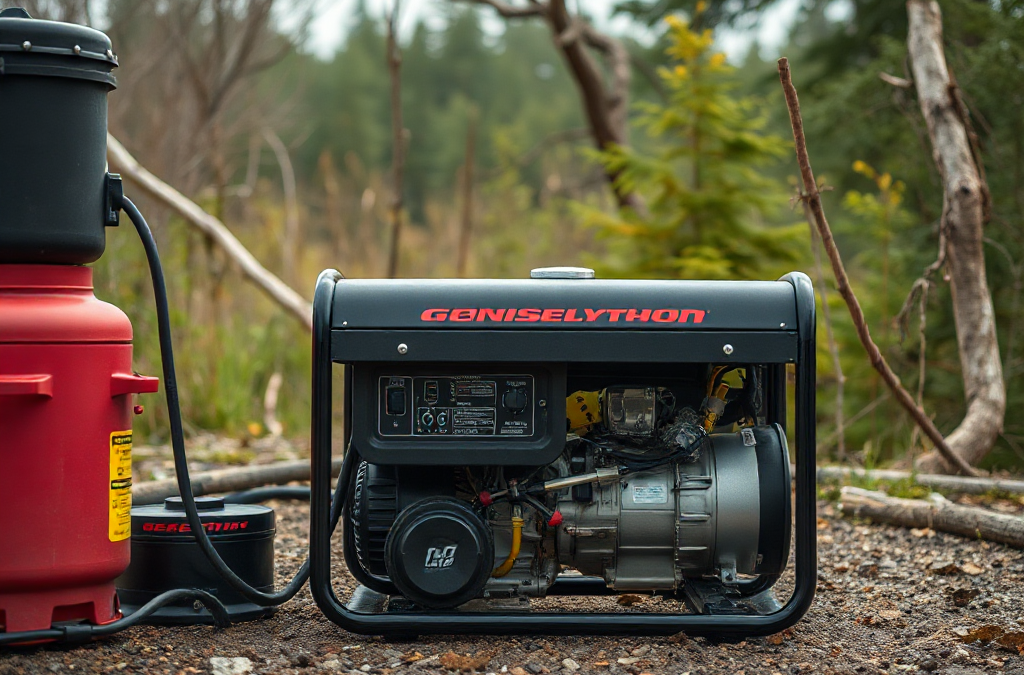
Build a Fuel Log That Reflects Actual Generator Use
Accurate fuel tracking begins with a repeatable record, not a guess based on the tank gauge. Before a long operating period, note the fuel level, hour-meter reading, generator model, fuel type, connected equipment, and the time the unit begins supplying power. At each refill, record the quantity added and the new hour-meter reading. A simple log makes it possible to distinguish fuel consumed by the engine from fuel that was spilled, transferred to another container, or left in an uncertain starting level.
The basic calculation is straightforward: fuel used divided by operating hours equals average fuel consumption per hour. If a generator uses 8 gallons during 10 hours of operation, its measured average is 0.8 gallons per hour. That number is useful only when the starting and ending measurements are credible. A partially filled tank, an inaccurate gauge, or a refill rounded to the nearest gallon can distort a short test.
For extended operation, use the same measuring method each time. A marked fuel container or a documented pump reading is generally more useful than estimating from a translucent tank. Record unusual events such as a shutdown, transfer switch change, extended idling period, or load being added. These details explain why two apparently similar shifts may show different results.
A common mistake is logging only the total number of hours. Runtime without fuel volume cannot reveal whether consumption is changing. Another weak assumption is treating the manual’s maximum runtime as a guaranteed operating figure; published runtime often depends on a stated load, a new engine, and favorable conditions. Your own log should become the primary planning reference, while the manual remains a technical baseline.
Measure Consumption Across Different Electrical Loads
Electrical load is usually the most important operating variable in a fuel-consumption record. A generator powering a refrigerator, lights, communications equipment, and a pump will not use fuel at the same rate as the same unit running a heater, compressor, or large well pump. Track the approximate wattage or amperage of connected equipment when possible, and record when major loads start or stop.
Load does not always rise in a perfectly linear relationship with fuel use. Engines have a baseline fuel demand whenever they are running, so a lightly loaded unit may consume a substantial amount of fuel while producing little useful power. At higher loads, fuel use normally increases as the engine supplies more energy, but operating near the generator’s continuous rating can create heat, voltage, and maintenance concerns. The useful comparison is not simply “low load versus high load”; it is measured gallons per hour alongside the work the generator is actually doing.

Consider a household that runs a freezer and battery charger for several hours, then briefly operates a sump pump and microwave. The average load may look modest, yet the pump’s starting surge can affect engine speed and cause a short period of higher fuel use. A separate record for steady loads and intermittent heavy loads gives a clearer picture than a single daily average.
Power meters, generator displays, or a properly installed energy monitor can improve the record, but they are not mandatory for useful tracking. A practical approach is to create three operating categories: standby or light load, normal essential load, and heavy or surge-prone load. Measure each category over enough time to smooth out brief starts and stops. Do not add loads merely to make a test convenient; prioritize equipment the generator is intended to support.
- Light load: record idle-like operation and note whether the generator is cycling equipment.
- Normal load: represent the appliances and circuits normally needed during the outage.
- Heavy load: document large motors, heating elements, pumps, or simultaneous starts separately.
Linking tracking fuel consumption during prolonged generator operation to load conditions prevents a misleading conclusion such as “the generator suddenly became inefficient” when the actual cause was a newly connected appliance.
Turn Fuel Records Into Reliable Runtime Forecasts
A runtime forecast should use measured consumption plus a deliberate fuel reserve. Start with the usable fuel available, not the tank’s advertised capacity. Some fuel may remain below the pickup point, and operating until the tank is empty can introduce air into the fuel system or stop power at an inconvenient moment. Divide usable gallons by the observed gallons-per-hour figure for the relevant load category.
For example, if 12 usable gallons remain and the generator consumes 0.65 gallons per hour under the current essential load, the theoretical runtime is about 18 hours. That is not a promise. A cautious forecast should account for changing loads, weather, imperfect measurements, and the need to refuel before the tank is nearly empty. If a pump or heating appliance may be added later, use the higher measured rate rather than the light-load rate.
Separate short-term forecasting from supply planning. Short-term forecasting answers when the next refill may be needed. Supply planning asks whether the available fuel will cover the expected outage, whether fuel can be obtained safely, and whether storage arrangements are suitable for the fuel and location. A spreadsheet can calculate both, but the inputs must be updated after every meaningful change in use.
Forecasts become unreliable when users average together unrelated conditions. A six-hour low-load test should not be used to predict a night when a well pump, refrigerator, and space heater will cycle. Likewise, a brief heavy-load test may overstate the fuel needed for a mostly quiet overnight period. Keep separate rates for distinct operating patterns and label each figure with the load, temperature, and maintenance condition when those details could matter.
A useful refill trigger is based on time and reserve, not only on the gauge. For instance, schedule a check when the calculated remaining runtime reaches the next practical refill window, then verify the estimate against the physical fuel level. The gauge is a warning instrument, while the log supplies the trend. Comparing both helps expose a faulty sender or an unexpectedly changing consumption rate.
Spot Consumption Changes Before They Become Failures
A rising gallons-per-hour figure deserves investigation, especially when the electrical load has not changed. Engines may consume more fuel because of restricted airflow, poor maintenance, fuel-system problems, overloading, excessive idling, or operating conditions that differ from the original baseline. The record matters because it shows whether the change occurred suddenly after an event or gradually over several operating periods.
Begin by checking the simple explanations. Confirm that the hour meter is working, the refill amount was measured correctly, and the connected equipment has not changed. Inspect for fuel leakage, unusual exhaust, unstable engine speed, difficult starting, or visible damage. Review the air filter, oil level, cooling airflow, and service schedule according to the manufacturer’s instructions. Do not bypass guards or open hot components while the generator is running.
A scenario illustrates the value of trend data. Suppose a unit normally uses 0.7 gallons per hour at its ordinary load but records a higher rate during two consecutive shifts. If the load monitor shows the same demand, the owner can investigate maintenance and leakage before the tank empties unexpectedly. If the increase began when a refrigerator and pump began cycling together, the apparent fault may instead be a changed duty cycle.
Low consumption is not automatically good news. A generator that is producing less power because a circuit has tripped, an appliance has disconnected, or the engine is failing to carry load may use less fuel while also failing its purpose. Compare fuel data with output, voltage behavior, engine sound, and the equipment actually operating. Consumption should be interpreted as part of a performance record, not as a standalone score.
Keep a dated baseline after maintenance and after any major change in connected equipment. Link each abnormal entry to what happened next, such as cleaning the filter, removing an unnecessary load, correcting a leak, or arranging professional service. That history is more useful than a vague note that the generator “seemed thirsty.”
Refill Decisions, Storage Limits, And Operating Safety
Fuel records are most valuable when they change behavior before a shortage or hazardous refill. Set a personal minimum reserve based on the generator’s measured rate, the importance of the connected loads, and the time required to obtain more fuel. A unit supporting a sump pump during severe weather may justify a larger operational buffer than one serving only occasional lighting, because an unplanned shutdown could have greater consequences.
Refueling requires a cooled, shut-down generator in a suitable outdoor location, with ignition sources controlled and the fuel container handled according to its labeling and local requirements. Never store fuel in an occupied living area or treat a generator fuel tank as a long-term storage solution. Follow the generator and fuel-container instructions for fuel type, stabilizer use, inspection, and disposal of degraded fuel. Carbon monoxide safety remains separate from fuel tracking: operate the generator outdoors and away from doors, windows, and ventilation openings as directed by official safety guidance.
Use a compact operating checklist before a prolonged run:
- Record the hour-meter reading and measured starting fuel.
- Confirm the connected load and identify equipment with motor-start surges.
- Inspect for leaks, blocked airflow, loose connections, and warning indicators.
- Log every refill, shutdown, load change, and unusual engine behavior.
- Recalculate the next refill window using the latest load-specific rate.
Do not confuse a large reserve with unlimited readiness. Fuel ages, containers require inspection, and a generator may need service before the stored supply is consumed. A smaller, well-rotated supply with reliable records can be more useful than a larger quantity that is poorly labeled or has an unknown age. The practical goal of tracking fuel consumption during prolonged generator operation is dependable decision-making: knowing how much fuel is usable, how fast it is being consumed, and when continued operation should give way to maintenance or a controlled shutdown.
For equipment-specific fuel rates, maintenance intervals, fuel specifications, and operating limits, consult the generator manufacturer’s current owner’s manual. For fire, carbon monoxide, and generator placement guidance, use official information from agencies such as the U.S. Consumer Product Safety Commission, the U.S. Environmental Protection Agency, or local fire authorities rather than relying on an unofficial runtime chart.
Frequently Asked Questions
What is the simplest way to calculate generator fuel consumption?
Measure the fuel added during a known operating period, then divide gallons used by hours run. Record the electrical load because the result applies only to similar conditions.
Why can a generator use more fuel than its runtime estimate suggests?
Runtime estimates may assume a particular load and operating condition. Added appliances, motor-start surges, poor maintenance, leaks, cold weather, or inaccurate fuel measurements can raise actual consumption.
Should fuel use be tracked at light and heavy loads separately?
Yes. Separate load-specific rates are more useful than one average because a generator’s baseline engine demand and changing appliance cycles can make fuel use vary considerably.
How much reserve fuel should be kept?
Keep enough usable fuel to cover the next practical refill opportunity plus a margin for changing loads and measurement uncertainty. The exact reserve depends on access to fuel, generator demand, and the consequences of shutdown.
What does a sudden rise in fuel consumption indicate?
First verify the refill measurement, hour meter, and connected load. If those are unchanged, inspect for leaks, airflow restrictions, overload, poor engine performance, or other maintenance issues before continuing a long run.
Further Reading
Authoritative Sources
- Investor.gov
investor.govSEC investor education resources for evaluating financial products and risk.
- FINRA Investor Insights
finra.orgInvestor education, broker-check tools, and financial decision resources.
- Consumer Financial Protection Bureau
consumerfinance.govConsumer guidance on credit, debt, lending, and financial products.
- Internal Revenue Service
irs.govOfficial tax guidance, forms, and compliance information.
Conclusion
Reliable generator fuel planning comes from measured operating data, not a gauge reading or a single number in a manual. Record fuel volume and hours together, separate light, normal, and heavy-load conditions, and update the forecast whenever appliances or operating patterns change. Treat rising consumption as a diagnostic clue, but compare it with electrical output and engine behavior before assuming a mechanical fault. Refuel early enough to preserve a practical reserve, and keep fuel handling, ventilation, storage, and maintenance requirements separate from the arithmetic. After the next operating period, review the log for a usable gallons-per-hour baseline and mark the refill point that fits your actual access to fuel. That small record can prevent both an avoidable shutdown and an unnecessary overestimate of supply needs.
Related Content
- Preparedness for Uncertain Times: Essential Strategies for Building Resilience
- When is it best to run emergency practice drills?
- PREPARE Magazine – What You Need to Prepare for the Future
- Basic Prepping Tips: Essential Foods and Supplies for Beginners
- Storm Survival Kits: 9 Lifesaving Parts Of Equipment




