
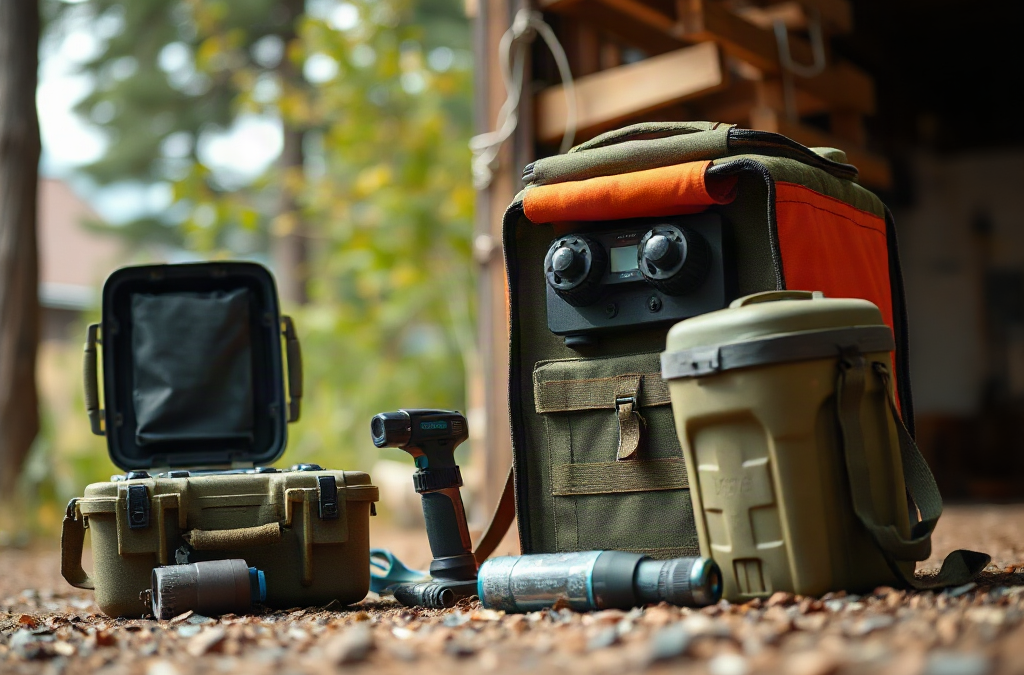
Preparedness equipment chosen for portability and durability should combine low carry weight with materials, closures, power systems, and repair features that withstand repeated use. Prioritize compact water treatment, layered lighting, a weather-resistant communication method, adaptable first-aid supplies, and tools with replaceable batteries or simple manual operation. Test packed weight by carrying the loaded setup before an emergency, because equipment that stays at home is not portable in practice. Avoid judging durability by rugged-looking shells alone: inspect seams, hinges, connectors, battery access, and replacement-part availability. A modular loadout usually outperforms one oversized container because it lets you match supplies to a commute, vehicle trip, evacuation, or short disruption.
What Portability and Durability Mean in Practice
Portable preparedness equipment is useful only when a person can carry, access, and deploy it under the conditions it was selected for. A compact bag for a daily commute has different requirements from a vehicle-based supply case. The first may need a slim profile, quiet zippers, and a comfortable harness; the second can accommodate heavier water containers, larger tools, and spare power banks. Treating both as the same loadout usually produces either an uncomfortable bag or an unnecessarily limited vehicle kit.
Durability refers to more than a hard exterior. Repeated opening, vibration in a car, moisture exposure, temperature changes, and rough handling place stress on stitching, buckles, cable connections, seals, and battery compartments. A tool may survive a drop but fail when its small latch breaks or its proprietary charging cable is lost. For that reason, inspect the parts that enable use, not just the housing. The Preparedness equipment chosen for portability and durability should remain functional after ordinary wear, cleaning, repacking, and transport.
A practical way to judge the balance is to compare carried weight with useful capability. A compact headlamp may be more valuable than a large lantern when both provide adequate area lighting, because the headlamp leaves both hands free. A folding saw may offer more field utility than a heavy axe for a person who is not equipped to transport or safely swing the axe. The lighter option is not automatically better; it is better when its limitations match the intended task.
Before buying, define the movement scenario: walking several miles, moving from a damaged building to a vehicle, working from home during a utility outage, or supporting a household for several days. Then identify what must be carried on the body, what can stay in a vehicle, and what belongs in a home reserve. That separation prevents the common mistake of forcing every useful item into one overloaded pack.

How to Choose Equipment by Function and Failure Risk
Function should determine the equipment category before brand, color, or accessory count. Start with the tasks that become difficult when normal services fail: obtaining safe drinking water, seeing after dark, communicating, treating minor injuries, staying warm and dry, opening or securing access points, and charging essential devices. Each function deserves a primary method and, when failure would create serious difficulty, a simpler backup.
Water treatment illustrates the tradeoff clearly. A compact filter can reduce the burden of carrying stored water, but its performance depends on the water source, filter condition, and treatment limits stated by the manufacturer. Purification tablets weigh little and provide a separate method, yet they may involve waiting time, taste changes, or restrictions for particular contaminants. Carrying both can be sensible for mobile use, while a household reserve may place greater emphasis on stored water and suitable containers. Do not assume that a small filter handles every water hazard.
Lighting benefits from layered selection rather than one impressive device. A headlamp supports hands-on work, a small flashlight provides directional checking, and a modest area light helps a room function. Select common battery formats when possible and store protected spares separately. Rechargeable devices can be efficient during routine use, but they need a charging plan; a manual or battery-powered fallback may be more useful during a prolonged outage.
Communication equipment requires similar realism. A radio, phone power bank, charging cable, and written contact information address different failure points. A power bank is not a communication system if it is empty, incompatible with the phone, or packed where it cannot be reached. Test cables with the actual devices, mark battery types, and keep essential contacts available without network access. A weather-resistant radio can provide useful alerts, but it does not replace local knowledge, a meeting arrangement, or a way to signal people nearby.
Use a short priority check before adding secondary tools:
- Immediate survival: water, appropriate food access, warmth, lighting, and basic first aid.
- Movement and access: footwear, gloves, eye protection, a simple cutting tool, and needed medication supplies.
- Information and power: charging, radio access, paper notes, and spare batteries.
- Recovery support: repair tape, cordage, sanitation items, and small replacement parts.
The failure mode matters as much as the intended use. Choose a backup when the primary item depends on one battery, one connector, one moving seal, or a technique nobody has practiced. This approach keeps the loadout focused without confusing redundancy with duplication.
Materials, Maintenance, and Real-World Testing
Durability is best assessed through construction details and repeated use, not marketing language. Examine fabric denier or comparable material information, reinforced stress points, stitching consistency, zipper tracks, buckle replacement options, and whether the product can be cleaned without damaging its working parts. For hard cases, check hinge alignment, gasket compression, handle attachment, and interior organization. A waterproof claim may apply only under specific conditions, so read the manufacturer’s stated limits rather than treating it as permission for submersion.
Portability also depends on how equipment is packed. Dense items positioned far from the back can make a bag feel heavier than their scale suggests. Sharp tools need protective covers, liquids need leak-resistant secondary containment, and small items should not be allowed to migrate into the bottom of a compartment. Pack frequently used equipment where it can be reached without emptying the entire load. A durable item that is difficult to retrieve may be ignored at the moment it is needed.
Conduct a staged test before relying on the setup. Carry the loaded bag on a normal walk, open it in low light, replace its batteries, operate its water treatment method, and use the tools while wearing the gloves intended for field conditions. For a vehicle case, secure it against movement, expose it to ordinary temperature variation, and inspect it after travel. A household can also conduct a timed packing exercise to reveal which items are confusing, inaccessible, or unnecessarily duplicated.
Signs of a sound setup include stable straps, protected components, clearly labeled supplies, and equipment that can be operated without searching for a manual. Warning signs include cracked plastic, swelling batteries, stiff zippers, loose tool heads, frayed cordage, corroded contacts, and accessories that fit only one discontinued device. Replace or repair those parts before increasing the kit’s size. Maintenance is often more valuable than purchasing a tougher replacement for an item that has never been tested.
Choose materials according to exposure rather than prestige. A coated fabric may be lighter and adequate for a commuter kit, while a rigid case may make sense for electronics stored in a vehicle. Metal can provide strength but add weight and corrosion concerns. Plastic can resist moisture while becoming brittle under some conditions. There is no universally durable material; suitability depends on stress, weather, handling, and repair options.
Building a Modular Loadout Without Excess Weight
A modular loadout divides supplies by use and location so that portability does not require sacrificing capability. A small personal module can cover immediate needs during travel, a vehicle module can carry heavier tools and water, and a home module can hold bulkier reserves. This structure also makes inspection easier because each module has a clear purpose rather than becoming a miscellaneous container.
Begin with the smallest module that supports the most likely movement scenario. It might include identification copies, essential medication information, water treatment, a compact light, a phone cable and battery, a few first-aid items, gloves, and weather protection. Add weight only when it solves a defined problem. A large multitool may replace several narrow tools, but it may be less suitable than dedicated equipment for repeated work. Conversely, carrying separate tools for every possibility can make the pack too heavy to move efficiently.
Use a simple decision test for each item: What task does it perform? How often might that task occur? What happens if it fails? Is there another item already present that performs most of the same job? This test favors adaptable equipment such as strong cordage, repair tape, protective gloves, and a light that accepts readily available batteries, while discouraging novelty gadgets with narrow uses.
Consider the user, not an imagined ideal carrier. A child, older adult, or person with limited strength may need lighter containers, easier closures, and supplies divided across several bags. Someone traveling by bicycle may value low bulk and secure attachment points more than rugged hard cases. Someone operating from a vehicle may prioritize organization, temperature protection, and safe restraint. The equipment described in Preparedness equipment chosen for portability and durability should fit the person’s mobility, storage space, climate, and ability to maintain it.
Review the modules on a fixed schedule tied to seasons or routine changes. Replace expired consumables, recharge stored power sources according to their instructions, inspect batteries for leakage, and verify that clothing still fits. Rotate frequently used items back into normal household use when appropriate, then replace them with fresh stock. A module that remains untouched for years may appear complete while containing dead batteries, degraded seals, or clothing unsuitable for current conditions.
Common Buying Mistakes and Better Alternatives
The most common mistake is equating rugged appearance with dependable performance. Thick cases and tactical styling can increase mass without improving the specific failure points that matter. A lighter bag with reinforced seams, repairable closures, and sensible internal organization may serve a walking evacuation better than a heavier molded case. Compare construction and maintenance demands rather than judging by visual toughness.
Another error is buying for a dramatic scenario while neglecting ordinary disruptions. Equipment that supports a power outage, vehicle delay, severe weather, or temporary water interruption is more likely to be used and tested. Those routine scenarios reveal whether the kit is comfortable, understandable, and maintained. Specialized equipment can be added later when a real need, skill level, or environment justifies it.
Overpacking creates its own risk. A carrier may remove the bag from regular use, leave it in an inaccessible location, or become fatigued during movement. Reduce duplication first, not essential function. If two lights perform the same role, keep the more reliable one and use the freed space for batteries, a protective case, or a needed consumable. If redundancy is necessary, make the backup meaningfully different, such as manual operation instead of another rechargeable device.
Finally, avoid buying equipment that cannot be supported locally. Proprietary batteries, obscure fittings, and nonstandard charging systems may work well until a component is lost. Favor products with clear instructions, replaceable parts, ordinary consumables, and a service life that can be extended through cleaning and repair. A careful comparison of Preparedness equipment chosen for portability and durability should end with a test, not a checkout receipt.
Frequently Asked Questions
Should portable preparedness equipment be stored in one large bag?
Usually not. Separate personal, vehicle, and home modules so each load matches the distance, carrier, and likely task.
How can I test whether a kit is genuinely portable?
Carry the fully loaded kit on a realistic walk, climb or use stairs if relevant, and check whether essential items remain accessible without unpacking everything.
Is a waterproof hard case always the most durable choice?
No. A hard case may protect electronics well but add weight and bulk. A reinforced fabric bag may be more suitable when frequent carrying matters.
What equipment deserves a backup?
Back up items whose failure would stop a critical function, such as lighting, water treatment, charging, or communication. Use a different operating method when practical.
How often should preparedness equipment be inspected?
Inspect it seasonally and after use or travel. Check batteries, seals, closures, consumables, fit, corrosion, and whether each device still works with its accessories.
Further Reading
Authoritative Sources
- Build a Kit
ready.govProvides government guidance on assembling supplies for household and evacuation needs
- Individuals and Communities
fema.govOffers preparedness information that can help readers match equipment to household risks and local conditions
Conclusion
Good preparedness equipment earns its place by remaining usable when it is carried, stored, handled, and maintained over time. Select around real tasks rather than attractive features: water access, lighting, communication, first aid, protection from weather, and basic repair. Keep the personal load light enough to move with confidence, reserve heavier items for vehicles or home storage, and choose backups that fail differently from the primary tool. Test every module in the conditions it is meant to serve, then correct weak closures, dead batteries, awkward packing, and unnecessary duplication. Portability and durability are not competing labels; they are practical qualities measured by whether the equipment reaches the user intact, works without confusion, and can be maintained after repeated use.
Related Content
- How to Create a Family Emergency Plan That Works: Essential Steps and Considerations
- Why You Should Have a Bug-Out Bag for Your Car
- The Ultimate Guide to a Self Reliant Preparedness Plan You Can Trust in 2025
- Urban Survival Skills: Staying Safe in Cities
- From Natural Disasters to Power Outages: Your Complete Emergency Kit Checklist




