
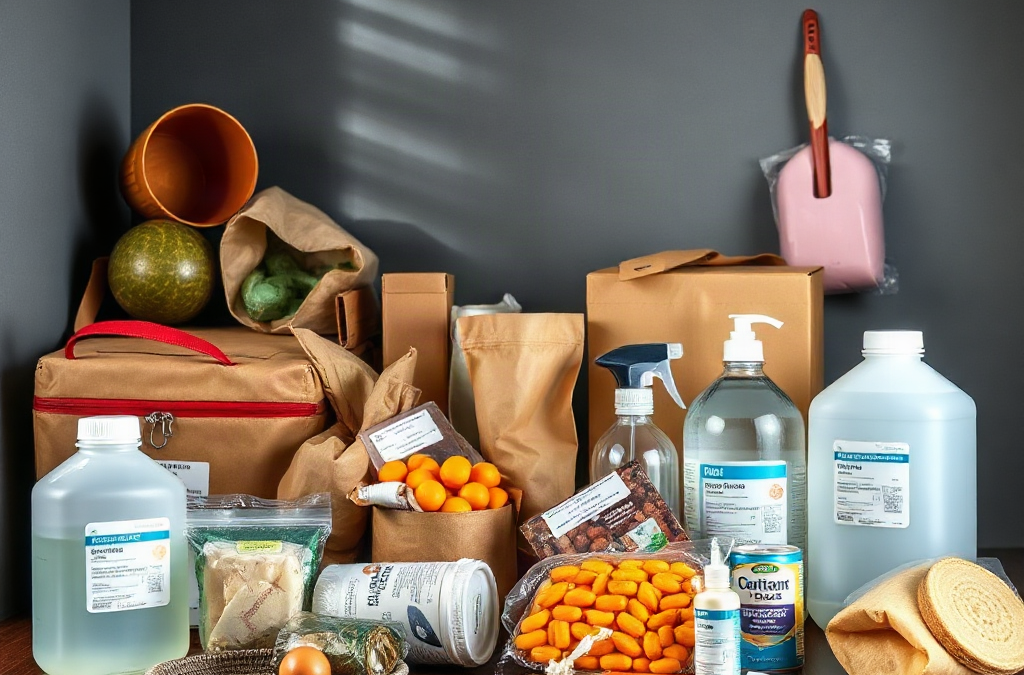
Pandemic preparedness supplies for extended isolation should cover shelf-stable meals, safe drinking water, prescription continuity, hygiene, cleaning, communication, and basic comfort for the period your household may need to remain home. Choose foods that require little refrigeration, store personal medications and health records, and include soap, disinfectant, masks, gloves, tissues, waste bags, and laundry supplies. A thermometer, first-aid materials, chargers, and a way to monitor official health guidance also reduce avoidable problems. The common mistake is buying large quantities of one category while overlooking water, medication refills, pet needs, or waste management. Rotate supplies and tailor quantities to household members, medical needs, storage space, and local guidance.
Set a Realistic Isolation Supply Baseline
Extended isolation changes the purpose of emergency supplies. The goal is not to create an extreme stockpile; it is to reduce unnecessary trips outside while preserving safe meals, medication access, sanitation, and basic household function. A household that can manage several weeks at home may need different items from a person living alone, a family with an infant, or someone who depends on refrigerated medicine.
Begin by estimating the people, animals, and routines that supplies must support. Record prescription names, refill dates, dietary restrictions, allergies, mobility needs, and the equipment that requires electricity. Include ordinary items that are easy to overlook, such as contact-lens solution, menstrual products, infant formula, pet food, glasses, hearing-aid batteries, and incontinence supplies. These gaps become more disruptive than a shortage of novelty preparedness gear.
Storage space and household budget also shape sensible choices. A compact apartment may favor concentrated cleaning products, stackable cartons, and foods that can be prepared with one pot. A larger home may allow bulk purchases, but volume still creates expiration, pest, and rotation problems. Buying more is not automatically safer if the supplies cannot be used, inspected, or replaced.
A useful baseline includes drinking water, familiar foods, medicine and first-aid materials, soap and toiletries, cleaning products, waste bags, lighting, charging equipment, and a method for receiving official updates. Review the Pandemic preparedness supplies for extended isolation needs of each household member rather than copying a generic shopping cart. The common failure is treating isolation as a food-only problem when medication, sanitation, and information access determine whether the household can function.

Choose Food, Water, and Medication for Homebound Days
Food for extended isolation should be familiar, nutritionally varied, easy to prepare, and realistic for the available cooking equipment. Shelf-stable beans, canned fish or poultry, canned vegetables, fruit, oats, rice, pasta, whole-grain crackers, nut or seed butters, powdered milk, and low-sodium soups can form a flexible base. Frozen foods are useful when electricity is dependable, but they should complement rather than replace shelf-stable options.
Prioritize foods that household members will actually eat. A large quantity of an unfamiliar product may look efficient but can create waste, digestive discomfort, or low intake during illness. Combine carbohydrates with protein and include fruits or vegetables in forms that require little preparation. Canned goods may be practical, while highly processed snacks can provide convenience without supplying a balanced meal pattern. People with diabetes, kidney disease, food allergies, or other medical needs should adapt choices to advice from their clinician.
Water planning requires more than purchasing containers. Consider drinking, cooking, medication use, handwashing, and the possibility that tap service or access to stores could be disrupted. Store water in clean, food-safe containers and follow the product label or local public-health guidance for replacement and handling. If a household uses a filtration device, keep the correct replacement cartridge and know whether it addresses the contaminant of concern; a filter is not a universal substitute for treated water.
Medication continuity deserves early attention because a missed refill cannot always be corrected quickly. Keep an updated medication list, prescriber and pharmacy details, and a small buffer obtained through lawful, pharmacist-approved refilling arrangements. Do not change doses or ration medicines to stretch a supply. Include nonprescription products the household routinely uses, such as fever-monitoring equipment or oral rehydration products, but follow labels and seek medical advice when symptoms are severe or unusual.
For a practical purchasing sequence, secure the items with the fewest substitutes first:
- Prescriptions, medical devices, contact supplies, and medically appropriate foods.
- Drinking water and meals that work with the household’s actual stove or appliance.
- Basic toiletries, soap, tissues, and laundry supplies.
- Flexible pantry ingredients, comfort foods, and replacement batteries.
The common mistake is buying dense bulk foods without checking cooking fuel, can-openers, storage temperature, or dietary tolerance. A smaller pantry that can be opened and prepared safely is more useful than a larger one that depends on unavailable equipment. See Pandemic preparedness supplies for extended isolation alongside a written household inventory so purchases solve specific gaps.
Build Hygiene, Cleaning, and Waste Controls
Hygiene supplies reduce the practical burden of staying home and can help limit contamination when someone is ill. Hand soap, running water, tissues, toilet paper, toothpaste, bathing products, menstrual care items, disposable towels, and laundry detergent should be treated as core supplies rather than optional extras. Alcohol-based hand sanitizer may be useful when soap and water are not immediately available, but it does not replace routine handwashing when hands are visibly dirty.
Cleaning and disinfecting are different tasks. Cleaning removes dirt and some germs from a surface; disinfecting uses an appropriate product according to its label to address remaining microorganisms. Focus on frequently touched surfaces and areas contaminated by respiratory secretions or bodily fluids instead of repeatedly treating every object in the home. Ventilation, product contact time, and safe storage matter more than spraying large amounts.
Never mix bleach with ammonia, acids, or other cleaners, and do not transfer chemicals into unmarked containers. Keep products away from children, pets, food, and heat. Gloves can protect skin during cleaning, but they do not make careless handling safe. Follow the manufacturer’s directions, including dilution, ventilation, surface compatibility, and whether rinsing is required around food-contact areas.
Waste management becomes a genuine constraint during a long stay indoors. Line bins, keep extra bags available, separate sharps or medical waste according to local instructions, and wash hands after handling trash. If a household member is sick, use the approach recommended by local health authorities and avoid shaking laundry or linens unnecessarily. Ordinary washable cloths may be more sustainable than disposable wipes, while disposable products can be useful when laundry capacity is limited.
A common misconception is that more disinfectant always provides more protection. Excess product can damage surfaces, irritate breathing, and create poisoning hazards without improving the cleaning result. A measured routine works better: clean visible soil, use the correct product when disinfection is warranted, observe the label’s contact time, and store the chemical securely. The Pandemic preparedness supplies for extended isolation inventory should show not only what is present but where it is stored and how it is used.
Cover Power, Communication, Health, and Household Needs
Isolation supplies must keep essential routines working when a household cannot shop normally. A thermometer, basic first-aid materials, prescribed medical equipment, spare eyeglasses, chargers, power banks, flashlights, and batteries can address small failures before they become urgent. People who use oxygen equipment, powered mobility devices, refrigeration, or other electrically dependent technology should identify backup arrangements with their clinician, utility provider, or equipment supplier before an emergency.
Communication is a health and logistics tool. Keep phones charged, record important numbers on paper, and identify official channels for public-health notices, pharmacy changes, food assistance, and emergency services. A battery-powered radio may be useful where mobile service is unreliable. Do not rely on a single app, website, or device, especially if the home has limited internet access or a power outage is possible.
Comfort supplies deserve measured attention because prolonged confinement can disrupt sleep, work, caregiving, and mood. Include reading material, simple games, headphones, a basic schedule, and items that help children or older adults maintain familiar routines. These are not substitutes for medical or mental-health care, but they can reduce avoidable friction. A household with remote workers may prioritize a power bank and extension cord; a family caring for children may need washable activities and extra snacks.
Consider how supplies will be obtained if delivery is delayed. Keep a short contact list for relatives, neighbors, community organizations, pharmacies, and local assistance services. Arrange contactless drop-off instructions before they are needed, and confirm whether pets require prescription food or medication. The tradeoff is between convenience and resilience: disposable plates may conserve water during illness, while reusable dishes reduce waste when washing capacity is normal.
The failure mode here is preparing for a dramatic outage while ignoring ordinary continuity. A household may own flashlights yet lack charging cables, or have canned food without a manual opener. Test every critical item in its intended setting. If a backup device cannot power the needed equipment, or a communication plan depends on one person answering immediately, revise it before isolation begins.
Rotate and Test the Supplies Before They Matter
Preparedness supplies remain useful only when they are known, accessible, and within safe use dates. Place newer products behind older ones, label opened packages, and inspect stored water, batteries, medications, and cleaning products on a regular schedule. “Best by” dates often describe quality rather than an automatic safety cutoff, but damaged packaging, unusual odors, swelling cans, expired medicines, and degraded equipment require cautious handling and replacement.
Use normal household consumption to rotate pantry goods. Add stored beans to a planned meal, replace them during the next grocery trip, and note whether preparation was practical. This test can expose problems such as excessive sodium, missing spices, an unsuitable can opener, or a cooking method that consumes more fuel than expected. The same principle applies to hygiene supplies: verify that products fit the household’s skin sensitivities and that gloves are available in usable sizes.
Create a compact inventory with item, quantity, location, expiration or replacement date, and the person responsible for checking it. Keep critical medicines and medical information easy to retrieve rather than buried in a storage area. Separate supplies that are needed immediately from reserve items so a sick or fatigued person does not have to unpack the entire cache.
Reassess after every illness, trip, power interruption, or change in household membership. If food ran out first, increase the foods that were actually eaten; if sanitation was difficult, add laundry detergent, bags, or soap rather than simply buying more snacks. A useful readiness check is whether another adult could find the water, medications, cleaning products, chargers, and emergency contacts without asking where they are. That practical test reveals more than a long inventory alone.
Frequently Asked Questions
How much food should a household store for extended isolation?
Choose an amount based on household size, likely isolation duration, storage space, medical needs, and cooking access. Build a usable reserve gradually rather than purchasing food that will expire before it is eaten.
Should water be included in pandemic supplies?
Yes. Include drinking and cooking water, and consider handwashing or service interruptions. Store it in clean, food-safe containers and follow local or product-specific handling guidance.
Which cleaning products are most useful?
Hand soap, detergent, trash bags, and an appropriate surface disinfectant are practical priorities. Use each product according to its label and never mix household chemicals.
How can medication shortages be reduced?
Keep an updated medication list, request refills early when permitted, and ask a pharmacist about lawful continuity options. Do not alter doses or substitute medicines without professional advice.
What supplies are often forgotten?
Common omissions include can-openers, batteries, charging cables, pet supplies, menstrual products, glasses, infant items, waste bags, and foods compatible with medical or allergy-related restrictions.
Conclusion
A practical isolation reserve protects continuity rather than chasing an impressive quantity of goods. Start with medication access, drinking water, familiar meals, soap, sanitation products, waste supplies, and the equipment needed to communicate and manage health at home. Then tailor the reserve to children, older adults, pets, dietary restrictions, powered devices, and limited storage.
Use ordinary meals to rotate food, inspect containers and batteries, and test chargers, can-openers, thermometers, and cleaning routines before they are needed. Keep an inventory that another household member can understand, and replace items based on use rather than fear-driven buying. Official public-health guidance should determine illness-specific precautions, while a measured household system handles the everyday demands of staying isolated safely and comfortably.
Related Content
- Emergency Kits for Families: Tailoring Essentials
- The Challenges of Prepping in High-Density Areas: Navigating Space Constraints and Resource Limitations
- What You Need to Do Before a Wildfire Strikes
- What Changes When an Outage Crosses Into a Second Week: Supplies, Safety, and Recovery Decisions
- The Family Emergency Plan: Creating a Comprehensive Disaster Preparedness Strategy




