
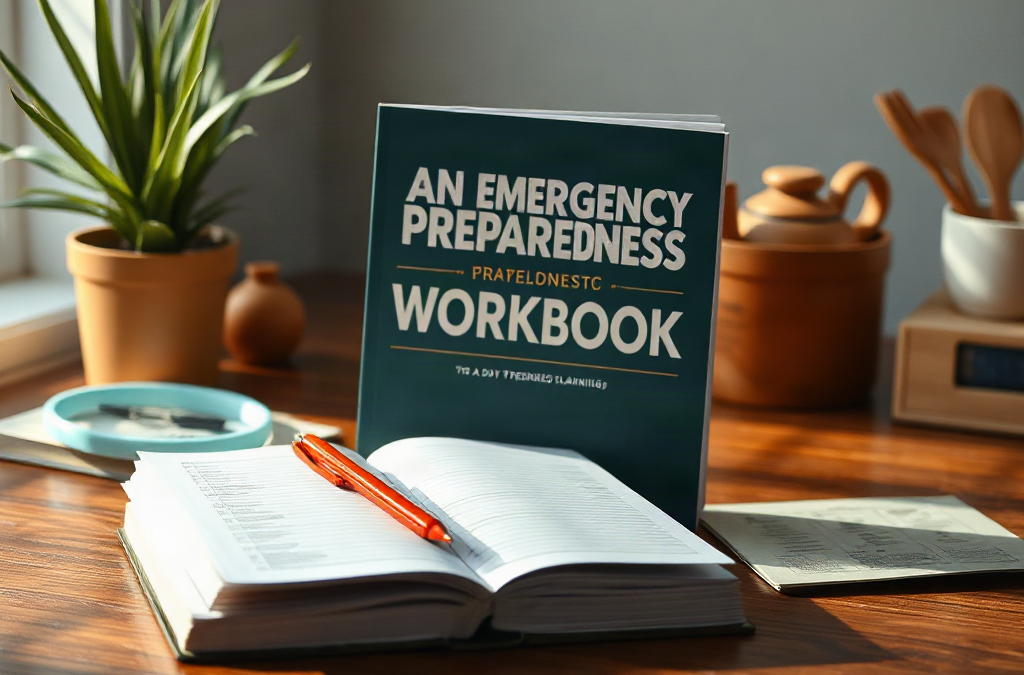
An emergency preparedness workbook for household planning turns broad safety advice into a usable household record covering contacts, evacuation routes, medical needs, food and water, utilities, and recovery tasks. Its value comes from assigning responsibilities, documenting location-specific risks, and testing the plan before a disruption occurs. A useful workbook includes a household profile, communication tree, two evacuation options, supply inventory, medication details, pet or mobility requirements, and review dates. Avoid treating stored supplies as the whole plan: an unpracticed route, outdated phone numbers, or inaccessible documents can undermine otherwise adequate preparation. Review the workbook after moves, changes in health, seasonal hazards, or major household changes.
Build the Workbook Around Household Decisions
A useful household workbook is a decision tool, not a collection of generic disaster facts. It should help people answer practical questions before stress and limited information make those questions harder: Who needs assistance? Where will everyone meet? Which hazards are plausible at this address? What can the household do if electricity, water, mobile service, or transportation is unavailable?
Begin with a household profile. Record names, preferred contact methods, work and school locations, medical considerations, allergies, mobility needs, language needs, pets, and the people authorized to collect children if normal routines are interrupted. Include a local contact and an out-of-area contact when appropriate. A relative who lives elsewhere may be easier to reach if local networks are congested, but that person should agree to the role rather than being listed without notice.
Risk assessment should be specific to the property and routine. A high-rise apartment, rural home, and suburban house may require different assumptions about elevators, wells, flood access, heating, and transportation. Note hazards such as severe weather, wildfire, flooding, extended utility outages, or hazardous-material incidents only when they are relevant to the household’s location and exposure. The goal is not to predict every event; it is to identify conditions that change the household’s actions.
A compact workbook can use one page for each decision area:

- People and responsibilities: who checks on whom, gathers supplies, contacts relatives, or handles animals.
- Locations and routes: home, workplace, school, meeting points, alternate roads, and accessible exits.
- Needs and constraints: prescriptions, assistive equipment, infant supplies, pet care, transportation, and important documents.
- Supplies and services: what is stored, where it is kept, what requires rotation, and which utilities need special shutoff knowledge.
A common failure is copying a template without translating it into household assignments. “Someone will gather the documents” is weaker than naming a person, location, backup person, and deadline. Use An emergency preparedness workbook for household planning as a living record: write in plain language, leave space for changes, and mark information that must be verified locally.
Document Communication, Evacuation, and Shelter Choices
Communication and movement decisions should be written as alternatives rather than a single ideal scenario. A household may need to shelter at home, leave quickly, or separate temporarily because work and school schedules do not align. The workbook should state what triggers each option and where people go next.
List at least two meeting places: one nearby for leaving the building or neighborhood and another outside the immediate area if access is restricted. Add addresses, landmarks, accessibility notes, parking limitations, and the person responsible for confirming arrival. A map or printed directions can be useful when battery power, internet access, or navigation services are unavailable. Do not assume the route used every day will remain open; identify an alternate route and the transportation required for each household member.
Communication instructions should include a short message format. A practical entry might specify the sender’s name, location, safety status, intended destination, and next check-in time. Record phone numbers, school or workplace contacts, and any local alert channels the household actually uses. Printed information matters because a phone may be lost, uncharged, damaged, or inaccessible to a child who needs to make contact.
Evacuation planning also has a timing tradeoff. Leaving early may reduce exposure to congestion and changing conditions, while waiting for more information may be appropriate when officials have not advised departure and the hazard is uncertain. The workbook should not invent its own authority; it should tell readers where official instructions will be checked and which household member monitors them. For a wildfire-prone area, for example, the plan may distinguish between preparing vehicles, moving pets, and departing when local authorities issue an evacuation notice.
The common mistake is choosing a meeting place that is familiar but operationally poor. A busy shopping center may close, become inaccessible, or lack a safe place to wait. Prefer locations with clear landmarks and a realistic way for children, older adults, people with disabilities, and pets to reach them. Connect these details with An emergency preparedness workbook for household planning, then test the plan with a short walk-through rather than assuming that written instructions are self-explanatory.
Turn Supplies and Medical Needs Into Trackable Tasks
Inventory pages are most useful when they connect supplies to people, conditions, and replenishment dates. A list that says “food” or “first-aid items” does not show whether the household can actually use what is stored. Record quantities, storage location, expiration or replacement dates, special preparation requirements, and the person responsible for checking the item.
Separate supplies by function. Drinking water, shelf-stable food, sanitation items, lighting, batteries, communication equipment, basic tools, first-aid materials, clothing, and document copies may be stored in different places. A home kit can be difficult to move, while a smaller grab-and-go bag should be light enough for the person carrying it. Keeping both options may be more practical than forcing every need into one container.
Food planning requires more than selecting products with long shelf lives. Include foods household members already eat, manual-open packaging where possible, and items that match allergies, infant feeding needs, or medical restrictions. Note whether cooking, refrigeration, or added water is required. A supply may appear adequate on paper but fail during a power outage if it depends on an appliance or fuel source that is unavailable.
Medical information deserves its own protected page. Record prescription names, dosing instructions as provided by the prescriber or label, pharmacy contact details, equipment needs, allergies, and insurance or care information that may be needed. Do not treat the workbook as a substitute for professional medical advice or assume that stored medication can be used indefinitely. Ask a pharmacist or clinician about appropriate refill planning and storage questions, especially when temperature or access is a concern.
Use a simple review table with four columns: item, location, condition, and next action. “Flashlight—hall closet—works—replace batteries in October” is more useful than “flashlight.” A common failure is hiding all supplies in a single inaccessible place. Water and heavier containers may be impossible for some household members to move, while critical documents stored in a locked room may not be available during an evacuation. Place items according to function and access, then use An emergency preparedness workbook for household planning to assign maintenance rather than relying on memory.
Test, Update, and Use the Workbook Under Pressure
A workbook becomes reliable when the household rehearses its decisions. Testing exposes assumptions that a written plan can conceal: a child may not know the meeting point, a pet carrier may be difficult to reach, a backup route may require a bridge, or a paper contact list may contain an old number.
Run a short, low-risk exercise rather than staging a dramatic event. Ask each person to locate the workbook, identify the nearest exit, find the communication page, and explain what they would take first. Then test one scenario, such as a nighttime power outage or a school closure that separates household members. Record the time required, points of confusion, missing items, and instructions nobody understood.
Review results by priority. A failed communication number and an inaccessible medication may deserve attention before adding another type of snack to the supply shelf. A plan is working when people can state their next action without searching through several pages. It is failing when responsibilities are vague, information conflicts, or the household depends on one person who may not be present.
Set review triggers instead of relying only on an annual date. Update the workbook after moving, changing jobs or schools, adding a pet, beginning a new treatment, replacing a vehicle, experiencing a local hazard, or changing household composition. A seasonal check can cover batteries, clothing, heating or cooling needs, food rotation, and route conditions. Keep a current digital copy if practical, but retain a printed version where it can be reached without internet access.
Privacy needs attention as well. The workbook may contain medical, contact, access, and identity information. Store it so household members can reach it while limiting unnecessary exposure, and avoid placing sensitive details in an openly visible vehicle. The final mistake is treating completion as success. A filled workbook that has never been discussed is less useful than a shorter plan understood by everyone. Schedule a brief review, make one correction, and repeat until the instructions fit the household’s actual abilities and constraints.
Frequently Asked Questions
What should an emergency preparedness workbook contain first?
Begin with household contacts, medical and mobility needs, meeting places, evacuation routes, communication steps, and assigned responsibilities. Supplies can then be matched to those documented needs.
Should the workbook be digital or printed?
Use both when practical. A digital copy is easy to update, while a printed copy remains available during power, internet, device, or account-access problems.
How often should household planning information be reviewed?
Review it on a regular schedule and after changes such as a move, new medication, altered work or school routines, a new pet, or a major equipment purchase.
How can a household test its plan without creating unnecessary risk?
Conduct a short walk-through: locate the workbook, identify exits, send a practice check-in, find essential supplies, and discuss one realistic outage or evacuation scenario.
What is a common mistake in household preparedness workbooks?
Leaving responsibilities vague is a frequent problem. Name a primary and backup person for key tasks, and verify that the assigned person can realistically perform them.
Conclusion
A household workbook earns its place when it reduces hesitation during a disruption. Give priority to information that changes immediate decisions: who needs help, where people meet, how they communicate, which route they use, and what medical or mobility constraints must be addressed. Add supplies as accountable tasks with locations, condition checks, and replacement dates rather than as an undated shopping list. Keep the document accessible, protect sensitive information, and review it whenever household circumstances change. The next useful action is small but specific: gather the household’s contacts and needs, assign one responsibility to each capable person, and run a short walk-through. Any confusion found during that exercise is a practical correction to make before an emergency exposes it.
Related Content
- How to Evacuate Safely During a Natural Disaster
- How to Determine the Right Amount of Food Storage: Factors to Consider and Practical Strategies
- Practical Ways to Reduce Anxiety During Uncertain Times
- Emergency Preparedness Lists Formatted for Printing With Priority Items, Home Supplies, and Evacuation Checks
- The Ultimate Guide to Preparedness for Disaster: 7 Effective Strategies for 2025




