
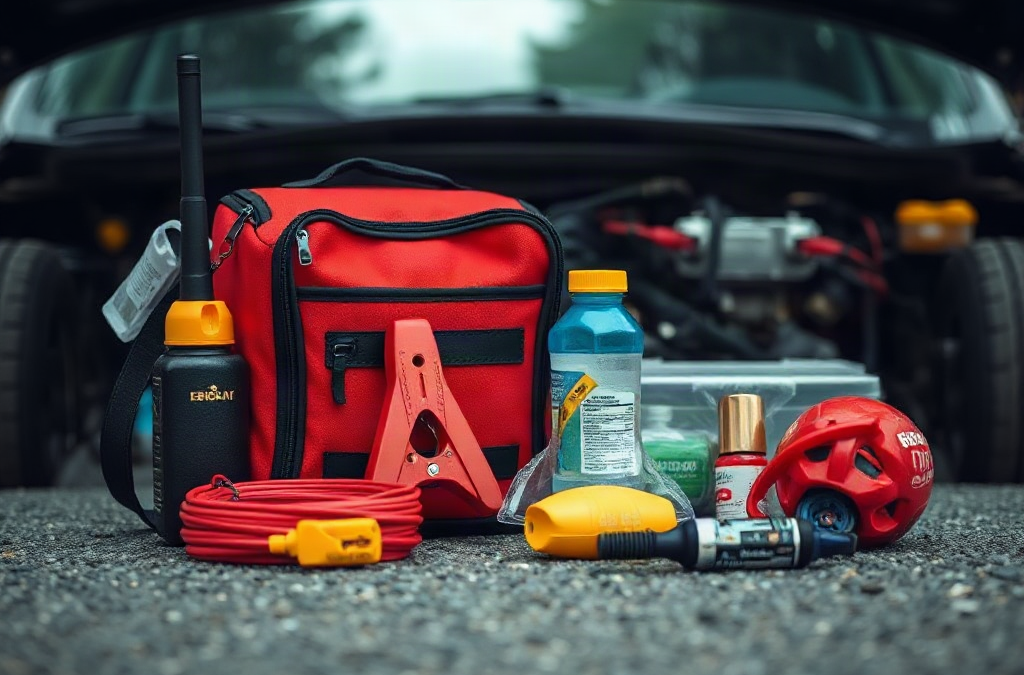
Jumpstart pack contents for roadside preparedness should cover safe battery assistance, visibility, communication, basic vehicle access, and weather exposure. Pack properly rated jumper cables or a charged jump starter, work gloves, eye protection, a flashlight, reflective warning devices, a phone charger, water, and a compact first-aid kit. A tire gauge, inflator, and simple tools can address minor problems, but they cannot replace roadside assistance for damaged tires, unsafe traffic conditions, or mechanical failures. Check the jump starter’s charge and cable condition regularly, keep supplies secured in the passenger area when possible, and never connect equipment by guesswork or work beside moving traffic.
What a Roadside Jumpstart Pack Should Do
A roadside jumpstart pack is a compact set of equipment for making a stalled vehicle safer and addressing a limited number of common problems. Its purpose is not to turn a driver into a mechanic. It should provide enough capability to restore power when a battery is discharged, make the vehicle visible to approaching traffic, support communication, and reduce exposure while help is arranged.
That distinction determines what belongs in the pack. Jumper cables may help when another vehicle is available, while a portable jump starter can work without a second vehicle but depends on battery charge and correct connection. Neither option repairs a failed alternator, a damaged battery, or an engine problem. A useful roadside preparedness pack therefore combines recovery equipment with warning and waiting supplies rather than treating the jump starter as the whole solution.
Location also changes the priority. A breakdown on a well-lit suburban street presents a different risk from a stop on a narrow shoulder, at night, during rain, or in extreme heat. In the second situation, reflective equipment, a reliable flashlight, a charged phone, and a way to contact roadside assistance may matter more than an expanded tool collection. Drivers should avoid unpacking beside traffic when moving to a safer location or remaining in the vehicle is the better choice.
A common mistake is buying a large emergency bag without checking whether its main device works with the vehicle. Some jump starters are unsuitable for larger engines, and some cables are too short or poorly insulated for convenient use. Read the vehicle and equipment instructions, confirm compatibility, and treat manufacturer limits as real limits rather than suggestions.

Core Battery and Visibility Equipment
The battery section deserves the most attention because an attempted jump involves electrical energy, awkward positioning, and traffic exposure. A dependable pack should contain either heavy-duty jumper cables or a portable jump starter, plus gloves and eye protection. Cables need intact insulation, clean clamps, and enough length to reach safely. A jump starter needs a charged internal battery, secure clamps, clear polarity markings, and a storage case that prevents accidental contact between terminals.
For a traditional jump, the order and connection points in the vehicle manual take priority. Drivers should park the assisting vehicle as instructed, switch off both vehicles before making connections, keep clamps from touching each other, and remove the cables in the specified reverse sequence. Hybrid and electric vehicles require extra care because their starting systems differ; the owner’s manual should identify whether the vehicle has an approved jump point and what the high-voltage system does not permit. Guessing can damage electronics or create a personal hazard.
Visibility equipment is just as important as the electrical device. Keep a high-visibility vest, a bright flashlight with spare batteries, and reflective warning triangles or equivalent warning devices where local rules and conditions permit. Hazard lights can help, but they are not a substitute for a flashlight or reflective marking when the vehicle is hard to see. A phone power bank and charging cable should be stored with the kit, not left in a separate drawer at home.
Choose between cables and a jump starter based on driving patterns. Cables are inexpensive and do not lose charge while stored, but they require another vehicle and a willing driver. A jump starter offers independence and is often more useful for a lone driver, although it must be recharged periodically and may fail if stored empty or in unsuitable temperatures. Carrying both is sensible for frequent long-distance driving if the added weight and maintenance are acceptable.
Items for Tires, Weather, and Personal Safety
A well-rounded roadside kit covers the problems that can leave someone waiting after the battery issue has been ruled out. Add a tire-pressure gauge, a vehicle-compatible inflator, and a tire sealant only when the product suits the tire and the manufacturer allows its use. A sealant can be a temporary measure for some small punctures, but it is not appropriate for every tire failure, sidewall damage, or a tire that has come off the rim. The spare tire, jack, and lug wrench should be checked separately because many drivers assume they are present without confirming their condition.
Weather supplies reduce exposure while assistance is delayed. Water, a compact blanket, hand warmers for cold conditions, sunscreen, and a small rain layer may be more practical than a bulky collection of tools. Include nonperishable snacks if occupants may wait for an extended period, especially on rural routes. A first-aid kit should contain basic wound-care supplies, but it should not encourage a driver to handle serious injuries instead of contacting emergency services.
Personal safety items should match the vehicle and passengers. Work gloves protect hands from hot, dirty, or sharp components; closed footwear is safer than sandals when inspecting a tire; and a seat-belt cutter or window-breaking tool may be considered if it can be stored where the driver can reach it. Keep medication, mobility aids, and child-specific needs in a separate regularly checked supply rather than assuming a generic kit covers them.
Tools require restraint. A screwdriver set, adjustable wrench, pliers, duct tape, cable ties, and a small utility light can support simple tasks such as securing a loose trim panel or replacing a fuse when the manual permits it. They will not make an unsafe roadside repair safe. The failure mode to avoid is spending time under a vehicle, near traffic, or in poor visibility because the kit contains tools. If smoke, fuel leakage, severe damage, a high-voltage warning, or an unsafe stopping position is present, move away from the hazard and request professional help.
How to Build, Store, and Check the Pack
Build the pack in priority order: make the vehicle visible, communicate your location, address a simple battery or tire issue, and remain protected while waiting. A compact checklist prevents expensive but less useful purchases from displacing essential items. Start with a charged jump starter or sound cables, flashlight, reflective warning equipment, gloves, phone charging gear, water, first aid, and the vehicle’s own spare-tire equipment. Add weather and passenger-specific supplies after those basics are covered.
- Inspect monthly: test the flashlight, check cable insulation and clamps, confirm the jump starter charge, and replace damaged or expired supplies.
- Inspect seasonally: review water, snacks, batteries, clothing, and temperature-sensitive equipment before hot or cold travel periods.
- Check before a trip: verify the spare tire’s pressure, locate the jack points, save roadside assistance details, and confirm the phone has a charging cable.
Storage involves a practical tradeoff. A trunk kit is protected from passengers and keeps the cabin clear, but it may be inaccessible if the trunk cannot open after a crash or if the vehicle is stopped on a dangerous shoulder. Keep the smallest critical items—phone power, flashlight, reflective vest, and emergency contact information—within reachable cabin storage, while heavier equipment can remain secured in the cargo area. Never allow loose tools or jump starters to become projectiles.
Practice matters more than collecting equipment. Read the jump starter instructions before an emergency and identify the approved battery terminals or jump points. Learn how to release the spare tire and jack without lifting the vehicle during practice. A useful test is whether a driver can locate the warning equipment in darkness, explain where to stand safely, and decide when not to attempt a repair. If those steps are unclear, another accessory will not solve the underlying problem.
Drivers should also record the vehicle’s assistance number, insurance contact, and location-sharing method. When calling, provide the road name or route, direction of travel, nearby landmarks, vehicle description, and whether anyone is injured or exposed to traffic. That information can shorten the handoff to a tow or emergency service. The related vehicle preparedness checklist should be reviewed whenever the vehicle, driver, or usual route changes.
Common Packing Mistakes and Better Priorities
The most frequent mistake is treating a jumpstart kit as a guarantee that the vehicle can continue. A successful restart does not prove the battery is healthy or that the charging system is functioning. If the engine starts and warning lights remain on, the vehicle may stop again. Arrange testing or professional assistance rather than repeatedly restarting and driving farther from help.
Another mistake is overlooking basic visibility. Drivers often buy cables first and discover that the flashlight has dead batteries, the vest is buried under luggage, or the reflective warning equipment is unavailable. Put safety and communication items where they can be reached without standing in traffic. If the shoulder is narrow, traffic is fast, or weather is severe, staying belted inside with hazard lights and contacting assistance may be safer than opening the hood.
Do not rely on online connection diagrams when the vehicle manual gives different instructions. Battery layouts vary, and modern vehicles may have designated terminals, sensitive electronics, or special procedures. A portable jump starter also needs careful handling: verify polarity, keep the clamps separated until connected, and disconnect it promptly after the vehicle is running according to its instructions.
The best pack is proportionate to the driver’s real conditions. A commuter in a populated area may prioritize a charged phone, visibility gear, and a reliable jump starter. A rural traveler may add more water, warm clothing, food, and navigation backup. A household with children or medical needs should adapt the contents around those occupants. Revisit the pack after every use and replace what was consumed instead of assuming the kit is ready because it remains in the vehicle.
For a final review, use the roadside equipment checklist and ask three questions: Can I be seen? Can I call and power my phone? Can I address a simple battery or tire problem without creating a greater hazard? If the answer to any question is no, that gap deserves priority over adding another specialized tool.
For vehicle-specific jump procedures, tire limitations, and designated connection points, consult the owner’s manual and the instructions supplied with the jump starter. Local transportation agencies and recognized roadside-assistance organizations can also provide current advice about stopping safely, warning approaching traffic, and requesting help.
Frequently Asked Questions
Are jumper cables or a portable jump starter better?
Cables are inexpensive but require another vehicle. A portable jump starter works independently, provided it is compatible, charged, and used according to its instructions. Frequent long-distance drivers may carry both.
Should a jumpstart pack include a spare tire?
The vehicle’s spare tire, jack, and lug wrench are separate from the pack but should be checked as part of roadside preparedness. Confirm that the spare is inflated and that the tools fit the vehicle.
Where should the kit be stored?
Store heavy equipment securely in the cargo area, but keep a flashlight, reflective vest, phone charger, and emergency contact details reachable from the cabin when practical.
Can a jump starter fix a failing battery?
It may provide enough power for a temporary start, but it does not repair a damaged battery or charging system. Repeated failure, warning lights, or rapid shutdown calls for professional diagnosis.
What should I do if the vehicle stops in an unsafe place?
Prioritize people over repairs. Turn on hazard lights, contact emergency or roadside assistance, move to a safer location when possible, and avoid standing near moving traffic or attempting work in a dangerous position.
Conclusion
A roadside jumpstart pack should solve a narrow problem without creating a larger one. Give priority to a compatible, maintained power solution, clear visibility equipment, phone power, gloves, water, basic first aid, and weather protection. Keep the vehicle’s spare-tire equipment ready, but recognize when a puncture, electrical fault, collision, fuel leak, or unsafe shoulder requires professional assistance. Test the jump starter, inspect cables and batteries, and place critical items where they can be reached quickly. Before the next long trip, read the vehicle manual, check the route and weather, and confirm that every regular passenger’s needs are covered. The strongest kit is not the largest one; it is the one that supports a safe decision when a restart is possible and helps the driver recognize when it is not.




