
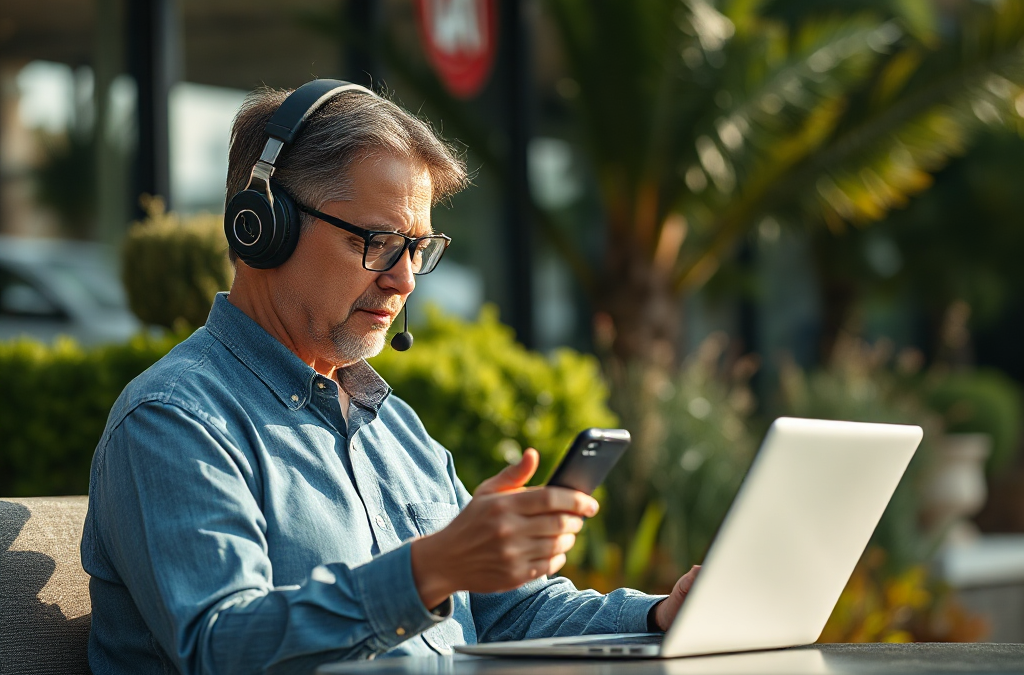
Text messages may work after voice calls fail because SMS uses a small, store-and-forward data path that can succeed when a voice connection cannot establish or remain stable. Voice calls need continuous two-way radio capacity, while a text can wait briefly for a signal, use a different network channel, or travel through Wi-Fi messaging when cellular voice service is impaired. Congestion, weak indoor coverage, damaged voice infrastructure, account settings, and temporary carrier outages can affect the services differently. Send a short SMS, move near a window or outdoors, confirm the recipient’s number, and avoid repeatedly calling if the network is overloaded. A delivered status is useful, but it does not prove that the person has read or acted on the message.
Why Voice and Text Services Behave Differently
Voice calls and text messages may use the same phone and carrier while relying on different delivery requirements. A voice conversation needs a continuous connection between two endpoints. The network must reserve or coordinate enough capacity for audio in both directions, maintain timing, and hand the call between nearby cell sites if the caller moves. A text message is much smaller and can be stored temporarily by the carrier before being forwarded.
That difference explains why a call may fail with no connection while an SMS arrives several minutes later. A marginal signal may not support stable speech, yet it may be sufficient for a brief signaling exchange. The phone can transmit the message, the carrier can queue it, and the recipient’s device can retrieve it when coverage improves. The result is not guaranteed, but the technical burden is lower.
Modern phones add another layer. A message may be sent as traditional SMS, multimedia messaging, an internet-based service, or a carrier-integrated chat feature. A voice call may be placed through cellular voice, voice over LTE, voice over Wi-Fi, or an app. Two icons that look similar to a user can therefore follow different routes. Checking whether a message is marked SMS, sent through Wi-Fi, or dependent on a chat service can clarify what actually worked.
Consider a person inside a concrete building during a busy period. Their phone may show one bar, enough to register a short text, but the audio connection drops during call setup. Moving to a window could improve both services, but sending a concise SMS may be the fastest first move. The common mistake is assuming that a successful text proves voice service is fully restored. It only shows that one message path succeeded at that moment.

Readers researching why text messages may work after voice calls fail should separate three questions: whether the message left the sender’s phone, whether it reached the carrier or recipient device, and whether the recipient noticed it. Those are different events and should not be treated as a single confirmation.
Network Conditions That Favor Text Messages
Network congestion is one of the clearest reasons texting can outperform calling. During a large event, power interruption, severe weather incident, or local outage, many devices may attempt to connect at once. Voice sessions require sustained resources, whereas short messages can be processed in brief bursts and queued. A text may therefore get through after repeated call attempts have failed.
Coverage gaps also produce uneven results. Radio signals weaken inside elevators, basements, metal-sided buildings, and structures with dense concrete or energy-efficient glazing. Voice service may fail during the initial handshake or during a handoff between towers. An SMS sent while the phone briefly detects a usable signal may remain pending until the device reconnects. This is why a message can appear delayed rather than immediately delivered.
Infrastructure failures do not always affect every service in the same way. A carrier may have a problem with voice switching, local backhaul, voice-over-LTE registration, or a particular cell site while text routing remains available. Conversely, SMS may be delayed if the messaging center is overloaded even when calls work. Wi-Fi can change the picture again: a phone connected to a functioning wireless network may send an internet-based message despite poor cellular coverage, but ordinary SMS generally depends on the carrier’s cellular service unless the device and carrier support a specific Wi-Fi calling or messaging arrangement.
Phone settings can create a misleading comparison. Airplane mode, disabled cellular data, an inactive SIM, blocked contacts, incorrect network selection, or a messaging app that cannot authenticate may prevent one service while another still functions. A recipient who has changed numbers, lost power, or enabled a focus setting may also receive the text later than expected.
Do not interpret a delivered message as a network-wide test. It confirms only that the particular route, device state, and moment were favorable enough for that message. If communication matters, test both directions with a simple reply rather than relying on a single outgoing text.
What to Check Before Sending an Urgent Text
A short, well-formed message has a better chance of being useful when calling is unavailable. Include your name if the recipient may not recognize the number, your location in broad but meaningful terms, the immediate status, and the action you want. “Alex: I’m at the library entrance, safe but unable to call. Please reply YES when you see this” is more useful than a vague “Call me.”
Keep the first message small. Plain SMS text is preferable when the network is strained because photos, videos, read receipts, typing indicators, and group-chat features may require additional data or a different service. If the recipient uses an iPhone, Android phone, satellite-capable device, or messaging app with different defaults, a message may switch between protocols without making the technical distinction obvious.
Before assuming the other person received anything, check the status shown by the phone. “Sending” or “Pending” means the device has not completed its attempt. “Sent” may indicate acceptance by a messaging service without confirming delivery to the recipient’s handset. “Delivered” is stronger evidence, but it still does not show that the person has read the message, has power, or can respond safely.
Use this compact order when a call fails:
- Try one call, then stop repeated dialing if the network appears congested.
- Send a plain, concise SMS with identity, location, condition, and requested reply.
- Move to a window, higher floor, outdoor area, or known coverage point if doing so is safe.
- Check airplane mode, signal status, SIM or eSIM activation, recipient number, and message status.
- Wait briefly for a queued message before sending many duplicates.
The best location is not always the strongest signal shown by the phone. A safe public place with power, shelter, and people nearby may be preferable to walking into an unsafe area for one extra bar. Likewise, toggling airplane mode can prompt a new network registration, but repeatedly changing settings can waste battery and does not repair a carrier outage.
A useful comparison is between an urgent coordination message and a casual conversation. The urgent message should be short and operational. A casual chat can wait for richer features or a stable connection. If the first attempt fails, retrying from a better position may be sensible; sending a long series of increasingly complex messages usually adds confusion rather than reliability.
When Texting Is Not a Reliable Substitute
Text messages are not a universal replacement for voice communication. They are asynchronous, so the recipient may not see them promptly. A phone can be powered on but muted, left unattended, damaged, out of storage, or disconnected from the network. Delivery records also vary by carrier and app, making status labels imperfect evidence.
Texting is especially weak when the situation requires immediate confirmation, detailed explanation, or rapid back-and-forth decisions. A medical emergency, dangerous location, missing person concern, or time-critical evacuation should not depend on an unanswered message. Use the appropriate emergency service or local authority when immediate assistance is needed, and follow any established household or workplace communication plan.
Privacy and misdirection create additional risks. A text may be forwarded, seen by someone else, or sent to an outdated number. Avoid placing sensitive identity details, financial information, access codes, or precise locations in a message unless the recipient and circumstances justify it. Group texts can also reveal everyone’s phone number and create a noisy reply chain.
There is a practical tradeoff between brevity and context. “I’m okay” is easy to send but does not tell the recipient where you are or what you need. A long narrative may fail to send, consume attention, or bury the request. Use a compact structure: who you are, where you are, what is happening, and what reply is needed. If more detail is necessary, send it after the recipient confirms contact.
Another failure mode is treating texting success as proof that the other person can communicate normally. They may receive your message but lack outgoing service, battery, privacy, or safe conditions for a reply. Ask for a simple response such as “OK” or “NEED HELP,” and establish an alternate contact route in advance. The broader communication plan should specify when to wait, when to try another channel, and when to seek direct assistance.
A Practical Communication Sequence
A reliable sequence reduces both network load and uncertainty. Begin by deciding whether the situation is urgent enough to require immediate professional help. If it is, do not delay that action while experimenting with phone settings. If it is not immediately life-threatening, use one call attempt followed by one concise text, then allow time for the message to move through a congested network.
After sending, look for evidence rather than guessing. A pending status suggests a connection problem on the sender’s side or between the phone and carrier. A delivered status suggests the message reached the recipient device or service, but a requested reply is still needed for two-way confirmation. If no response arrives, try a second channel that is genuinely independent, such as a landline, trusted messaging app over available Wi-Fi, or a designated contact who can check in person.
Battery management matters more than constant screen checking. Lower screen brightness, close unnecessary applications, use low-power mode when appropriate, and avoid repeated call attempts that keep the radio active. If coverage is absent, searching continuously for a signal can drain the phone before service returns. A known safe location with charging access may provide more value than walking around randomly.
Households and teams can improve outcomes before a disruption by agreeing on plain-language check-in rules. Decide what “safe,” “need assistance,” and “cannot reply” mean. Record important numbers in more than one place, including a paper copy. Test the arrangement occasionally, because people change phones, carriers, addresses, and preferred apps. Do not assume that everyone receives the same message format or has the same network capability.
The central mistake is escalating activity without improving information. Ten duplicate messages do not create ten independent delivery paths. A better approach is to change one meaningful variable at a time: location, network connection, communication channel, or recipient. That makes the result easier to interpret and preserves battery and attention for the next decision.
Frequently Asked Questions
Can a text work when there is no cell service?
Ordinary SMS generally needs some cellular connection, but it may succeed during a brief signal window or after the phone reconnects. An internet-based message may work over functioning Wi-Fi instead.
Why does a call fail immediately while a text says sent?
Calls require a continuous voice connection and successful call setup. A text can be accepted by a messaging system or queued, so “sent” does not necessarily mean the recipient has received it.
Should I keep calling if my messages are going through?
Usually, avoid repeated calls when congestion is suspected. Send a concise message, request a simple reply, and try another channel only if the situation or waiting period justifies it.
Does moving outside always make texting work?
No. Moving near a window or outdoors may reduce building-related signal loss, but a carrier outage, inactive SIM, damaged phone, or overloaded network will not necessarily improve with location.
What should an urgent text include?
Include your name, approximate location, immediate condition, and the action or reply you need. Keep it plain and brief, and avoid assuming that delivery means the recipient has read it.
Further Reading
Authoritative Sources
- Ready.gov
ready.govOfficial household preparedness guidance, emergency plans, and supply checklist resources.
- FEMA
fema.govFederal emergency management information, disaster planning resources, and recovery guidance.
- American Red Cross Emergency Preparedness
redcross.orgPractical emergency preparation, safety, and response guidance for households.
- CDC Emergency Preparedness and Response
cdc.govPublic health guidance for disasters, emergency response, and recovery conditions.
Conclusion
Texting can succeed after a failed voice call because it needs less continuous network capacity and can be queued while coverage or congestion changes. That advantage is useful, but it does not guarantee quick delivery, a response, or emergency assistance. Send one short message with your identity, location, status, and requested reply; then check its delivery state and conserve battery while waiting. A safer communication plan also includes an alternate channel, updated contact details, and a clear point at which you stop troubleshooting and seek direct help. Treat each status indicator as partial evidence, not proof that communication is complete. The most reliable next step is the one that improves confirmation without creating extra delay or exposing someone to unnecessary risk.
Related Content
- How to Make Do with Limited Supplies
- Preparedness and Safety: Essential Strategies for Home and Community Resilience
- The Ultimate Guide to Disaster Preparedness Training: 7 Effective Strategies for 2025
- Be Ready for Anything: Your Ultimate Guide to Emergency Preparedness
- Must-Read Books on Survival Skills