
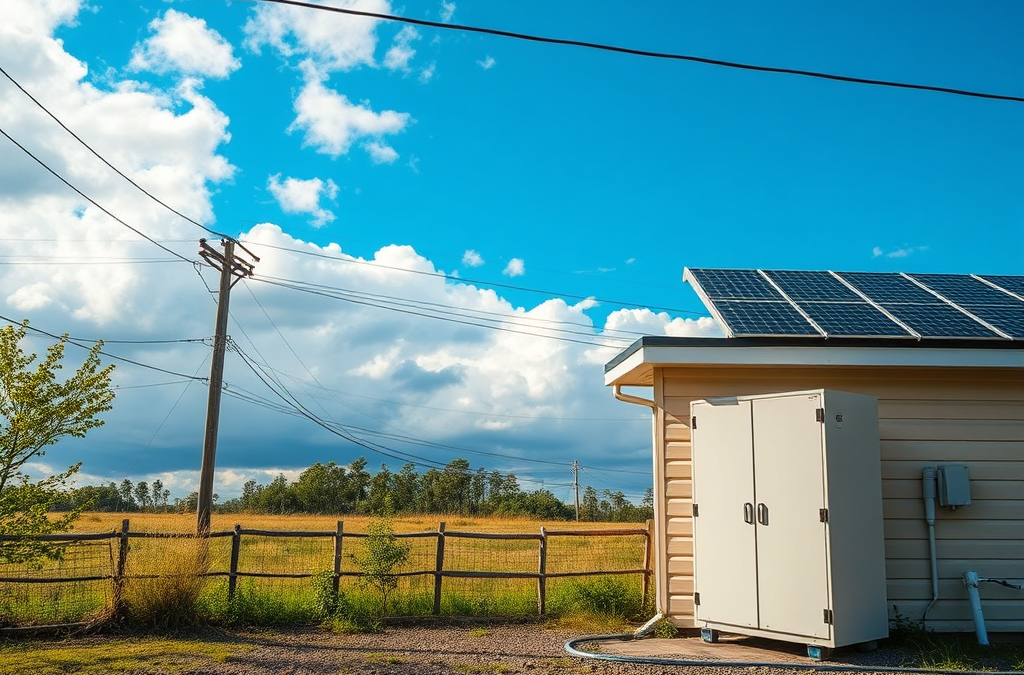
Backup power plans fail during cloudy weather when solar panels produce less energy than expected, batteries begin the day partially charged, and household loads consume power faster than the system can replace it. Thick cloud cover reduces solar generation, while shading, short winter daylight, dirty panels, battery age, and inverter losses can narrow the charging margin further. A plan based on peak panel output rather than location-specific daily production is especially vulnerable. Prioritize essential circuits, measure actual battery capacity, preserve a charging reserve, and arrange a non-solar backup such as a generator or utility connection before a prolonged overcast period.
Why Cloud Cover Exposes Weak Power Assumptions
Cloudy weather does not automatically stop a solar backup system, but it can reduce the energy available for charging and force the battery to carry more of the household demand. Solar panels still generate electricity under diffuse light, yet output may be far below the figure shown on a panel label. That label describes a controlled peak condition, not the energy a roof will deliver through heavy cloud, shade, low sun, dust, or a short winter day.
The failure usually begins before the outage. A household may size its plan around the battery’s advertised capacity and the array’s maximum wattage, then assume that a few hours of daylight will restore the charge. During a gray multi-day period, that assumption breaks down. The panels may produce enough to run a small refrigerator but not enough to run the refrigerator, internet equipment, lighting, medical devices, and a well pump while also replenishing the battery.
Location matters more than a weather app’s simple “cloudy” label. A bright overcast morning, dense rain clouds, fog, and storm darkness create different production patterns. Roof orientation, nearby trees, snow, panel dirt, and the inverter’s operating range also affect usable output. A system that performs acceptably in open summer sun may have little charging margin in a shaded winter installation.
Compare a plan built around average sunny-day production with one built around a poor-production day. The first may appear efficient and affordable, but it leaves no room for weather variation. The second reserves energy for essential loads and identifies a second charging source. That does not require abandoning solar; it means treating solar as one part of the supply chain rather than a guaranteed fuel source.

Readers reviewing why backup power plans fail during cloudy weather should first inspect the production assumption. Ask how many usable watt-hours the array produced on an overcast day, not how many watts the panels can theoretically produce at noon. That single distinction often reveals why an apparently large system cannot recover its battery.
Battery Capacity, Charging Losses, and Hidden Drain
A battery does not provide all of its nameplate capacity to household devices. Usable energy depends on the battery chemistry, permitted depth of discharge, temperature, age, inverter efficiency, and the power required by the inverter itself. A battery showing a full charge may deliver less than expected under a large load, while an older battery may lose capacity gradually without an obvious warning.
Charging also consumes more energy than the battery ultimately stores. Electricity passes through wiring, a charge controller, and battery-management electronics before it becomes stored energy. When solar input is weak, these losses take up a larger share of the available production. A small array can spend much of a dim day covering standby demand and conversion losses, leaving little surplus for charging.
Temperature creates another constraint. Batteries may accept charge more slowly in cold conditions, and some systems limit charging to protect the cells. Heat can also reduce battery life or trigger protective controls. The exact limits depend on the equipment, so the manufacturer’s operating range matters more than a generic runtime estimate.
Consider a battery that appears large enough for overnight use. If the household begins the evening at 70 percent rather than 100 percent, runs an inverter continuously, and powers a refrigerator with frequent compressor starts, the practical reserve may disappear before morning. Cloud cover then becomes the second failure, not the first: the system entered the low-production day without enough stored energy.
Check the battery’s state-of-charge reading against actual performance. If the display falls rapidly under a modest load, investigate capacity, calibration, temperature, and error codes before adding more appliances. A larger battery is not always the best first purchase. If the array cannot refill it during the available daylight, extra storage may simply provide a larger empty container. The better sequence may be load reduction, panel maintenance, more generation, and then additional storage.
The Loads That Quietly Exhaust a Backup System
Backup plans fail when the expected load is smaller than the real load. Continuous devices such as refrigerators, freezers, routers, security systems, aquarium pumps, ventilation fans, and heating controls consume energy hour after hour. Intermittent equipment can be even more demanding: well pumps, electric water heaters, kettles, microwave ovens, sump pumps, and space heaters may draw high power while operating.
Starting current complicates the picture. A motor-driven appliance may briefly require much more power when its compressor or pump starts. If the inverter cannot handle that surge, it may shut down even though the average wattage appears acceptable. A system can therefore fail from insufficient instantaneous power before the battery is technically empty.
Cloudy weather magnifies these errors because the panels contribute less during the same period that people may use more electricity. Dark afternoons encourage extra lighting, wet weather can increase pump operation, and cold conditions may increase heating demand. Electric resistance heat is especially difficult for a small battery system because it converts electricity directly into heat at a high continuous draw.
Make two load lists rather than one. The first contains equipment that must remain powered, such as a medically necessary device or a sump pump. The second contains conveniences that can wait, including laundry, cooking appliances, entertainment equipment, and vehicle charging. Then identify whether each essential item needs constant power or can run in scheduled intervals. A freezer may tolerate carefully managed cycling; a network connection may not.
- Measure: use a plug-in meter for smaller appliances and equipment documentation for larger circuits.
- Separate: place critical circuits on a dedicated backup panel where possible.
- Schedule: run high-demand devices only when solar production is strongest, provided the equipment and installation support that practice.
- Reserve: keep enough battery energy for overnight essentials instead of spending it on discretionary loads.
A common mistake is to switch off visible appliances while overlooking hidden consumption. An inverter, network device, freezer, and ventilation fan can continue draining power in the background. Rechecking the plan with measured wattage and run time produces a more realistic estimate than adding appliance labels together.
How to Build a Cloud-Resilient Backup Plan
A resilient plan assigns each power source a defined job. Solar can provide daytime energy, the battery can cover short interruptions and overnight needs, and a generator or utility connection can cover extended low-production periods. Treating one source as a fallback for every situation creates a single point of failure.
Begin with the minimum acceptable service. For one household, that might mean refrigeration, communications, lighting in selected rooms, a medical device, and a sump pump. For another, water pumping or heating controls may rank first. Write the priority order down because an outage is a poor time to negotiate which devices remain connected.
Next, establish a reserve threshold. The threshold should reflect the expected overnight demand and the time required to obtain another charging source. A battery-management system may provide low-state-of-charge warnings, but the warning is not a substitute for a plan. If the system reaches the reserve during a cloudy afternoon, disconnecting nonessential loads may preserve the critical circuits.
Use a short decision sequence when production falls:
- Confirm that the panels, inverter, and battery show normal operating status.
- Remove discretionary loads and delay high-demand equipment.
- Compare current solar input with the measured essential load.
- Protect the overnight reserve rather than chasing a full charge at any cost.
- Use the alternate charging source before the battery reaches its shutdown limit.
The tradeoff is cost and complexity. A generator requires safe fuel storage, ventilation, maintenance, and suitable transfer equipment. More panels may improve recovery but cannot create sunlight during a prolonged storm. More battery capacity extends runtime but does not solve an energy deficit if daily generation remains too low. The appropriate choice depends on outage length, critical loads, local weather patterns, installation limits, and the user’s ability to operate and maintain the equipment.
That practical balance is central to why backup power plans fail during cloudy weather: the answer is often not one defective component but a mismatch between energy entering the system and energy leaving it.
Testing the Plan Before the Weather Turns
A backup plan should be tested under a controlled low-generation scenario, not only during a convenient sunny outage. Choose a safe period, review equipment instructions, and simulate the essential load while observing solar input, battery percentage, inverter temperature, and warning messages. Do not disconnect utility power or operate a generator unless the installation and procedure are appropriate and safe.
Record the results in practical terms. Note the battery level at the beginning, the essential loads connected, the weather, and the time required for the battery to fall by a measured amount. Repeat the observation when solar production is weak if conditions allow. The goal is not a laboratory-grade calculation; it is a household-specific picture of how quickly the reserve disappears.
Signs of a weak plan include a battery that never reaches its intended reserve, an inverter that trips when a pump starts, solar input that remains unexpectedly low after clouds clear, or a system that requires manual intervention several times a day. A healthy plan should show stable operation, predictable consumption, and a clear response when production drops.
Review maintenance items before storm season. Keep panels clear of avoidable debris, inspect visible wiring without touching hazardous components, confirm that ventilation openings are unobstructed, and check battery and inverter alerts. Battery terminals, transfer switches, generator connections, and household electrical panels may require a qualified professional rather than user servicing.
Use the findings to update the load list and operating instructions. The most valuable result of a test is often discovering that a supposedly essential appliance can be reduced, rescheduled, or replaced with a lower-demand option. Revisit the plan after adding equipment, changing occupancy, aging the battery, or experiencing a longer outage. A written procedure that reflects actual measurements is more dependable than a capacity estimate copied from a product listing.
Frequently Asked Questions
Do solar panels work during cloudy weather?
Yes, panels can generate electricity from diffuse daylight, but output may be much lower than on a clear day. Heavy cloud, rain, shade, dirt, and short daylight hours can reduce the surplus available for battery charging.
Why does a battery run out even when the panels are producing power?
The panels may produce less energy than the connected loads consume. Inverter losses, battery charging losses, standby demand, and motor-start surges can widen that gap.
Is adding a larger battery enough to fix cloudy-weather failures?
Not always. A larger battery can extend runtime, but it will not solve a daily energy deficit if weak solar production cannot refill the storage. Load reduction or additional generation may be needed first.
Which appliances should be disconnected first?
Disconnect discretionary and high-demand equipment first, such as space heaters, electric water heaters, cooking appliances, laundry machines, and vehicle chargers. Keep medically necessary devices and other defined critical loads connected.
How can I tell whether my backup plan is realistic?
Measure actual appliance consumption, observe battery decline during essential use, compare solar input on weak-production days, and test the alternate charging procedure before an outage occurs.
Further Reading
Authoritative Sources
- Ready.gov
ready.govOfficial household preparedness guidance, emergency plans, and supply checklist resources.
- FEMA
fema.govFederal emergency management information, disaster planning resources, and recovery guidance.
- American Red Cross Emergency Preparedness
redcross.orgPractical emergency preparation, safety, and response guidance for households.
- CDC Emergency Preparedness and Response
cdc.govPublic health guidance for disasters, emergency response, and recovery conditions.
Conclusion
Cloud cover exposes the gap between a backup system’s advertised capacity and its real operating margin. Reliable planning depends on measuring household loads, accounting for inverter and charging losses, protecting an overnight reserve, and recognizing that cloudy days can reduce input while increasing demand. Start by separating critical circuits from conveniences and recording how quickly the battery declines under actual use. Then decide whether the next improvement should be lower consumption, better solar exposure, more generation, additional storage, or a dependable alternate source. Test the procedure before storm conditions arrive, and treat generator safety and electrical connections as professional matters where appropriate. A plan built around measured energy flows will remain useful when the panels produce only a fraction of their clear-sky output.
Related Content
- Storm Survival Kit Checklist: Essential Items for Effective Emergency Preparedness
- Don’t Wait for the Aftermath: Proactive Steps for Disaster Preparedness
- Why Financial Planning Is Crucial for Preppers: Strategies for Effective Resource Management
- Storm-Ready: Your Comprehensive Playbook for Getting Prepared Before a Storm
- How to Stay Focused During Crisis Events




