
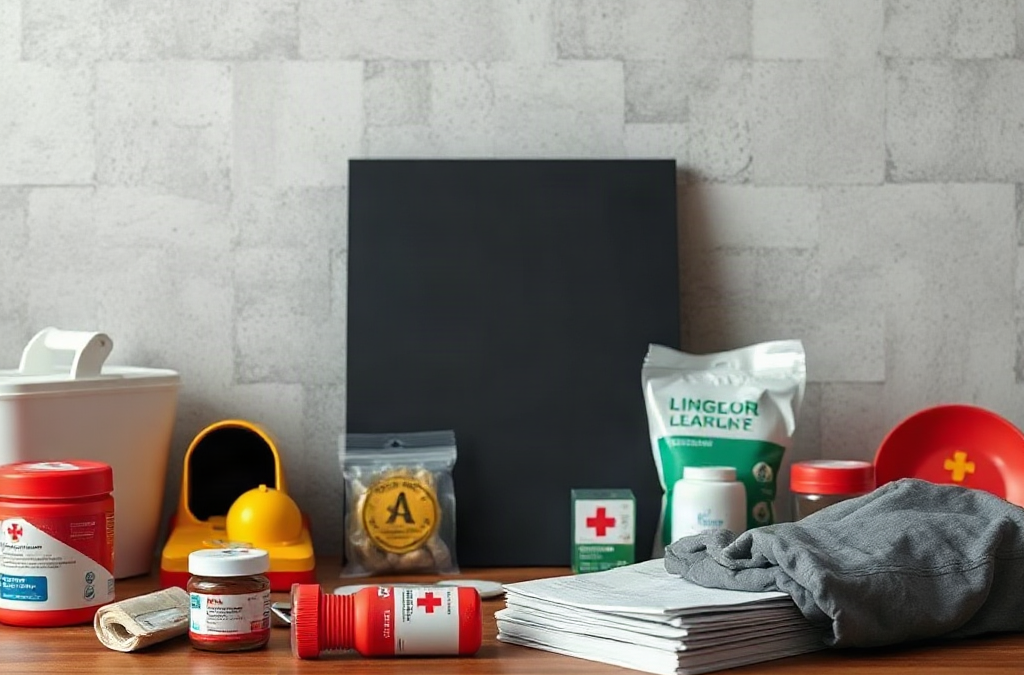
Red Cross emergency preparedness checklist essentials include a tailored disaster plan, accessible contact information, evacuation and shelter arrangements, and supplies for water, food, medications, lighting, communication, sanitation, and first aid. Build the kit around each person’s medical, mobility, dietary, and communication needs rather than relying on a generic shopping list. Keep a portable evacuation bag separate from larger stay-at-home supplies, and store copies of vital documents where they remain protected and reachable. Review expiration dates, test equipment, update contacts, and practice the plan regularly; a complete kit can still fail if no one knows where it is or how to use it.
What Belongs in a Red Cross Emergency Kit?
A useful emergency kit supports three immediate functions: staying hydrated and fed, receiving reliable information, and managing basic health and safety when normal services are interrupted. The American Red Cross advises households to assemble emergency supplies before a disaster, but the practical value comes from choosing items that remain usable under conditions such as darkness, loss of running water, damaged roads, or an urgent departure.
Water, nonperishable food, a flashlight, a battery-powered or hand-crank radio, spare batteries, first-aid materials, medications, sanitation items, and copies of important records form the core. Add a manual can opener when packed food requires one. Include phone-charging options, but do not make a power bank the only communication backup; stored power runs out, cables become misplaced, and cellular networks may be congested. A radio can provide instructions when internet access is unavailable.
A compact checklist keeps purchases focused:

- Water and food: potable water, shelf-stable foods, utensils, and foods that household members can safely eat.
- Light and information: flashlights, radio, batteries, charging cables, and a written contact list.
- Health: first-aid supplies, necessary medications, glasses, hearing-device batteries, and relevant medical information.
- Sanitation and protection: soap or sanitizer, waste bags, hygiene products, weather-appropriate clothing, sturdy footwear, and blankets.
- Access and records: cash in practical denominations, spare keys, identification copies, insurance details, and local maps.
Separate items by purpose instead of putting everything into one heavy container. A portable evacuation bag should hold what must leave with you quickly, while larger water containers, extra food, bedding, and sanitation supplies can remain in a home kit. This distinction matters when stairs, public transportation, disability, or limited vehicle space makes a large tote unrealistic.
Common mistakes include buying unfamiliar food, leaving batteries installed until they corrode, and storing the kit in a garage or basement that may become inaccessible. Another weak assumption is that owning camping equipment automatically creates an emergency kit. A camp stove, for example, may be useful only where it can be operated safely and in accordance with its instructions; it should never be treated as an indoor cooking solution unless the manufacturer explicitly permits that use. Pack for the conditions in which an item will actually be used.
How Should Supplies Match Household Needs?
Household-specific needs determine whether standard supplies remain practical after an evacuation or prolonged outage. Age, medical needs, disability, language, diet, climate, pets, and available transportation all change what belongs on the list. The better approach is to walk through a normal day and identify every product, device, assistance arrangement, or piece of information that would become difficult to replace during a disruption.
Medication planning deserves special attention. Keep an up-to-date medication list with names, doses, allergies, pharmacy information, and prescriber contact details. Refill timing and the amount that can legally or practically be kept on hand vary, so questions about an emergency reserve should go to the pharmacist, prescriber, or insurer rather than being answered with a universal quantity. Temperature-sensitive medicine, powered medical equipment, and mobility devices also require a realistic backup plan that accounts for transport and electricity loss.
For an older adult who uses a walker and hearing aids, a kit might include spare hearing-device batteries, written instructions, a lightweight blanket, copies of care information, and a plan for moving the walker. A family with an infant needs feeding supplies, diapers, wipes, clothing changes, and safe water appropriate to its feeding method. Pet owners should account for food, water, medication, carriers or leashes, identification, sanitation supplies, and destinations that can accommodate animals.
| Household factor | What to add or verify | Failure to avoid |
|---|---|---|
| Daily medication | Current list, supply plan, storage instructions | Packing expired medicine or omitting dosage details |
| Mobility or sensory needs | Assistive devices, batteries, transport help, written instructions | Assuming one person can manage every transfer |
| Infants or children | Feeding, hygiene, clothing, comfort, identification | Relying on adult food and equipment |
| Pets | Carrier or leash, records, food, water, medicine | Choosing a destination without checking animal policies |
| Extreme weather | Seasonal clothing, blankets, sun protection, safe hydration | Leaving last season’s supplies packed year-round |
Budget constraints are best handled by prioritizing consequences, not by buying a prepacked kit and assuming the work is finished. Begin with water storage, essential health items, light, communication, and foods already used at home. Add specialized equipment only after confirming who will operate it and under what conditions. Commercial kits offer convenience, but they may contain low-value duplicates while omitting prescription needs, suitable food, document copies, or properly sized protective items.
A customized kit is working when each household member can access essential items and the load can be carried or transported as planned. It is failing when critical supplies depend on one unavailable person, instructions exist only on a locked phone, or the packed container cannot be moved by the people expected to move it.
Evacuation, Shelter, and Communication Planning
Supplies cannot replace decisions about where to go, how to reconnect, and whose instructions to follow. Emergency plans should cover both evacuation and sheltering because the safer action depends on the hazard and official directions. A wildfire warning may require immediate movement, while severe outdoor air conditions or hazardous weather may call for staying inside. Do not assume the same response fits every event.
Choose more than one meeting place: one near the home for a localized incident and another outside the immediate area if the neighborhood cannot be entered. Identify at least two possible routes, while recognizing that a familiar road may be closed. Households without a vehicle should discuss transportation with nearby contacts and investigate local emergency arrangements before an incident. Anyone who needs physical assistance should know who will help and what equipment must travel with them.
Communication plans work better when they are written on paper as well as stored digitally. Include household numbers, an out-of-area contact, schools, caregivers, workplaces, medical contacts, and relevant local emergency numbers. During network congestion, a text message may go through when a voice call does not, but no single method is dependable in every situation. Agree on a brief check-in format so messages convey location, condition, and intended next step without requiring a long exchange.
Consider a weekday power outage that disrupts transportation while family members are at work and school. A plan limited to “meet at home” fails if the home is within an evacuation zone. A stronger arrangement names who may pick up children, where school reunification information will be obtained, which out-of-area person will collect updates, and where everyone should go if the primary meeting location is inaccessible.
Document protection is part of this plan. Keep copies of identification, insurance information, relevant medical records, property details, and contact information in a protected format. Physical copies remain usable without power, while encrypted digital copies can reduce the burden of carrying paper; using both avoids dependence on one method. Protect account numbers and personal information from casual access, and do not store the only copy somewhere exposed to the same fire or flood risk as the originals.
A plan is credible when household members can explain it without consulting the person who wrote it. Warning signs include outdated pickup permissions, an inaccessible meeting site, no arrangement for pets, and reliance on a single route or contact. Correct those dependencies before adding less critical gear.
How Do You Maintain and Test the Checklist?
Emergency readiness declines as food expires, medications change, batteries discharge, children grow, and contact details become outdated. Maintenance should therefore be tied to a recurring household event, such as a seasonal clock change, lease renewal, or school-term transition. The precise interval matters less than using a schedule that is remembered and actually completed.
Inspect food and water according to their labels and storage conditions rather than assuming every item has the same shelf life. Look for damaged packaging, leaks, swelling, corrosion, moisture, pests, and temperature exposure. Rotate suitable foods into normal meals before their quality declines, then replace them with fresh stock. Test flashlights and radios, recharge power banks, verify cables, and store spare batteries in a manner consistent with manufacturer instructions.
Maintenance also means checking whether the plan still fits the people. Update medication and allergy details, emergency contacts, insurance information, school arrangements, pet records, clothing sizes, and mobility requirements. Replace unreadable document copies and confirm that household members can unlock any protected digital files. Seasonal changes may require swapping cold-weather layers for heat protection or adjusting water and transportation plans.
Testing reveals failures that visual inspection misses. Conduct a short evacuation exercise in which everyone gathers the portable bags, leaves through an alternate exit, and checks whether the load is manageable. Run a separate communication check from normal weekday locations. A home-outage exercise can test whether flashlights are easy to find in darkness and whether necessary devices have a workable backup. Follow real safety limits; do not disable essential medical equipment, create fire risks, or simulate hazardous conditions.
After each exercise, record only actionable corrections. “Improve communication” is too vague. “Print the school number and place it in both adult wallets” identifies an owner and a result. Fix high-consequence gaps first: inaccessible medication, no safe destination, missing transportation help, unusable water, or an unmanageable bag. Comfort items and equipment upgrades come later.
The checklist is functioning when supplies are within date, equipment turns on, bags can be moved, contacts respond, and every person knows the next action. Repeated confusion about destinations, gear that no one can operate, or supplies stored behind clutter show that the system exists on paper but not in practice. A shorter, tested plan is more dependable than a large inventory that has never been used.
Conclusion
A dependable checklist connects supplies to specific decisions: whether to evacuate or shelter, how to receive instructions, where household members will reunite, and how medical or mobility needs will be handled. Prioritize drinkable water, suitable food, essential health items, lighting, information, sanitation, and protected records before purchasing specialized gear. Divide portable evacuation items from larger home stores so neither kit becomes impractical.
Next, assign responsibility for contacts, transportation, children, pets, and anyone who may need assistance. Test the radio and lights, carry the packed bag, practice an alternate route, and correct any failure that could delay departure or interrupt essential care. Revisit the checklist when seasons, medications, addresses, schools, or household members change. Preparedness becomes usable when the people, plan, and supplies work together under realistic constraints.
Frequently Asked Questions
Is a preassembled emergency kit enough?
Usually not by itself. Check its water, food, lighting, first-aid contents, sizes, and expiration dates, then add medications, documents, charging options, clothing, dietary items, and supplies for children, disabilities, or pets.
Where should an emergency kit be stored?
Choose a cool, dry, readily accessible location that is unlikely to be blocked by the hazard you face. Keep portable evacuation supplies near a practical exit and consider smaller kits for vehicles or workplaces.
How often should emergency supplies be checked?
Use a recurring schedule you will remember and inspect items whenever household needs change. Follow product dates and storage directions, test powered equipment, and update documents, contacts, clothing, food, and medicine information.
Should cash be included in the kit?
A modest amount in practical denominations can be useful if card terminals or networks are unavailable. The appropriate amount depends on household circumstances, and cash should be stored discreetly and reviewed as part of the kit.
What documents belong with emergency supplies?
Consider protected copies of identification, insurance details, essential medical information, prescriptions, emergency contacts, pet records, and relevant property information. Use secure physical and digital copies so one failure does not remove access.
Further Reading
Authoritative Sources
- American Red Cross: How to Prepare for Emergencies
redcross.orgProvides official Red Cross planning, emergency-kit, hazard-preparation, and household safety resources
- Ready.gov: Build a Kit
ready.govOffers federal guidance for assembling and maintaining disaster supplies around individual household needs
- CDC: Emergency Supplies
cdc.govExplains health-related supplies and planning considerations for emergencies that disrupt normal services
- FDA: Emergency Preparedness
fda.govProvides official information concerning food, water, medicine, and medical-product considerations during emergencies




