
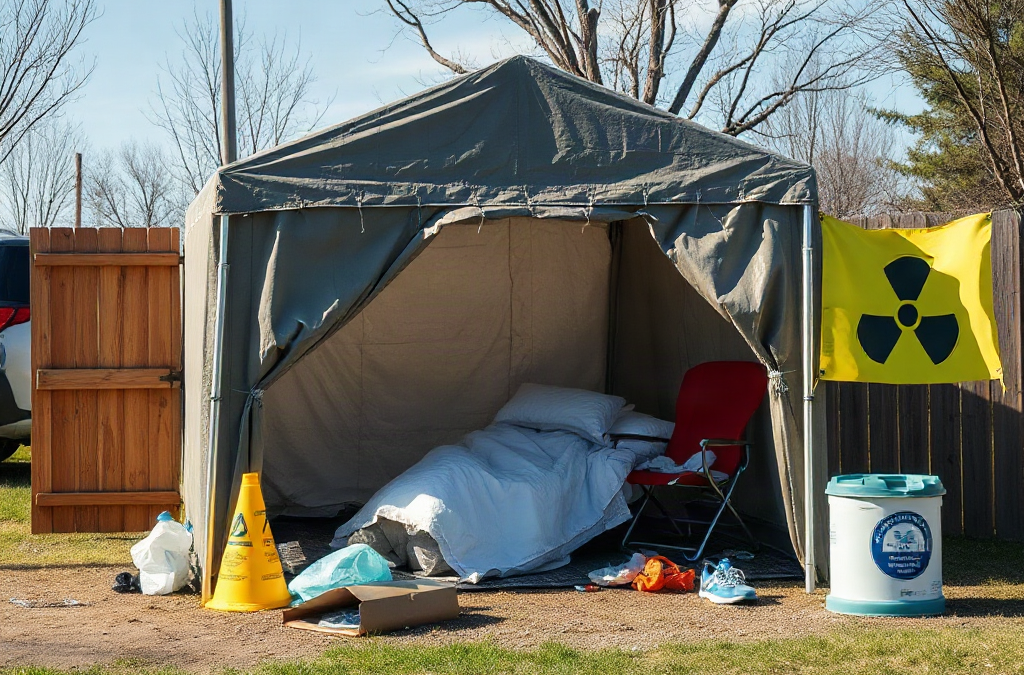
Radiation emergency preparation and protective actions center on getting indoors quickly, increasing distance from radioactive material, reducing exposure time, and following official instructions about sheltering, evacuation, or medical care. A sturdy building—especially a basement or central room—can provide meaningful shielding, while closing windows, turning off systems that draw outdoor air, and remaining inside limits contaminated dust exposure. Remove an outer layer of clothing if contamination is suspected, bag it away from people, and wash exposed skin gently. Do not leave shelter to collect relatives or take potassium iodide unless public health officials specifically direct it; neither action is automatically safer.
How Radiation Emergencies Create Exposure
Radiation emergencies can involve a nuclear power plant incident, a transportation accident, an industrial source, a radiological dispersal device, or a detonation that produces fallout. The protective response depends on what has happened, where radioactive material is located, and whether the immediate danger comes from blast, fire, airborne particles, or penetrating radiation. Treating every event as an identical evacuation problem can lead people away from safer shelter at the wrong time.
Exposure occurs through different pathways. External exposure happens when radiation reaches the body from a nearby source or contaminated surface. Internal contamination occurs when radioactive material is inhaled, swallowed, or transferred through an open wound. Fallout and other radioactive particles can settle on clothing, vehicles, soil, and building surfaces; being near those particles for longer periods can increase dose. The basic controls—time, distance, and shielding—work because they reduce either the duration of exposure, the intensity reaching the body, or the material between the person and the source.
A useful distinction is contamination versus irradiation. A person can be irradiated by a source without carrying radioactive material, much as a person can receive light from a lamp without becoming a lamp. Contamination means radioactive material is on or inside the person. That distinction affects whether removing clothing and washing can reduce risk. It also explains why ordinary household cleaning may be useful after an official instruction, while attempting to handle an unknown source is dangerous.
Consider a person outdoors when an alert is issued. Remaining outside to watch a plume, search for visible ash, or wait for more information increases time near airborne or deposited material. Moving indoors promptly, placing distance between the person and exterior walls, and listening for verified instructions usually offers a better first move than trying to identify the material personally. An assumption that “nothing is visible, so there is no danger” is unreliable: radiation cannot be detected by sight, smell, or touch.

Use Radiation emergency preparation and protective actions as a household decision topic rather than a shopping list. The most valuable preparation is knowing which building areas provide the best shelter, how official alerts reach the household, and how to avoid spreading dust indoors. A radiation detector may provide information in specialized settings, but consumer ownership does not replace public guidance or professional assessment.
Sheltering Indoors and Reducing Dose
Prompt sheltering is often the first protective action when radioactive material may be outdoors. Choose a substantial building and move toward a basement or the middle of the structure, away from windows, exterior doors, and outside walls. Dense materials such as concrete, brick, and packed earth can provide more shielding than a lightweight vehicle or a thin-walled outbuilding. The goal is not to find a perfect room; it is to put as much solid material and distance as practical between people and outdoor contamination.
Once inside, close windows and doors and turn off systems that intentionally bring outdoor air into the building, such as some ventilation or forced-air settings. Do not block vents or alter equipment in a way that creates a fire, carbon-monoxide, or indoor-air hazard. A building that is well sealed but unsafe because of smoke, fire, structural damage, or a gas leak is not suitable shelter. Life-threatening building hazards take priority, and occupants should follow emergency instructions for moving to a safer location.
Different buildings create different tradeoffs. A basement may offer stronger shielding, but it may be unsafe if flooding, structural damage, or a fire threatens it. A central interior room on a middle level may be preferable in a tall, intact building. A car generally provides limited shielding and should not be treated as a long-term shelter. If someone is already indoors, leaving to drive elsewhere can increase outdoor exposure and place the person in traffic or contaminated areas.
After sheltering, stay inside until officials provide a release, evacuation order, or other direction. Broadcast messages, official emergency alerts, local emergency management, and public health agencies are more reliable than forwarded posts or unverified claims. Keep phones available for alerts, but avoid repeatedly calling emergency lines for general information. If power fails, a battery or hand-crank radio can preserve access to instructions when internet service is intermittent.
A compact shelter check can be completed before an incident:
- Identify one basement or central interior location and one alternative if it becomes unsafe.
- Know how to close windows, doors, and outdoor-air ventilation controls without creating a separate hazard.
- Store drinking water, shelf-stable food, essential medicines, a flashlight, batteries, a radio, sanitation supplies, and chargers where they can be reached indoors.
- Plan for infants, older adults, disabled people, pets, and anyone dependent on powered medical equipment.
A common failure is treating the first alert as a cue to evacuate immediately. Evacuation may be ordered, but an improvised departure can expose people to the plume or traffic congestion. Shelter first when directed, obtain verified instructions, and leave only by the route and timing officials identify unless the building itself presents an immediate danger.
Decontamination, Food, Water, and Medical Decisions
Decontamination aims to remove radioactive material from the body and prevent it from spreading to other people or surfaces. If a person may have been outdoors during fallout or a radioactive release, carefully removing an outer layer of clothing can remove a substantial portion of surface contamination. Place clothing in a plastic bag or another sealable container away from people and animals; follow local instructions for where to store it. Avoid vigorous shaking, brushing, or actions that could send dust into the air.
Wash exposed skin and hair with lukewarm water and soap if available. Do not scrub harshly, use bleach on skin, or apply disinfectant chemicals. Cover cuts while washing so material does not enter an open wound, and use clean water for eyes or follow medical advice if irritation persists. If running water is unavailable, gently wipe exposed areas with a clean damp cloth and place the used cloth with contaminated items. Removing contaminated clothing and washing does not treat radiation injury, so urgent symptoms or a known high-exposure event require professional medical instructions.
Food and water decisions require restraint. Sealed food, bottled water, and items inside intact packaging are generally less likely to have surface contamination than exposed food, but people should follow local declarations about safe supplies. Do not eat garden produce, drink from open containers, or use milk from animals grazing outdoors after a release unless authorities say those items are safe. Boiling water does not remove radioactive material; it can reduce biological contamination but may leave radioactive substances behind or concentrate them as water evaporates.
Potassium iodide is frequently misunderstood. It can help protect the thyroid from radioactive iodine in specific circumstances, but it does not protect the whole body from radiation or contamination from other radionuclides. Taking it unnecessarily can create health risks and may be inappropriate for some people. Use it only when public health or emergency officials instruct the relevant population to do so, and follow the product or professional dosing directions rather than assuming that more is better.
Medical triage may change after a radiation event. Severe burns, trauma, breathing difficulty, confusion, or persistent vomiting require emergency attention, but do not delay life-saving care because contamination is suspected. Tell responders about possible exposure and follow their directions for transport and treatment. A common mistake is refusing to enter a medical facility for fear of contaminating staff; responders have procedures for managing contaminated patients, while delaying care can worsen ordinary injuries as well as radiation-related illness.
Use Radiation emergency preparation and protective actions to separate actions that reduce exposure from products that merely appear specialized. Water stored before an emergency supports sheltering; a household radiation meter may be difficult to interpret without calibration, location data, and official context. Prioritize actions that reduce contact with outdoor material and preserve access to trusted instructions.
Communication, Evacuation, and Household Readiness
Communication failures can turn a manageable shelter period into a series of risky decisions. Write down contact information, medication details, medical-device needs, school or workplace procedures, and the location of the chosen shelter area. Household members may be separated when an alert occurs, so agree in advance that everyone will shelter where they are until officials provide reunification instructions. Traveling across town to collect someone can expose both the traveler and the person waiting to unnecessary risk.
Prepare more than one way to receive information: emergency alerts on charged phones, local radio, official websites, and local government channels. Check the source before sharing a dramatic message. Official instructions may change as monitoring data improves, but a changing message is not proof that authorities are hiding information. Record the time and source of important instructions so the household can distinguish a current evacuation order from an old screenshot.
Evacuation is appropriate when authorities order it, when the structure is unsafe, or when another immediate hazard makes sheltering impossible. Follow the designated route, take essential medicines and identification, and keep vehicle windows closed if instructed. Do not take shortcuts through restricted zones or stop to investigate debris. A vehicle can provide transport but limited shielding, so it is not a substitute for the protected interior of a substantial building during an outdoor release.
Households with special needs should rehearse the part of the plan that is most likely to fail. Someone using oxygen or a powered device may need backup power and a way to contact the utility or emergency service. A child may need a familiar explanation and a labeled comfort item. Pets may require carriers, food, and records, but people should never delay life-saving sheltering to gather every supply. Preparation should reduce decision time without creating a false promise that every event will follow the rehearsal.
Review supplies periodically and replace expired medicines, dead batteries, damaged packaging, and outdated contact lists. Store supplies in a location accessible to the people who may need them, not in a locked shed or vehicle that could be inaccessible during a release. Practice moving indoors, closing openings, locating the radio, and accounting for household members. The sign that a plan is working is not perfect execution; it is that people know their first safe move and can verify the next instruction without leaving shelter unnecessarily.
For additional context, Radiation emergency preparation and protective actions should be reviewed alongside local emergency plans. National guidance explains general protective principles, while local officials determine routes, shelter locations, and area-specific actions. That distinction matters because a technically sound response in one location may be unsafe in another if wind, geography, building damage, or infrastructure conditions differ.
Frequently Asked Questions
Should I evacuate immediately after a radiation alert?
Not automatically. If the building is safe, shelter indoors and wait for verified instructions unless officials order evacuation or an immediate hazard such as fire makes the building unsafe.
Which room offers the best protection?
A basement or central interior room with substantial walls and no windows is generally preferable. Avoid exterior walls and windows, but choose another safe area if the basement has flooding, fire, or structural hazards.
Can boiling water make it safe after radioactive fallout?
No. Boiling can address some germs but does not reliably remove radioactive material and may concentrate contaminants as water evaporates. Use stored or officially approved water instead.
Should everyone take potassium iodide?
No. Potassium iodide is relevant only to certain radioactive iodine exposures and can cause harm when used unnecessarily. Take it only when public health officials direct your group to do so.
What should I do with potentially contaminated clothing?
Remove it carefully without shaking, place it in a sealable bag away from people and animals, and follow official disposal or storage instructions. Wash exposed skin gently with soap and water.
Further Reading
Authoritative Sources
- American Red Cross Emergency Preparedness
redcross.orgProvides practical household preparation and emergency communication guidance that complements radiation-specific protective actions
- Radiation Emergencies
ready.govExplains federal guidance on sheltering, contamination reduction, alerts, and actions during a radiation emergency
- Radiation Emergencies
cdc.govOffers public health information about exposure, decontamination, potassium iodide, and medical concerns
- Radiation Protection
epa.govProvides background on radiation protection and environmental monitoring from a federal authority
Conclusion
Radiation readiness is built around disciplined first actions rather than specialized gear. Know the safest interior location, move indoors when directed, reduce outdoor-air entry, and use official alerts to decide whether to remain sheltered or evacuate. If contamination is possible, remove outer clothing, contain it, and wash gently; do not scrub with harsh chemicals or assume boiling water removes radioactive material. Keep essential medicines, water, food, communication equipment, and power supplies where they can be reached during sheltering. Review local emergency instructions before an incident, especially if the household includes children, pets, older adults, or people dependent on medical equipment. A clear plan reduces unnecessary travel and leaves more attention for the instructions that may change as responders assess the event.
Related Content
- Determining The Real Expense Of Catastrophe Readiness
- The Ultimate Guide to Disaster Preparedness Training: 7 Effective Strategies for 2025
- The Ultimate Checklist for Emergency Preparedness
- The Impact of Climate Change on Disaster Preparedness
- Evacuation Preparedness Checklist: Key Items and Steps for Safe Departure




