
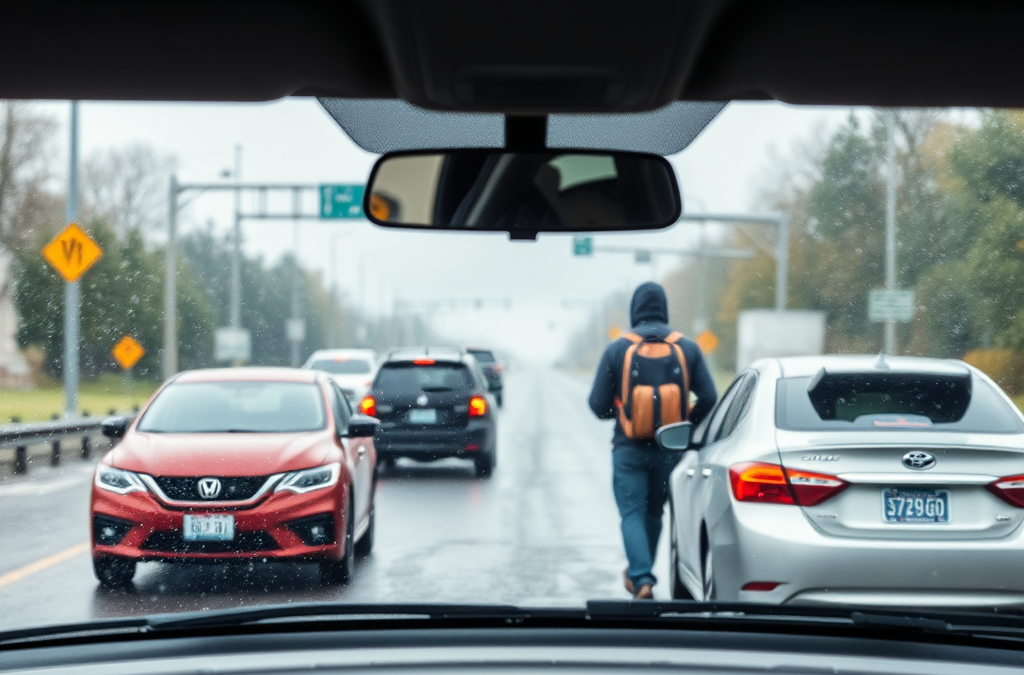
Leaving before an order when conditions are deteriorating can be reasonable when credible hazards are worsening, travel routes remain open, and delaying would reduce safe options. Check official alerts, road conditions, fuel, household needs, and destination capacity before departing; do not rely on rumors or a single alarming post. Early departure may reduce exposure to blocked roads and rushed traffic, but leaving too soon can create avoidable travel risk or place you outside official support. Record why you left, tell a trusted contact, follow lawful instructions, and reassess if conditions change. A calm, documented decision is safer than waiting until visibility, communications, or mobility deteriorate.
When Deteriorating Conditions Justify an Early Departure
Leaving before an official order is a judgment call based on changing risk, available routes, and the consequences of delay. An order may provide formal direction, but hazards can begin affecting roads, power, communications, air quality, or household mobility before authorities issue one. The practical question is not whether an order has been announced; it is whether remaining in place is becoming less safe while a controlled departure is still possible.
Early movement is more defensible when several signals point in the same direction. Examples include a fire or flood edge moving toward populated areas, repeated official warnings about worsening conditions, a forecast that could close the only usable route, or a household member whose health or mobility makes rapid departure difficult. A family with an infant, oxygen equipment, limited transportation, or animals may need more lead time than a mobile household nearby. Waiting for identical instructions for every household ignores those differences.
The tradeoff is real. Leaving early can expose people to traffic, poor visibility, unfamiliar roads, or an unavailable destination. It can also separate household members if people depart without a clear plan. Staying may be the better choice when the hazard is distant, authorities advise sheltering, roads are already unsafe, or the household lacks fuel and a confirmed place to go. The safest decision is usually the one that preserves options rather than the one that feels most decisive.
Use a simple threshold: if conditions are worsening, your household would need extra time to move, and a viable route and destination are available, prepare to leave rather than waiting passively. If any of those elements is missing, pause long enough to verify information and solve the limiting problem. The purpose of leaving before an order when conditions are deteriorating is to avoid a rushed departure, not to turn uncertainty into unnecessary travel.

How to Verify Risk Before an Order Exists
Reliable verification should combine official information with direct observations that affect your specific location. Check local emergency management notices, weather or hazard alerts, road agency updates, and public safety announcements. Look for the time of the update, the geographic area covered, and whether the message describes current conditions, a forecast, or a precautionary recommendation. An old screenshot can be accurate in wording and still be dangerously outdated.
Do not treat a lack of an order as proof that conditions are safe. Orders can be area-specific, delayed by rapidly changing events, or unnecessary where authorities recommend another protective action. Conversely, a dramatic social-media report does not automatically justify driving toward danger. Confirm the claim through at least one official channel and, when possible, a second independent source. If communications are unreliable, save relevant alerts locally and use battery-powered or vehicle-based information sources without stopping in exposed areas to search for updates.
Translate broad warnings into household-specific questions. Is the road to the destination open, and does it cross the threatened area? Could smoke, flooding, ice, debris, or fallen lines make the route impassable? Is the vehicle fueled, mechanically reliable, and suitable for the expected conditions? Can the destination accept everyone, including pets or someone needing medication? A route that looks short on a map may be a poor choice if it contains one bridge, canyon, low-water crossing, or narrow road.
A useful verification record can be brief:
- Write down the source, update time, and affected area.
- Mark two possible routes and identify where either could fail.
- Confirm fuel, medications, identification, chargers, water, and destination access.
- Set a reassessment time instead of repeatedly checking without making a decision.
The common mistake is collecting alarming information without converting it into a location-based decision. A warning becomes actionable when it changes your estimate of route safety, available time, or household vulnerability. That interpretation is more useful than counting how many alerts appear on a phone.
Preparing a Departure That Can Actually Work
A workable early departure plan is short, specific, and executable by the person who may need to act first. Decide who leaves, where everyone meets, which route is primary, which route is secondary, and what condition would trigger a change. Put essential items together before the situation becomes urgent. Packing every possession creates delay and can overload a vehicle; packing only documents and electronics may leave people without medication, water, clothing, or pet supplies.
Prioritize items that are difficult to replace during disruption: prescription medicines, identification, communication devices and charging equipment, critical medical supplies, keys, payment methods, basic clothing, water, food suitable for the household, and necessary infant or animal supplies. Keep the load arranged so that medications and a phone charger are reachable without unloading the vehicle. A small amount of organization can matter if a route closes and the household must stop or change vehicles.
Vehicle preparation deserves a separate check. Fuel level, tire condition, windshield visibility, lights, coolant, and spare-tire access affect whether an early departure remains controlled. A vehicle that starts but has poor tires may be less useful than a delayed departure in a better-maintained vehicle. If fuel is limited, choose the destination and route before leaving; driving around to investigate options can consume the margin that made early travel attractive.
Household roles should be explicit. One person can monitor official updates while another gathers people and animals; someone else can confirm the destination. If a member is away, agree on a meeting point and a message format rather than assuming a phone call will connect. Tell a trusted contact the planned destination, route, occupants, and expected check-in time, while avoiding public posts that disclose an empty home or live location.
For example, a household near a rapidly changing hazard may leave before an order because one resident uses a mobility aid and needs extra loading time. The decision is not based only on fear; it reflects the reduced speed of departure, the possibility of route congestion, and the value of arriving before conditions worsen. The alternative—waiting for a formal instruction—might be reasonable for a nearby household with no mobility constraints, a different route, and a confirmed shelter. Leaving before an order when conditions are deteriorating must account for actual household limits rather than a universal clock.
Travel Risks, Communication, And Reassessment
Departure does not end the decision. Conditions can deteriorate on the road, and a route that was open at the time of departure may later become blocked or unsafe. Drive only when visibility, road conditions, and vehicle capability allow it. Avoid entering standing water, smoke-obscured roads, areas with downed lines, or routes closed by authorities. A detour is not automatically safer if it leads into an unfamiliar hazard area or lacks fuel, services, and communications.
Keep communication purposeful. Send a departure message, a destination update when plans change, and an arrival message when safe. If the phone network fails, do not keep driving while attempting repeated calls. Use prearranged meeting points and contact procedures instead. A paper note in the vehicle or an offline map may be useful when batteries, coverage, or navigation services fail, but it should support—not replace—current official road information.
Reassess at defined points: before leaving, at a safe stopping location, after a route change, and on arrival. Signs that the plan is failing include a road closure, sharply reduced visibility, a vehicle warning light, a passenger medical problem, fuel falling below the return or detour margin, or a destination that can no longer receive the household. Pulling over safely to reassess is preferable to making a complex decision while moving.
Turn back only when doing so is safer and legally possible; do not reverse into a known danger simply because the first plan failed. A third option may exist, such as moving to a designated reception site, a confirmed alternate destination, or a safer nearby location while awaiting updated instructions. Official evacuation routes and shelter directions should take precedence over personal shortcuts when authorities have issued them. Early departure is meant to increase flexibility, but flexibility disappears if every change is improvised.
Common Mistakes And Better Decision Rules
The most damaging mistake is waiting for certainty that cannot arrive before the hazard changes. Another is leaving on the first rumor without confirming route conditions or destination capacity. Both errors confuse information quality with decision quality. A sound choice uses the best available evidence, states what is unknown, and identifies the next condition that would change the plan.
Several weak assumptions deserve correction. “No order means no risk” ignores the time needed by slower households. “Leaving first is always safer” ignores dangerous roads and limited destinations. “The shortest route is best” ignores chokepoints and closures. “Everyone can meet later” ignores lost communications and separated vehicles. Replace each assumption with a check tied to the actual household and location.
A practical decision sequence is:
- Identify the hazard: determine what is worsening and how it could affect your home, route, or destination.
- Measure remaining options: check usable roads, fuel, mobility, communications, and a place to go.
- Set a trigger: choose a clear condition for departure, such as a credible route threat, a worsening official forecast, or loss of a household safety margin.
- Depart in an orderly way: take essential supplies, notify a trusted contact, and follow closures and official directions.
- Review the plan: reassess only from a safe location and change course when evidence—not panic—requires it.
Practice exposes practical failures before a real event. Confirm that everyone knows where medicines, documents, keys, and carriers are stored. Test the backup route without assuming it will remain open. Check whether the destination has room and whether the vehicle can carry the complete household. A plan that works only when every person, road, phone, and service performs perfectly is not a plan; it is an optimistic sequence of assumptions.
Use leaving before an order when conditions are deteriorating as an option-preservation decision. The priority is not proving that departure was necessary. The priority is reaching a defensible choice while travel, communication, and household movement remain manageable.
Frequently Asked Questions
Is it legal to leave before an official order?
Leaving voluntarily is generally different from ignoring a closure or restricted area, but local rules vary. Follow road closures, access controls, and instructions from emergency officials.
What is the strongest reason to depart early?
A combination of worsening hazard conditions, a household that needs extra travel time, and a confirmed route and destination provides a stronger basis than a rumor or general anxiety.
Should I wait for a second official warning?
Not necessarily. If waiting would remove a safe route or make movement difficult, act on credible current information while continuing to monitor official updates.
What should I do if my planned route closes?
Stop or turn around only from a safe location, check official detour information, and use a confirmed alternative destination. Do not improvise through blocked or visibly hazardous areas.
How should I tell others that I left?
Send a trusted contact your departure time, destination, occupants, route, and expected check-in. Avoid broadcasting real-time location details publicly.
Further Reading
Authoritative Sources
- Academy of Nutrition and Dietetics
eatright.orgProfessional nutrition guidance, healthy eating resources, and practical dietitian-reviewed advice.
- U.S. Department of Agriculture
usda.govOfficial food, nutrition, agriculture, and consumer guidance from the USDA.
- NIH Office of Dietary Supplements
ods.od.nih.govResearch-based fact sheets on nutrients, supplements, dietary intake, and safety considerations.
- International Society of Sports Nutrition
sportsnutritionsociety.orgEvidence-informed sports nutrition resources and position stands for active people and athletes.
Conclusion
An early departure is most useful when it preserves safe choices for a household facing worsening conditions. Verify the hazard through current official sources, examine the route and destination rather than relying on distance alone, and account for people, animals, medical needs, fuel, and mobility limits. Leave before options narrow when those facts support the decision, but do not drive into a closure or unconfirmed danger merely to avoid waiting. Pack essentials where they can be reached, notify a trusted contact, and reassess from safe stopping points if the road or hazard changes. The practical goal is neither immediate flight nor passive waiting: it is a documented, flexible departure made while the household can still move deliberately.
Related Content
- Survival Skills for Handling Toxic Animals
- The Ultimate Guide to a Disaster Response Plan: 7 Effective Strategies for 2025
- Emergency Preparedness: What You Need to Know Now
- Evacuation Preparedness Checklist: Key Items and Steps for Safe Departure
- 10 Effective Strategies for Self-Reliance in Emergencies (2025 Guide)




