
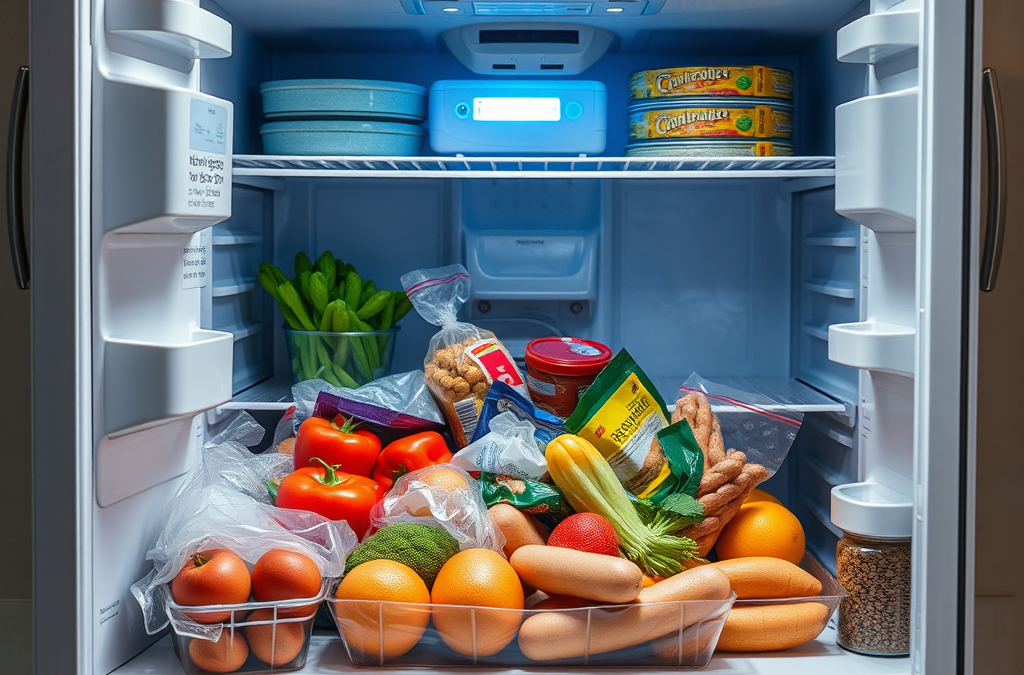
Deciding which refrigerated food to discard after uncertain temperatures depends on the food’s likely time above 40°F, its starting condition, and whether it can support rapid bacterial growth. Discard meat, poultry, seafood, leftovers, cut produce, soft cheese, milk, and other highly perishable foods if the refrigerator may have been warm for about four hours or longer, especially when no reliable temperature record exists. Unopened shelf-stable foods, hard cheeses, butter, whole uncut produce, and some condiments may remain usable, but smell and appearance cannot prove safety. Check appliance readings, door history, ice crystals, packaging, and the most perishable items first; when evidence is incomplete and the food is high-risk, replacement is safer than tasting it.
Identify the Temperature Exposure Before Sorting Food
Food decisions become clearer once the possible temperature window is reconstructed. A refrigerator should keep perishable food at 40°F or below, but an uncertain reading does not automatically mean every item is unsafe. The useful questions are how warm the compartment became, how long it may have stayed there, whether the door remained closed, and whether the food was already cold at the beginning of the event.
Begin with evidence rather than opening containers and smelling them one by one. Check a refrigerator thermometer, appliance display, outage notes, smart-home alerts, or a maximum-temperature indicator if one was used. A current reading only describes the refrigerator now; it cannot prove that the compartment stayed cold earlier. A closed refrigerator generally holds cold longer than one opened repeatedly, while a packed compartment may warm more slowly than a nearly empty one. Neither circumstance establishes a safe temperature by itself.
Separate the situation into three levels: a known safe temperature, a short or uncertain exposure, and a prolonged exposure that may have reached the unsafe range. If the refrigerator was without power briefly and food remained cold with no evidence of warming, the decision may be narrower. If the door was left ajar overnight, the appliance alarm sounded for hours, or the temperature history is missing entirely, highly perishable foods deserve the most conservative treatment.
The common mistake is treating “still cool” as equivalent to “safe.” Food can feel cool while having spent enough time warm for bacteria to multiply. The opposite mistake is discarding every item without distinguishing raw chicken from mustard or a whole apple. A careful sort reduces both food waste and unnecessary risk. Keep questionable food refrigerated while making the assessment, and use deciding which refrigerated food to discard after uncertain temperatures as a record-based process rather than a smell test.

Separate High-Risk Refrigerated Foods From More Tolerant Items
Highly perishable foods should be reviewed first because their moisture, nutrients, and handling history can support rapid bacterial growth. The priority group includes raw or cooked meat, poultry, seafood, eggs, milk, cream, soft cheese, deli meat, cooked rice or pasta, leftovers, cut melons, cut leafy greens, prepared salads, and foods made with cream or custard. These items may become unsafe without obvious changes in color, odor, or texture.
Raw poultry and seafood deserve particular attention because their juices can contaminate shelves and ready-to-eat foods. Cooked leftovers are not automatically safer than raw ingredients: cooking may reduce bacteria present at that moment, but handling and later warming can create a new risk. A container of cooked rice left in a warming refrigerator should not be rescued merely because it was fully cooked. Discarding a questionable leftover is usually a better tradeoff than trying to reheat it into safety.
Some refrigerated foods have more resilience, although resilience is not the same as unlimited safety. Hard cheeses, butter, whole uncut fruits and vegetables, unopened commercial condiments, jams, pickles, and similar acidic or preserved products may remain usable under conditions that make milk or cooked meat unacceptable. Their quality may decline before they become an immediate safety concern, and labels may still recommend refrigeration for texture or freshness. Examine the product type, whether it was opened, and whether it was contaminated by leaking food.
A useful priority order is:
- Discard first: raw or cooked animal foods, seafood, dairy, eggs, leftovers, prepared salads, and cut produce with a questionable warm exposure.
- Assess separately: soft cheeses, opened sauces, deli foods, refrigerated dough, and foods with cream, custard, or mayonnaise.
- Often lower concern: hard cheese, butter, whole produce, unopened acidic condiments, and commercially preserved products, provided packaging is intact.
The weak assumption to avoid is that an unopened package is automatically protected. An unopened carton of milk can still warm, and a sealed tray of raw meat can still leak as it heats. Conversely, an opened jar of mustard should not be judged by the same standard as an opened container of chicken salad. Food category, temperature history, and contamination potential matter together.
Use Packaging, Ice Crystals, and Food History as Evidence
Physical clues can refine a decision, but they cannot certify safety. Frozen food that still contains solid ice crystals or feels thoroughly frozen may often be refrozen or cooked promptly, although quality can suffer. A package that has fully thawed, leaked, or remained warm is more difficult to evaluate. Refreezing does not reverse bacterial growth that occurred during thawing; it only changes the food’s temperature again.
Inspect containers for swelling, broken seals, leaking juices, unusual separation, or evidence that food warmed and cooled. A swollen package may indicate spoilage or microbial activity, but a normal-looking package proves little. Do not taste questionable food to test it. Small amounts of harmful bacteria or toxins may not create a detectable flavor, and tasting turns an inspection into an unnecessary exposure.
Food history adds context. A freshly purchased, unopened item that entered the refrigerator cold is different from a casserole that sat on a counter before the refrigerator problem. A door that was opened repeatedly during a power interruption creates a different exposure from a closed appliance in a cool room. A refrigerator packed with warm groceries may also have started the event at a disadvantage. Record what you know instead of relying on a single clue.
Consider this scenario: a refrigerator display reads 46°F after an overnight outage, but no one knows when it crossed 40°F. A sealed container of leftover pasta, an unopened bottle of ketchup, hard cheddar, raw salmon, and whole oranges are inside. The pasta and salmon should receive the most conservative decision because they are highly perishable. Ketchup, hard cheddar, and whole oranges belong to a separate assessment group, though any item touched by leaking salmon should be discarded or thoroughly cleaned according to food-safety guidance.
The comparison that matters is not “smells fine versus smells bad.” It is strong evidence versus weak evidence. A verified temperature log is stronger than a current display; a continuous frozen center is more informative than a cold surface; and a documented short exposure is more reassuring than an unknown overnight interval. If an item is expensive but high-risk, cost does not change the safety mechanism. It may be better to replace one package than to gamble on an invisible hazard.
Apply a Practical Discard Sequence and Prevent a Repeat
Sort the refrigerator in a sequence that protects people and preserves useful evidence. Keep the door closed until you are ready, wash hands after handling leaking packages, and place items into groups rather than making isolated guesses. Start with foods for infants, older adults, pregnant people, or anyone with a weakened immune system; a lower tolerance for uncertain exposure is reasonable for these households.
Use this compact process:
- Confirm the current reading: use a refrigerator thermometer if possible, while recognizing that it does not show the earlier peak temperature.
- Reconstruct the timeline: note the last known cold time, outage or door-open period, alarms, and any temperature changes.
- Remove the highest-risk foods: prioritize meat, poultry, seafood, dairy, eggs, leftovers, prepared foods, and cut produce with prolonged or unknown warming.
- Check lower-risk foods: evaluate hard cheese, butter, whole produce, condiments, and preserved products separately for package damage and contamination.
- Clean the compartment: contain leaks, wash affected surfaces, and prevent raw-food juices from contacting ready-to-eat items.
When the facts are incomplete, the safest decision may also be the least satisfying one: discard a high-risk item rather than trying to save it through cooking, freezing, or seasoning. Cooking can kill many living bacteria, but it should not be treated as a universal reset for food that may have been warm too long. Freezing preserves the condition food has reached; it does not reliably repair a prior temperature abuse.
Prevention is inexpensive compared with replacing a full refrigerator. Keep an appliance thermometer in the main compartment, avoid filling the door with the most perishable foods, and label leftovers with the preparation date. During a power interruption, open the door as little as possible. A cooler with ice can protect selected high-priority foods if it can be kept cold and monitored, but transferring everything without a plan may spread leaks and make the timeline harder to track.
For future incidents, write down the last confirmed safe temperature and the time the appliance problem was discovered. That small record can distinguish a documented short interruption from an unknowable overnight exposure. The same discipline makes deciding which refrigerated food to discard after uncertain temperatures faster, more consistent, and less dependent on guesswork.
Frequently Asked Questions
Can I keep refrigerated food if it still feels cold?
Cold to the touch is not proof that food stayed at a safe temperature. Use a thermometer or reliable timeline when available; discard high-risk food if prolonged warming is possible.
Should I taste food to check whether it spoiled?
No. Harmful bacteria and toxins may not change taste, smell, or appearance. Tasting adds exposure without providing a dependable safety answer.
Are hard cheeses safer than milk after uncertain refrigeration?
Hard cheeses are generally more tolerant of temperature variation than milk because they contain less available moisture, but contamination, mold, packaging damage, and the length of warming still matter.
Can cooking make questionable leftovers safe?
Cooking may kill many bacteria but does not reliably undo every hazard created by prolonged warming. Do not use reheating as a rescue method for leftovers with an unknown or extended exposure.
What should I check first after a refrigerator temperature problem?
Check the temperature history, appliance thermometer, outage or door-open timeline, leaks, and the most perishable foods first. Keep the door closed while gathering evidence.
Further Reading
Authoritative Sources
- Academy of Nutrition and Dietetics
eatright.orgProfessional nutrition guidance, healthy eating resources, and practical dietitian-reviewed advice.
- U.S. Department of Agriculture
usda.govOfficial food, nutrition, agriculture, and consumer guidance from the USDA.
- NIH Office of Dietary Supplements
ods.od.nih.govResearch-based fact sheets on nutrients, supplements, dietary intake, and safety considerations.
- International Society of Sports Nutrition
sportsnutritionsociety.orgEvidence-informed sports nutrition resources and position stands for active people and athletes.
Conclusion
Refrigerated-food decisions are strongest when they combine temperature evidence, elapsed time, food type, and contamination history. Put meat, poultry, seafood, dairy, eggs, leftovers, prepared foods, and cut produce at the front of the review; do not let a normal smell or a cool package override an unknown prolonged exposure. Assess hard cheese, butter, whole produce, and preserved condiments separately rather than applying a single rule to the entire refrigerator. When reliable facts are missing, replacing a high-risk item is the sensible tradeoff, especially for vulnerable household members. A refrigerator thermometer, dated leftovers, limited door opening, and a written timeline can make the next incident far easier to judge.
Related Content
- Significance Of Hygiene In Your Emergency Situation Preparedness Plan
- The Ultimate Guide to a 2025 Disaster Preparedness Kit: 10 Effective Tips
- Improving Home Security Before a Disaster
- The Risks of Not Considering Local Wildlife in Prepping: Understanding Behavior, Hazards, and Safety Precautions
- Emergency Storage Ideas: Essential Supplies and Strategies for Preparedness




