
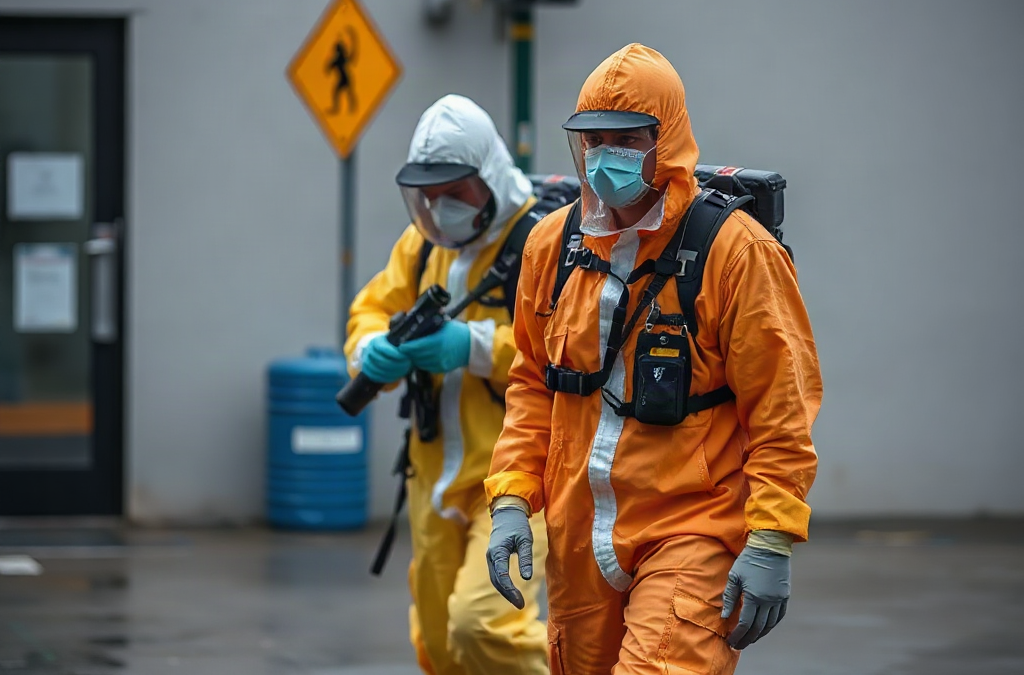
Decontamination planning for early emergency responders should establish a safe first-arrival sequence: identify the hazard, control movement, isolate contaminated clothing and equipment, set up a clean route, and coordinate medical care without spreading exposure. Responders should work from upwind or otherwise safer positions when feasible, use only protection appropriate to the suspected hazard, and prevent contaminated people from entering ambulances, stations, or treatment areas before controls are in place. Plans work best when they define roles, communications, water and waste arrangements, patient prioritization, and handoff points in advance. Improvised scrubbing, unprotected rescues, and unclear hot-zone boundaries are common causes of secondary contamination.
First-Arrival Priorities and Hazard Boundaries
Early responders rarely have complete information when they reach a suspected contamination scene. The first operational problem is not choosing a cleaning method; it is preventing an uncertain hazard from becoming a larger exposure area. Responders should pause long enough to assess visible clues, wind or airflow, casualties, suspicious containers, unusual odors, symptoms, and the route used by people leaving the scene. A short delay for positioning and communication may reduce exposure more effectively than an immediate approach.
The initial plan should distinguish between the suspected source area, the transition space, and the clean support area. Many agencies describe these as hot, warm, and cold zones, but the labels matter less than the controls attached to them. The source area should have restricted entry. The transition area should support removal of contamination and controlled movement. The clean area should contain unexposed personnel, transport coordination, records, and supplies. Boundaries must be visible enough to work in poor light, weather, crowding, or smoke.
A useful first-arrival sequence is:
- Approach from the safest practical direction and stop unnecessary movement through the suspected source.
- Notify dispatch and request the specialist, medical, fire, hazardous-materials, or public-health support appropriate to the situation.
- Separate potentially exposed people from unexposed people without forcing unnecessary contact or movement.
- Establish a controlled route for responders, patients, equipment, and waste.
- Record observations, actions, and transfers so later teams understand who may have been exposed.
The plan should account for people who cannot walk, children, older adults, people with disabilities, and those whose symptoms require urgent care. A blanket instruction to “decontaminate everyone” can create dangerous delays when airway compromise, severe burns, trauma, or altered consciousness requires medical attention. Conversely, moving every person directly into an ambulance can contaminate the vehicle and crew. The practical choice depends on the suspected hazard, exposure route, symptoms, available protection, and direction from qualified incident leadership.

A common failure is treating the first visible casualty as the entire incident. A person may have carried contamination into a vehicle, building, waiting area, or responder staging point. The planning question is therefore broader than where to wash someone: it is where contamination may have traveled, which surfaces need control, and how to stop further movement while preserving access to care. A clear decontamination planning for early emergency responders framework keeps scene safety ahead of speed without abandoning patients.
Building a Decontamination Process That Controls Movement
A workable decontamination process is a sequence of controlled decisions rather than a single shower operation. It should specify who receives assistance first, where clothing and personal items go, how people cross from contaminated to clean areas, and what happens when water is unavailable or inappropriate. The process must match the suspected substance and incident conditions. Water may be useful for some exposures, while uncontrolled washing may spread material, create runoff, damage skin, or complicate a reactive substance incident. Responders should follow agency protocols and specialist direction rather than improvising a universal method.
Clothing removal often has a major effect because garments can hold or transfer contamination. The plan should provide privacy, bags or containers suitable for the incident, labels, and a method for keeping removed items away from clean clothing and medical supplies. People should not be encouraged to shake clothing, brush unknown powders, or handle contaminated objects unnecessarily. Assistance should be organized so that one responder is not moving repeatedly between contaminated and clean areas.
Patient flow deserves the same attention as washing technique. A person who has completed a decontamination step should not walk back through the entry route to reach treatment. Marked lanes, one-way movement, staff assigned to each zone, and a simple handoff signal reduce cross-contamination. If several people are involved, triage may need to separate ambulatory patients from nonambulatory patients, while still preserving a route for urgent medical intervention.
Consider a warehouse release where workers exit through one door and gather beside a responding vehicle. A response that places a hose near the vehicle may clean some surfaces but leave the vehicle, crew, and gathering point exposed. A stronger arrangement moves the crowd away from the vehicle, establishes an upwind or otherwise safer control point when feasible, keeps ambulatory people in a managed queue, and reserves a protected path for patients needing immediate care. The best arrangement may be slower than a spontaneous rinse, but it gives responders a chance to control who crosses each boundary.
Wastewater and discarded materials also belong in the plan. Do not assume that runoff can enter ordinary drains or that sealed bags can be left beside a public road. Local procedures, environmental direction, and incident-command decisions may determine containment and disposal. When resources are limited, prioritize boundary control, patient separation, protective measures, and communication before adding equipment that cannot be managed safely.
The common misconception is that visible cleanliness proves successful decontamination. Odor, residue, or appearance may not reliably show whether a hazard remains. Conversely, excessive scrubbing can damage skin and increase absorption for some substances. The responder decontamination plan should define observable completion criteria, medical reassessment, and the authority responsible for releasing a person or area.
Equipment, Staffing, and Communications Under Pressure
Equipment supports a decontamination plan only when responders know where it is, who carries it, and how it will be replenished. A stockpile that remains locked in a distant facility is not an operational capability during the first minutes of an incident. Early-arrival kits should be checked for protective clothing, gloves, eye and face protection, respiratory protection where authorized and trained, barriers, marking materials, waste containers, lighting, communications equipment, privacy screens, patient coverings, and supplies for documentation.
Protective equipment must be selected for the suspected hazard and the task. More equipment is not automatically safer if it restricts vision, communication, dexterity, heat loss, or movement beyond what the responder can manage. Respiratory protection may require fit, training, medical clearance, or a defined level of respiratory hazard control. A responder should not enter a suspected contaminated area simply because a mask or disposable suit is available.
Staffing plans should assign specific functions: entry control, patient movement, decontamination support, medical triage, equipment monitoring, communications, and clean-area protection. These roles should not be left to whoever happens to arrive first. A responder handling a contaminated garment should not simultaneously manage clean-area records or distribute food and water. Relief personnel are also necessary because heat, protective clothing, stress, and repeated lifting can degrade judgment.
Communications must work across the zone boundary. Radios may be difficult to operate with gloves, hearing may be reduced by respiratory protection, and distressed patients may not understand technical instructions. Use short phrases, preassigned signals, large visual markers, and a backup communication method. Tell people where to stand, what not to touch, and when they may move. If a message cannot be heard or repeated accurately, the process is not ready for a crowded scene.
Imagine a small volunteer fire crew arriving before specialized support. The first crew may not be able to establish a full decontamination corridor, treat every patient, and protect its own members at once. The plan should identify the minimum safe actions: stop uncontrolled entry, isolate the likely source, request additional resources, prevent contaminated people from entering the apparatus, and provide life-saving care within the limits of available protection. This is safer than pretending a small team can reproduce a fully staffed hazardous-materials operation.
One recurring failure is confusing possession with readiness. Inspect kits, replace expired or damaged items, test lighting and radios, and verify that containers fit the supplies they are meant to hold. The early responder planning process should also identify supply gaps honestly. A plan that names its limits gives incident leaders better choices than a checklist that implies capabilities the team does not possess.
Training, Review, and Failure-Point Testing
Training should rehearse decisions as well as physical tasks. Responders need to practice recognizing when to stop an approach, establish a perimeter, request specialized support, protect a clean route, and communicate uncertainty. A drill that demonstrates only hose placement may look successful while leaving responders unable to manage patient flow, contaminated clothing, documentation, or a changing wind.
Use scenarios that expose the plan’s weak points. A useful exercise might begin with an unknown powder in a public building, then add an unconscious patient, a family member trying to cross the boundary, a damaged radio, and a shortage of protective garments. The purpose is not to reward fast improvisation. It is to reveal whether roles, escalation thresholds, and alternate routes remain clear when the original assumption fails.
After each exercise or incident, review what actually happened. Ask where people crossed boundaries, which instructions were misunderstood, how long equipment took to reach the scene, whether clean supplies stayed clean, and whether medical care was delayed. Also check responder welfare, heat stress, contamination of vehicles, and the handling of personal information. A decontamination plan improves when observations become specific changes rather than general praise or blame.
Keep the written plan usable in low light and under stress. A short first-arrival card can list the initial notification, approach restrictions, zone controls, patient-flow direction, protective-equipment limits, and the location of specialist contacts. Detailed procedures can remain in the larger incident manual. The quick-reference version should not contain so much text that a responder cannot find the next decision.
Training also needs boundaries around public messaging. People may remove clothing, wash at home, or travel to hospitals before responders arrive. Public instructions should be clear, hazard-specific, and coordinated with authorities; broad claims about what is safe can cause unnecessary exposure or dangerous crowd movement. When information is uncertain, explain the immediate protective action and where official updates will come from.
A weak assumption is that one successful exercise validates the whole system. Weather, terrain, crowd size, night operations, water access, staffing, and the substance involved can change the answer. Test the plan against those constraints, update contact lists and supply locations, and repeat the exercise after major equipment or staffing changes. Readiness is shown when a small team can recognize its limits early and hand control to the right support without creating a second exposure event.
For operational details, responders should consult current guidance from their local emergency-management authority, hazardous-materials program, fire service leadership, public-health agency, and occupational-safety authority. Those sources can address jurisdiction-specific protective equipment, medical monitoring, waste handling, training requirements, and incident-command procedures that a general article cannot establish.
Frequently Asked Questions
What should early responders do before approaching a suspected contaminated area?
Pause outside the suspected area, assess hazards and airflow, restrict unnecessary movement, notify dispatch, and request specialized support. Do not enter solely to investigate an odor, package, powder, or casualty.
Should every exposed person be washed immediately?
Not automatically. The method depends on the suspected substance, exposure route, symptoms, available protection, and specialist direction. Life-threatening medical needs may change the order of actions.
How can responders prevent contamination of ambulances?
Keep potentially contaminated people out of vehicles until the incident plan or qualified authority establishes an appropriate pathway. Separate clean transport operations from the contaminated movement route.
What equipment should a small first-arriving team prioritize?
Prioritize communication, boundary-marking materials, appropriate authorized protection, patient coverings, waste containers, lighting, documentation supplies, and a reliable way to request additional resources.
How often should a decontamination plan be exercised?
Exercise it periodically and whenever staffing, equipment, facilities, or local hazards change. Include scenarios involving poor communications, limited water, nonambulatory patients, and contaminated vehicles.
Conclusion
Effective decontamination planning for early emergency responders begins before anyone crosses the scene boundary. The first priorities are safe approach, movement control, clear separation of contaminated and clean areas, appropriate protection, and rapid coordination with specialist and medical resources. Plans should explain how patients move, where clothing and waste go, how ambulances and equipment are protected, and what the first crew cannot safely do. Practice those decisions with realistic constraints rather than relying on equipment lists or a single washing demonstration. After every drill, correct a specific weakness—an unclear handoff, missing supply, poor radio method, or unsafe vehicle route. That disciplined review turns a written procedure into a safer first-arrival operation.
Related Content
- Stay Calm and Prepare On: A Step-by-Step Approach to Emergency Preparedness
- How to Prepare for Unexpected Natural Disasters: Essential Steps and Checklists
- Survival Skills for Extreme Heat Conditions
- Preparing for the Unexpected: Proven Steps on What to Do Before a Disaster Strikes
- Emergency Supply Planning Guide: Essential Checklist for Disaster Preparedness




