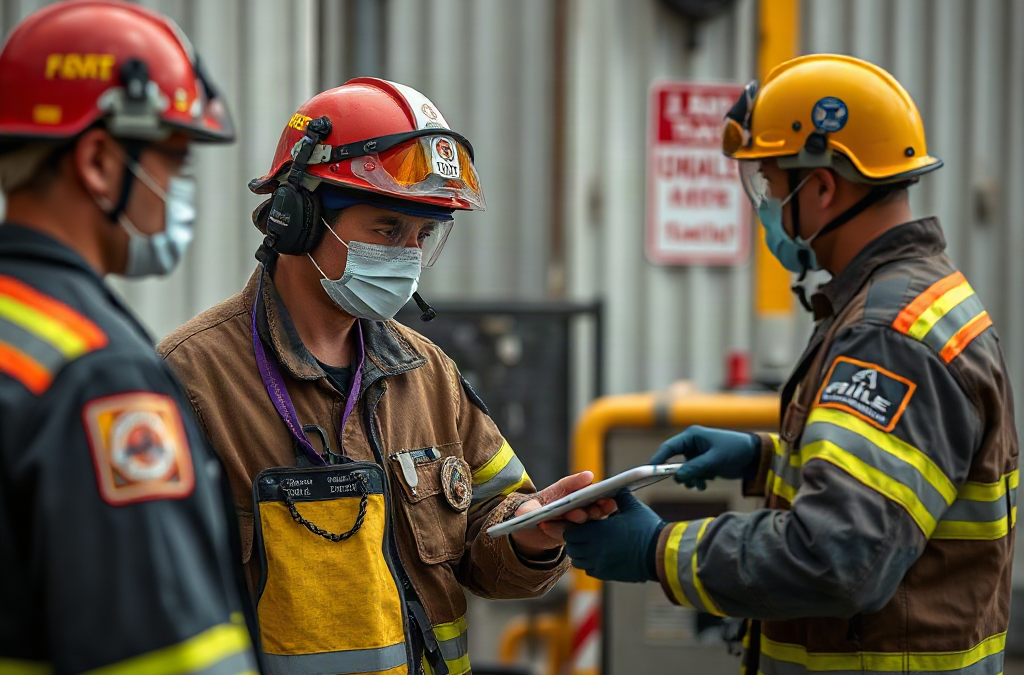
Just-in-time training for emergency skills and procedures delivers short, task-specific instruction immediately before a responder must act, using clear steps, equipment checks, brief demonstrations, and supervised practice. It is most useful when a person has learned a procedure previously but may forget details, when conditions change, or when a rare event makes full-course retraining impractical. Effective training identifies the exact task, limits information to safety-critical actions, confirms understanding through demonstration, and provides an escalation point for situations beyond the learner’s authority. It should reinforce—not replace—formal certification, recurring practice, local protocols, or professional emergency care.
Why Timing Matters in Emergency Skill Training
Emergency skills are vulnerable to forgetting because many people use them rarely, under pressure, and with incomplete information. A person may remember that a procedure exists while forgetting the order of actions, the location of supplies, or the point at which outside help is required. Just-in-time instruction addresses that gap by placing a concise reminder close to the moment of use.
Timing does not mean introducing a complex skill for the first time during a crisis. A learner who has never practiced bleeding control, evacuation equipment use, or a communication protocol may not develop reliable performance from a hurried video or card. The safer sequence is foundational instruction during calm conditions, followed by short refreshers when a known risk, shift, event, season, or assignment makes the skill relevant.
Consider a workplace that stores an automated external defibrillator. A nearby visual prompt can remind a trained employee where the device is, how to activate its voice guidance, and how to clear the patient during analysis. It cannot substitute for local emergency activation procedures, formal instruction, or competent medical assessment. The prompt reduces avoidable hesitation without pretending that a reference card turns an untrained person into a specialist.
The main failure is poor timing rather than too little information. A ten-minute lesson delivered weeks before an event may be less useful than a ninety-second rehearsal immediately before a supervised drill. Conversely, a reminder placed where a person cannot safely read it, or delivered while the person is already managing an unstable situation, may create distraction. Training designers should ask whether the learner has enough attention, light, space, and time to use the material.

For a broader foundation, pair this topic with Just-in-time training for emergency skills and procedures as part of a documented readiness program rather than treating it as a standalone solution.
What Effective Just-In-Time Instruction Contains
Useful just-in-time instruction is narrow, visible, and action-oriented. It identifies the immediate task, states the first safe move, shows the required equipment, and explains when the learner must stop or call for help. It avoids lengthy background material when attention is limited. The goal is not to compress an entire course into a handout; it is to make the next authorized action easier to perform correctly.
A strong module usually has four layers: a trigger, a task sequence, a verification step, and an escalation rule. The trigger might be a drill, equipment assignment, weather alert, patient-care scenario, or start of a shift. The sequence should use plain verbs and match the actual equipment. Verification may involve repeating a critical instruction, pointing to a control, or demonstrating a low-risk step. The escalation rule defines what exceeds the learner’s role, available resources, or training.
For example, a shelter team preparing to use a portable generator needs more than a generic “generator safety” reminder. The material should direct the team to the approved operating location, fuel-handling restrictions, ventilation requirements, shutdown procedure, and responsible supervisor. It should not encourage improvisation when the model, site, or local rule differs. A short checklist that matches the device is safer than a polished generic video with unfamiliar controls.
Information density must be managed carefully. Color coding, numbered actions, diagrams, and equipment labels can reduce search time, but clutter can hide the one warning that matters most. Use the same terms on the training card, equipment label, drill script, and reporting form. If one document says “isolate power” and another says “disconnect the source,” learners may hesitate over whether the actions are equivalent.
Common mistakes include presenting warnings without showing the corresponding action, assuming that watching equals competence, and omitting environmental constraints. A procedure may work in a classroom yet fail when gloves reduce dexterity, noise obscures instructions, lighting is poor, or several people speak at once. Test the material in conditions that resemble use while keeping the exercise controlled and safe.
Choosing the Right Format for the Situation
The best format depends on urgency, complexity, risk, and the learner’s prior exposure. A laminated card may be ideal for a short sequence near equipment. A voice-guided application can help when hands are occupied, but it depends on battery power, connectivity, and clear audio. A short video can demonstrate movement or setup, while an instructor-led rehearsal is better when judgment, coordination, or feedback matters.
Do not choose a digital format simply because it is easy to distribute. A phone may be unavailable during a power outage, a login may delay access, and a small screen may make a diagram difficult to interpret. Printed instructions can fail when they are outdated, poorly lit, or stored away from the equipment. A layered approach is often more resilient: a concise physical prompt at the point of use, an offline digital copy, and periodic supervised practice.
Match the format to the error you are trying to prevent. If people cannot find a shutoff, a labeled map may matter more than a lecture. If they confuse the order of actions, a numbered card and coached repetition may help. If they fail to recognize when a situation exceeds their role, scenario discussion and escalation practice are more appropriate than a mnemonic alone.
A community event provides a useful comparison. Volunteers assigned to first-aid support may need a briefing on radio channels, location reporting, supply access, and who contacts professional responders. A detailed clinical manual would be too broad for the assignment. A short role card, a walk-through of the venue, and a radio check would better address the operational risk. Volunteers still need clear boundaries against diagnosing, treating beyond their training, or delaying emergency services.
Review materials after each exercise. If learners repeatedly ask where equipment is located, the problem may be placement rather than instruction. If they perform a step incorrectly despite reading it, the wording or visual design may be inadequate. If they skip the same safety check, the procedure may be too long for the available time or the check may not be integrated into the workflow.
Readers comparing approaches can use Just-in-time training for emergency skills and procedures alongside formal courses, drills, and role-specific competency checks. The short reminder should reinforce the larger system, not become the only exposure to a safety-critical procedure.
Testing Recall, Performance, and Safe Escalation
Emergency training should measure more than whether a learner can repeat information. A person may recite a sequence yet freeze when equipment is unfamiliar or conditions change. Practical checks should examine whether the learner can identify the situation, begin the first authorized action, communicate essential facts, and stop when the scenario requires a higher level of assistance.
Use low-risk scenarios that reflect actual responsibilities. A facilitator might present a blocked exit, a simulated injury, a loss of communication, or a failed piece of equipment. The learner should explain what they notice, what they would do first, and whom they would contact. Where physical practice is appropriate, use safe simulation equipment and clear stop rules. Never create a real hazard to make training feel realistic.
Feedback should be specific and immediate. “Be more confident” does not identify a correctable problem. “You located the kit quickly, but you did not state the incident location before requesting assistance” gives the learner a concrete adjustment. Ask the learner to repeat the missed step rather than assuming that hearing the correction creates lasting recall.
A compact performance check can include:
- Identify the hazard and confirm personal safety before intervening.
- Locate the correct equipment or communication channel.
- Perform the first critical action in the approved sequence.
- State the information needed by responders or supervisors.
- Recognize the boundary that requires escalation or withdrawal.
Assessment must account for conditions. A perfect classroom demonstration may not predict performance during darkness, crowd noise, protective clothing, or a change in team roles. The answer is not to make every drill extreme. It is to vary one relevant constraint at a time and determine whether the core behavior remains reliable.
A weak assumption is that speed is always the main measure. Rushing can cause skipped safety checks, incorrect equipment selection, or poor communication. Accuracy, hazard recognition, and timely escalation may matter more than shaving seconds from a sequence. Document recurring errors, revise the prompt, and schedule focused practice instead of merely marking attendance.
Building a Sustainable Emergency Training System
Just-in-time training works best when it is maintained like operational equipment. Assign an owner for each procedure, record the approved version, identify the audience, and set a review trigger. Triggers may include equipment replacement, a change in site layout, a revised local protocol, an incident, or a drill that exposes confusion.
Keep a simple priority register. High-risk, low-frequency tasks deserve more frequent prompts and supervised practice than familiar low-consequence actions. Procedures involving electricity, fire, medical care, hazardous materials, or evacuation should be checked against applicable official guidance and organizational requirements. Local emergency services, workplace safety personnel, recognized training organizations, or equipment manufacturers may provide authoritative instructions for specific contexts.
Ownership also prevents stale material. A card that names a retired radio channel or shows a discontinued device can create false confidence. Put a revision date and responsible contact on controlled materials, but do not rely on dates alone. During drills, ask whether the instructions still match the site, staffing, equipment, and authority structure.
Training access should reflect the people expected to act. New staff may require full instruction before receiving a short refresher. Experienced responders may need scenario variations rather than basic definitions. People with disabilities, language needs, or limited digital access may require adapted materials and additional time. Accessibility is an operational issue when a team depends on rapid, shared action.
Organizations should also distinguish readiness from certification. A completion record shows that someone attended or passed a check at a particular time; it does not prove performance in every future situation. Use recurring drills, equipment inspections, after-action reviews, and clear escalation pathways to maintain realistic readiness. The practical measure is whether people can perform the assigned first steps safely and communicate when they cannot proceed.
For planning context, Just-in-time training for emergency skills and procedures should sit beside an inventory of hazards, roles, contact methods, supplies, and formal training requirements. That combination makes short instruction targeted rather than improvised.
Frequently Asked Questions
What does just-in-time emergency training mean?
It is concise, task-specific instruction delivered shortly before or during a relevant assignment. It refreshes or supports known skills rather than replacing foundational training.
Can a quick refresher replace formal emergency training?
No. A refresher may support recall, but complex or safety-critical procedures require appropriate instruction, practice, supervision, and any applicable qualification.
What should an emergency training card include?
Include the first safe action, the correct equipment, the short sequence, critical warnings, communication details, and the point at which the learner must escalate.
How can training effectiveness be checked?
Use a controlled scenario, observe the learner performing the relevant steps, assess communication and hazard recognition, and correct specific errors immediately.
When should just-in-time materials be updated?
Review them after drills, incidents, equipment changes, site changes, staffing changes, or updates to applicable procedures. Remove obsolete copies from every access point.
Further Reading
Authoritative Sources
- Ready.gov
ready.govOffers official preparedness guidance that can help organizations connect short training prompts with broader emergency planning
- OSHA Emergency Preparedness
osha.govProvides workplace-oriented information on emergency planning, response roles, and safety considerations
- FEMA Emergency Management Training
fema.govLists training resources relevant to emergency management responsibilities and coordinated response
Conclusion
Just-in-time instruction is most valuable when it closes a specific gap between prior learning and immediate action. Build it around the actual equipment, role, environment, and escalation path rather than compressing a full course into a generic reminder. Use short prompts for sequence and recall, coached scenarios for judgment and communication, and formal training for skills that cannot be acquired safely in a crisis. Check whether learners can recognize hazards, perform the first authorized step, and summon appropriate help without creating additional risk. After each drill or incident, revise the material when the evidence shows confusion, outdated equipment, or an impractical workflow. A dependable system combines timely reminders with recurring practice, clear role boundaries, accessible materials, and accountable review.
Related Content
- The Consequences of Inadequate Training for Disaster Response: Risks, Mistakes, and Real-World Impacts
- How to Recognize Signs of Burnout in Prepping Efforts: Symptoms, Causes, and Effective Strategies
- The Ultimate Guide to 10 Effective Community Disaster Preparation Strategies for 2025
- What’s the Best Way to Prepare for a Tsunami?
- How can I build a community of like-minded, self-reliant people?