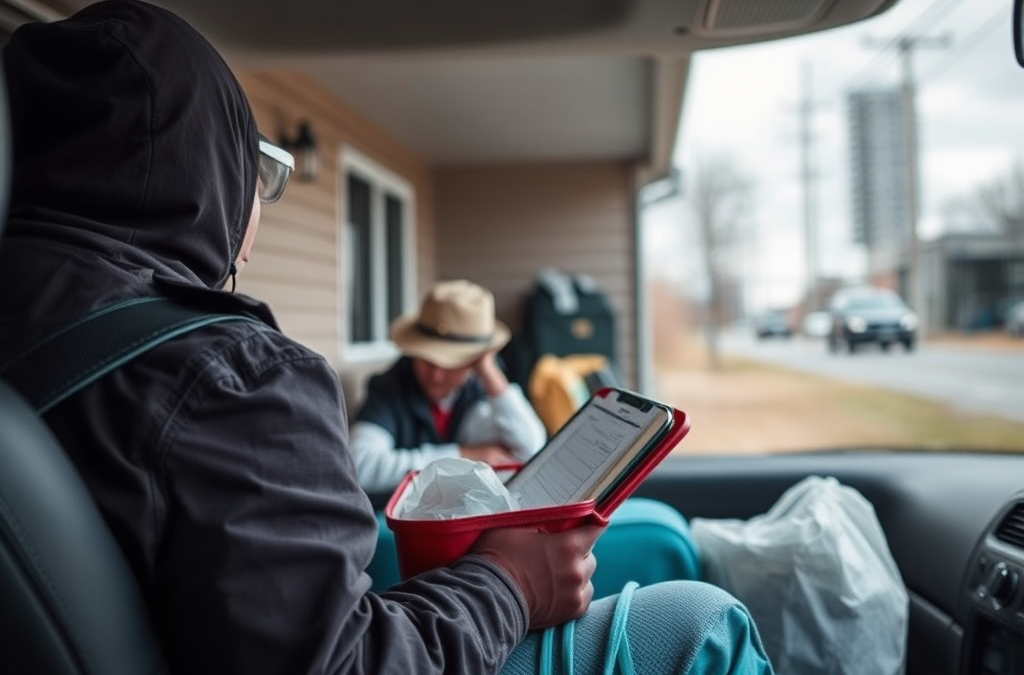
Lessons to record after a real evacuation should cover the warning timeline, departure choices, route conditions, communication gaps, supply problems, and the point at which the household reached safety. Record facts while memories are fresh, separating confirmed observations from guesses or emotional impressions. Note what delayed movement, which items were unreachable, whether vehicles, medications, documents, and pet supplies were ready, and how official information affected decisions. Compare the written account with the intended evacuation plan, then assign specific changes such as relocating gear, adding an alternate route, revising contact instructions, or leaving earlier. Avoid recording only what went wrong; successful actions show which parts of the plan deserve preservation.
Build a Reliable Evacuation Record While Details Are Fresh
A useful post-evacuation record captures what happened in sequence, not merely how the experience felt. Begin with the first warning, the information source that prompted action, the time the household began preparing, the time each person left, and the time the group reached its destination. A simple timeline exposes delays that are difficult to remember later. For instance, a departure that seemed immediate may have included an unplanned search for identity documents, a medication refill, or a missing pet carrier.
Use separate notes for observed facts, decisions, and assumptions. “The road was closed at the west junction” is different from “the road was probably closed because of flooding.” The first can be checked against official notices; the second should remain marked as an interpretation. This distinction prevents a later plan from being built around a mistaken explanation.
Write down successful actions as carefully as failures. A pre-packed document pouch, a charged power bank, or a neighbor’s warning may have reduced confusion. Preserving those details matters because people often redesign a plan by removing frustrating elements while overlooking the small measures that actually worked. A record that lists only problems produces an incomplete lesson.
Keep the first account short enough to finish. A phone note, voice memo followed by transcription, or two-page worksheet is more useful than an ambitious narrative abandoned halfway through. Add timestamps, screenshots of alerts, receipts for emergency purchases, and photographs of relevant conditions when they clarify the sequence. Avoid sharing private addresses, medical information, or identifying details in a public post.

One common mistake is writing the review while exhaustion, fear, or anger is still driving every conclusion. Immediate notes are valuable, but final judgments can wait until everyone has slept and urgent recovery tasks are handled. The goal is not to assign blame. It is to identify where the plan, equipment, information flow, or household expectations diverged from reality. Readers comparing their own experience with lessons to record after a real evacuation should preserve both the first raw account and the later edited version.
Examine Departure Timing, Routes, and Information
Timing records reveal whether the household reacted to a clear trigger or spent too long waiting for certainty. Note when the first credible alert arrived, what threshold was used for leaving, and which tasks consumed the final minutes. A plan may say “leave when advised,” yet the real process may depend on finding a charger, contacting relatives, or deciding whether to secure outdoor equipment. Those dependencies belong in the review.
Route analysis should include more than the chosen road. Record the planned route, actual route, delays, closures, fuel stops, traffic conditions, and points where navigation failed. A route that worked in daylight may be unsuitable in darkness, poor visibility, or heavy traffic. An alternate road may look attractive on a map but lack fuel, reliable reception, safe turnaround points, or access for a large vehicle. Comparing the preferred route with the route actually used shows whether the problem was poor planning or changing conditions.
Information quality deserves its own section. Identify which alerts were authoritative, which messages were delayed, and which informal reports caused confusion. Save the wording and time of important instructions where possible. Official guidance can change as conditions develop, so a household should record not only what it heard but how it decided which source to trust. The useful lesson may be a better alert hierarchy rather than a new piece of equipment.
Consider two competing errors: leaving too late because every detail seemed uncertain, or leaving too early based on an unverified rumor. The correct response depends on hazard speed, local instructions, mobility needs, road capacity, and the consequences of being stranded. A post-event review should not turn one successful departure into a universal rule. It should identify the signals that were available, the signals that were missed, and the point where waiting stopped adding useful information.
Record whether communication worked between household members and outside contacts. Did everyone know the destination? Could a person who became separated find the meeting point? Did low battery, overloaded networks, or unclear wording interfere? A short contact script and a backup method may be more valuable than adding multiple apps. The recording process should explain why a communication step succeeded or failed, not simply label it “good” or “bad.”
Audit People, Supplies, Vehicles, and Property
The most revealing inventory is the one made under real pressure. List what each person needed, what was available, what was inaccessible, and what had to be purchased or left behind. Include medications, mobility aids, glasses, infant supplies, pet items, identification, financial cards, water, food, chargers, and clothing suited to the destination. A supply that exists but cannot be found quickly should be treated as unavailable for planning purposes.
People-related observations are equally important. Record who knew their assignment, who needed hands-on help, who became separated, and which decisions required repeated discussion. A child, older adult, person with a disability, or anxious pet may change the pace of departure more than the packing list suggests. Avoid describing a person as the problem when the actual weakness was an unrealistic timetable or unclear responsibility.
Vehicle notes should cover fuel level, loading time, available seating, child restraints, tire or mechanical concerns, navigation access, and whether a second vehicle created coordination difficulties. A larger vehicle may carry more supplies but take longer to load and maneuver. A single vehicle may simplify communication but create a single point of failure. These tradeoffs should be written down rather than resolved through assumption.
Property actions also need a factual review. Note which doors, windows, utilities, documents, outdoor items, and animals were addressed, and which actions were skipped because time ran out. Do not let property protection delay an urgent departure. The lesson may be to create a short “leave now” sequence and a separate optional sequence for conditions that allow more time. Photographing damage or conditions can support later insurance and repair records, but personal safety and official evacuation instructions take priority.
A compact audit can use four columns: needed, available, reachable, and change required. This exposes a common misconception: a well-stocked home is not automatically an evacuation-ready home. Supplies stored in a basement, documents spread across rooms, or a pet carrier buried behind seasonal items may fail at the exact moment they are needed. Link the findings to specific lessons and revisions, not to a general instruction to “be more prepared.”
Turn Observations Into Specific Plan Changes
A record becomes useful only when it changes a future action, location, trigger, or responsibility. Review each observation and ask: what happened, why did it happen, what consequence followed, and what change would reduce the chance or cost of repetition? “Packing took too long” is an observation. “Move documents and medications into one labeled grab pouch beside the exit” is a testable correction.
Prioritize changes by consequence and reliability. A missing prescription, unsafe route, or inability to account for a household member deserves attention before an inconvenience such as uncomfortable clothing. Favor low-cost changes that remove repeated friction: duplicate critical documents in a secure location, keep chargers with the departure kit, label pet supplies, and write the destination and contact details on paper. More expensive purchases may be justified when the event exposed a genuine capacity problem, but buying equipment should not substitute for clearer decisions.
Use a short action register with five fields:
- Finding: the specific event or gap.
- Cause: confirmed reason, or a clearly marked hypothesis.
- Change: the new action, item, location, or rule.
- Owner: the person responsible for maintaining it.
- Test date: when the change will be checked in a calm setting.
Testing matters because a correction can create a new problem. Moving all supplies to one location may improve speed but make the kit too heavy. Switching routes may avoid one closure while increasing distance or reducing fuel options. A rehearsal should measure retrieval time, loading order, communication clarity, and whether anyone is overlooked. If the revised process only works when every person is present, it is not complete.
Review the record after official information about the incident becomes available, but do not rewrite firsthand observations to match a later story. Conditions may have changed between neighborhoods, and a route that appeared open at one time may have become dangerous later. Preserve uncertainty where it remains. The strongest lesson is often a modest, specific adjustment that can be maintained: an earlier trigger, a second destination, a printed contact card, or a monthly check of medications and vehicle readiness.
Frequently Asked Questions
When should an evacuation review be written?
Make brief notes as soon as practical, then complete the considered review after urgent recovery and rest. Early notes preserve timing and details; later review improves judgment.
What if household members remember the evacuation differently?
Keep differing accounts and label them by person. Compare timestamps, alerts, receipts, and route records before deciding what can be confirmed.
Should successful actions be included?
Yes. Record actions that reduced delay or confusion so they remain part of the revised plan rather than being discarded during a problem-focused review.
How detailed should a post-evacuation checklist be?
Make it detailed enough to identify a responsible person, location, trigger, and test date, but short enough to use under pressure. Separate urgent steps from optional tasks.
What is the biggest recording mistake?
Turning an assumption into a fact is a common error. Mark uncertain causes clearly and base plan changes on verified conditions whenever possible.
Further Reading
Authoritative Sources
- Academy of Nutrition and Dietetics
eatright.orgProfessional nutrition guidance, healthy eating resources, and practical dietitian-reviewed advice.
- U.S. Department of Agriculture
usda.govOfficial food, nutrition, agriculture, and consumer guidance from the USDA.
- NIH Office of Dietary Supplements
ods.od.nih.govResearch-based fact sheets on nutrients, supplements, dietary intake, and safety considerations.
- International Society of Sports Nutrition
sportsnutritionsociety.orgEvidence-informed sports nutrition resources and position stands for active people and athletes.
Conclusion
A strong evacuation review preserves the sequence of events, the conditions people faced, and the choices that shaped the outcome. Record warning times, route changes, communication performance, supply access, vehicle limitations, household needs, and unfinished property tasks. Separate observations from explanations, and protect private information when storing or sharing the notes. Then convert the findings into a small action register with an owner and a test date. Prioritize changes that affect safety, medication access, accountability, and departure speed before comfort upgrades or additional gear. Rehearse the revised process under ordinary conditions and keep the successful parts intact. The value of the record is measured by whether the next departure becomes clearer, faster, and more realistic—not by how long the document becomes.
Related Content
- Surviving the First 72 Hours of a Crisis: What You Need to Know
- The Impact of Seasonal Weather on Prepping Efforts: Key Strategies for Different Conditions
- A Beginner’s Guide to Self-Sufficient Living in Rural Areas
- The Challenges of Prepping for Less Common Disasters: Strategies for Unique Situations
- 5 Essential Steps to Prepare for an Emergency