
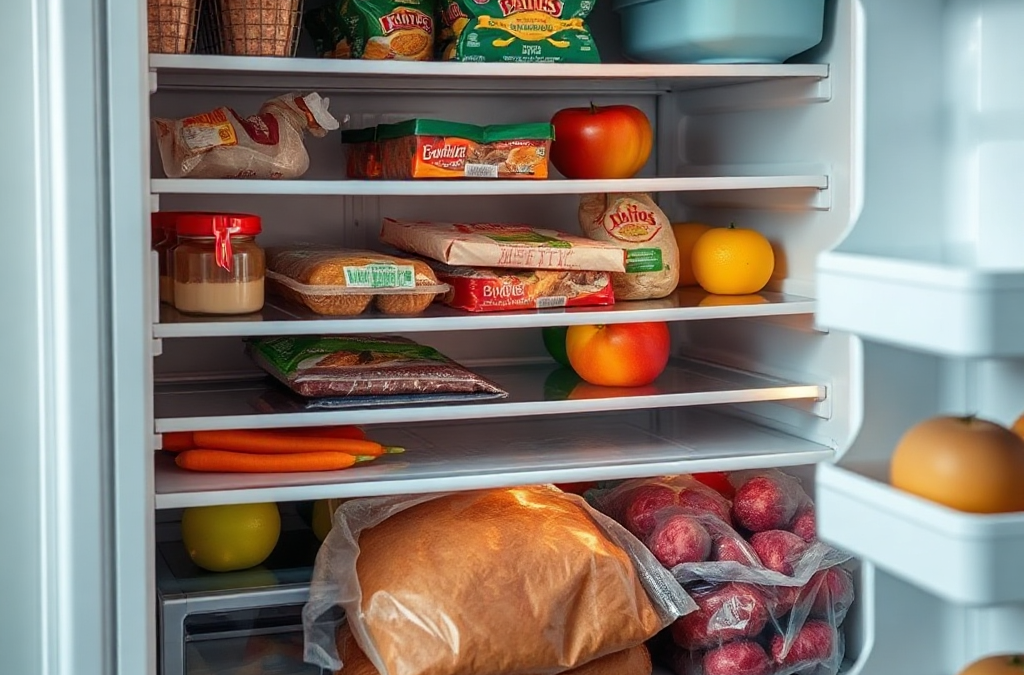
Safe refrigeration decisions after repeated brief outages depend on the refrigerator’s actual temperature, the total time food may have spent above safe cold conditions, and the type of food involved. Keep doors closed during each interruption, use a refrigerator thermometer when power returns, and treat repeated warm-up cycles as cumulative uncertainty rather than separate harmless events. Perishable foods such as meat, poultry, seafood, eggs, milk, and prepared leftovers deserve the strictest review because they can support bacterial growth without obvious changes in smell or appearance. When timing or temperature cannot be established reliably, discarding a questionable high-risk item is safer than tasting it or relying on its appearance.
Why Repeated Short Outages Create a Different Food-Safety Problem
A refrigerator does not warm at the same rate every time, and a brief outage does not automatically make food unsafe. The difficulty begins when several interruptions allow the cabinet temperature to rise, cool partially, and rise again before anyone can establish what happened. Each cycle depends on room temperature, door opening, food volume, appliance insulation, and whether the compressor had time to restore normal cooling.
A closed, full refrigerator generally holds cold longer than a sparsely stocked one because the food mass changes temperature more slowly. That advantage disappears when people repeatedly open the door to check contents, move items, or search for a thermometer. A small refrigerator in a warm kitchen may also recover differently from a large, well-filled unit in a cool room. The outage label—“only ten minutes”—does not describe the food’s actual temperature history.
Repeated interruptions also create a record-keeping problem. If power failed at 8 a.m., returned at 8:12, failed again at 9, and returned at 9:20, the refrigerator may not have fully returned to its normal operating range between events. Treating every interruption as an independent ten-minute exposure can produce false reassurance. The better question is whether the food remained adequately cold throughout the combined period and whether that can be supported by evidence.
Use safe refrigeration decisions after repeated brief outages as a risk assessment, not a smell test. Spoilage odors and slimy textures can reveal deterioration, but foodborne pathogens may be present without visible or sensory warning. Tasting a questionable item is not a safe test. The most useful immediate action is to stop unnecessary door opening, note the outage timeline, and find the refrigerator thermometer or another reliable temperature clue.

How Temperature, Timing, And Food Type Change the Decision
Temperature evidence is more useful than the outage duration alone. A refrigerator thermometer shows the cabinet environment, although it may not perfectly represent every food item. A thermometer reading taken after power returns can also miss a previous warm period if the appliance has already cooled again. For that reason, the reading should be combined with the outage sequence, door activity, food placement, and any signs that cold storage was interrupted.
Food type determines how conservative the decision should be. Raw poultry, ground meat, seafood, soft dairy products, cut fruit, cooked rice, leftovers, and ready-to-eat meals have different handling risks than unopened shelf-stable foods. A sealed jar of mustard is not evaluated like a container of cooked chicken. Hard cheeses, whole produce, and some condiments may tolerate conditions that would make a raw meat package or cream-filled dessert a poor choice. The goal is not to apply one rule to every item, but to match uncertainty with the food’s vulnerability.
Packaging can mislead. A frozen package that still contains ice crystals may offer more useful evidence than a chilled casserole that merely feels cool on the surface. Conversely, a cold exterior does not prove the center stayed cold. Large containers, tightly packed leftovers, and dense meat packages change temperature slowly, while small containers and foods stored in the door may warm sooner. Door shelves are usually less stable than interior shelves, so their contents deserve closer scrutiny after repeated access.
When an appliance has a display, remember that its number may reflect the sensor location rather than the warmest point. A refrigerator set to a cold target can still experience uneven conditions if air circulation is poor or the door seal is damaged. Avoid assuming that power restoration instantly resets the safety question. If the temperature is unknown and the item is highly perishable, uncertainty itself becomes a reason to choose the lower-risk option.
A useful comparison is between known exposure and unknown exposure. Known exposure lets you apply an established food-safety decision based on time and temperature. Unknown exposure requires more caution because neither a pleasant smell nor a brief stated outage can establish what happened inside the package. Keep a record of which foods were in the refrigerator, where they were stored, and whether they were moved; that simple note may prevent repeated handling and guesswork.
A Practical Inspection Sequence When Power Returns
Begin by preserving evidence rather than immediately rearranging the refrigerator. Record when the latest outage began and ended, estimate how often the door was opened, and check the appliance thermometer before moving food. If the refrigerator is still warm, keep the door closed while deciding whether food can be transferred to a working refrigerator or a properly prepared cooler.
Inspect the coldest and warmest zones separately. Check interior shelves, the door, drawers, and any area near the front where items may have been exposed to warm air. Look for leaking packages, swollen containers, separated sauces, melted ice, or condensation. These signs do not by themselves prove that food is unsafe, but they can reveal that the cabinet or a package experienced a substantial temperature change.
Use this compact sequence:
- Establish the timeline: combine the repeated interruptions rather than counting only the latest event.
- Check temperature clues: read the appliance thermometer and note whether frozen items remain solid or partly frozen.
- Sort by risk: separate raw animal foods, dairy, eggs, leftovers, cut produce, and ready-to-eat foods from lower-risk packaged items.
- Prevent cross-contamination: place leaking raw packages in a contained tray and clean affected surfaces according to safe food-handling practice.
- Decide before tasting: discard items whose exposure cannot be established and whose risk is high.
The inspection should be orderly, but it should not become an excuse to leave the door open for a long time. A family may reasonably prioritize an unopened beverage or whole apples later, while promptly evaluating cooked leftovers, milk, and raw poultry. If a cooler is available, transfer the most temperature-sensitive items first, using enough ice or cold packs to keep the container cold and a thermometer to verify conditions rather than guessing from touch.
One common failure is mixing newly purchased cold food with older questionable food. That makes later decisions harder and may spread leaks. Another is placing a hot pot into an already stressed refrigerator, which adds heat and slows recovery. Once power is stable, allow the appliance to cool without unnecessary loading, verify that the door closes fully, and check whether a tripped breaker, loose plug, or failing seal is causing the interruptions to continue.
What To Keep, Cook, Move, Or Discard
Keep food when the available evidence supports continuous cold storage and the package remains intact. Move high-risk items to a dependable refrigerator or ice-filled cooler when the home appliance is still cycling unpredictably. Cooking is not a universal rescue method: heat may reduce some living organisms, but it does not make every temperature-abused food choice acceptable, and it cannot reverse all forms of deterioration or contamination.
Discard decisions should be strictest for foods that are highly perishable, ready to eat, or intended for people at greater risk from foodborne illness. Raw meat and seafood, opened milk, soft dairy, egg dishes, cooked leftovers, and prepared foods deserve more caution than unopened shelf-stable products. Do not use appearance, odor, or a small taste to clear an item. A food can look normal while presenting a hazard, and tasting it adds exposure without producing reliable information.
Food location matters when the evidence is mixed. A sealed container stored deep on an interior shelf may have stayed colder than a small carton in the door. A large block of food may remain cold in its center while its edges warm; that does not automatically make the entire item safe. Separate packages that were touching leaking raw food, and discard damaged packaging when its contents may have been contaminated.
Consider a repeated-outage household with a refrigerator thermometer reading cold after power returns. The reading supports recovery, but it does not prove that milk in the door and a shallow container of leftovers remained safe during earlier warm periods. The prudent choice may be to retain lower-risk items and remove uncertain ready-to-eat foods. In another household, a full freezer with solidly frozen food and little door activity may provide stronger evidence for keeping its contents, subject to the condition of each package.
For future events, prepare before the next interruption by keeping a refrigerator thermometer visible, grouping similar foods, maintaining cold packs, and marking leftovers with dates. A simple outage log can include start time, return time, door openings, temperature readings, and items transferred. Use safe refrigeration decisions after repeated brief outages again when the same appliance has several power events; recurring outages may point to an electrical or equipment problem that needs attention beyond food sorting.
When The Appliance Itself Needs Attention
Food safety and appliance reliability are connected. If the refrigerator repeatedly loses power, fails to cool after power returns, develops an unusual operating pattern, or cannot hold a stable temperature, replacing food is only a temporary response. Check the plug, outlet, circuit protection, door gasket, blocked air vents, and condenser-area cleanliness where the manufacturer permits user maintenance. Do not bypass electrical protection or attempt unsafe repairs.
A refrigerator that cools slowly after every interruption may be overloaded, poorly ventilated, or developing a mechanical fault. An appliance placed beside a heat source may struggle more during warm weather. A damaged seal lets cold air escape and allows warm, humid air to enter, increasing both temperature variation and condensation. These causes matter because repeated brief outages can expose a weakness that was not obvious during normal operation.
Compare the cost of preventive action with the cost of repeated uncertainty. A visible thermometer and a cooler with prepared cold packs are relatively simple safeguards, while a service call may be appropriate when temperatures remain unstable despite stable power and a properly closed door. If food must be discarded repeatedly, document the readings and outage times; that record can help a technician identify whether the problem is electrical, mechanical, or related to installation.
Do not pack the refrigerator so tightly that cold air cannot circulate, but do not leave it nearly empty if that makes temperature swings sharper. Store raw foods below ready-to-eat foods and use containers that prevent leaks. These habits will not compensate for a failed appliance, yet they reduce the consequences of a short disruption and make the next inspection more reliable.
Frequently Asked Questions
Does a ten-minute outage automatically spoil refrigerator food?
No. A brief event is not automatically unsafe, but repeated interruptions, frequent door opening, a warm room, or uncertain temperature history can change the assessment.
Should I trust the refrigerator display after power returns?
Use it as one clue, not complete proof. The display may reflect one sensor location and may show recovery after food has already warmed.
Can I smell food to decide whether it is safe?
No. Harmful bacteria may not change smell, taste, or appearance. Sensory checks can identify spoilage but cannot clear questionable perishable food.
Which refrigerator foods deserve the earliest review?
Check raw meat, poultry, seafood, milk, eggs, soft dairy, cooked leftovers, and ready-to-eat prepared foods before lower-risk packaged items.
What should I do if outages keep happening?
Limit door opening, monitor temperature, use a prepared cooler when needed, and investigate the outlet, breaker, door seal, ventilation, or appliance fault.
Further Reading
Authoritative Sources
- Academy of Nutrition and Dietetics
eatright.orgProfessional nutrition guidance, healthy eating resources, and practical dietitian-reviewed advice.
- U.S. Department of Agriculture
usda.govOfficial food, nutrition, agriculture, and consumer guidance from the USDA.
- NIH Office of Dietary Supplements
ods.od.nih.govResearch-based fact sheets on nutrients, supplements, dietary intake, and safety considerations.
- International Society of Sports Nutrition
sportsnutritionsociety.orgEvidence-informed sports nutrition resources and position stands for active people and athletes.
Conclusion
Repeated brief outages call for a combined review of time, temperature, food type, storage location, and appliance performance. Keep the door closed during interruptions, record the sequence of events, and use a thermometer rather than relying on touch or smell. Prioritize highly perishable and ready-to-eat foods, especially when their exposure history is uncertain; cooking or tasting is not a dependable way to recover questionable food. Transfer the most vulnerable items to verified cold storage when the refrigerator cannot stabilize. After the immediate decision, address the cause of recurring power loss or poor cooling, and keep a thermometer, cold packs, and an outage log ready for the next event.
Related Content
- How to Build a Survival Kit: Essential Items and Practical Steps
- What You Need for Survival: Essential Items for Emergency Preparedness
- Issues With Relying Solely on Online Prepper Resources: Common Misconceptions and Practical Alternatives
- Survival Gear: Must-Haves for Harsh Weather
- Building a Community Disaster Response Plan




