
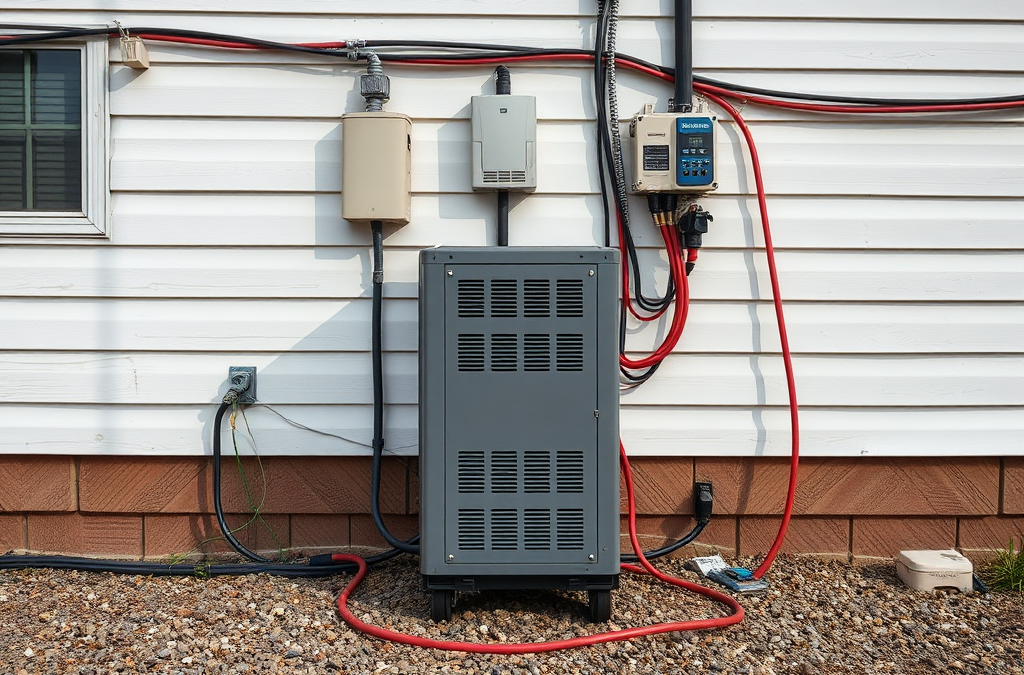
Powering only essential circuits without exceeding inverter limits requires a measured load list, a startup-watt allowance, and deliberate circuit separation. Identify refrigeration, medical equipment, communications, heating controls, and selected lighting before connecting anything, then compare their running and surge demands with the inverter’s continuous and peak ratings. Keep a reserve for motor starts, because a refrigerator or pump may briefly draw far more than its running label suggests. A transfer switch or professionally installed essential-load panel is safer than improvised backfeeding, while a circuit-by-circuit test reveals hidden loads such as chargers, controls, and standby electronics. Shed nonessential breakers before energizing the backup source and add loads one at a time.
Define Essential Circuits and Measure Their Loads
Essential circuits are the electrical services that protect health, preserve critical supplies, or maintain basic communication. They are not simply the rooms a household uses most. A refrigerator, medical device, internet modem, selected lights, a sump pump, or a heating-system control may deserve priority, while an electric range, clothes dryer, water heater, central air conditioner, and workshop receptacles usually consume too much capacity for a modest inverter.
Make the first decision by function rather than convenience. Refrigeration may need periodic operation instead of continuous power. A well pump may be essential for water access but create a demanding motor surge. A gas furnace may use relatively little electricity for its controls and blower, whereas electric resistance heat can overwhelm a small backup system. This distinction is why a circuit schedule is more useful than a vague list of appliances.
Record each candidate circuit, its connected equipment, running watts, estimated starting watts, and expected duty cycle. Appliance labels, manuals, and a plug-in power meter can provide useful figures, but a meter reading during startup is more informative than a steady-state reading alone. Hidden loads matter: a kitchen circuit may include a refrigerator, coffee maker, microwave, toaster, and chargers even if only the refrigerator was intended to remain available.
A practical first-pass list might include one refrigerator circuit, a medical-equipment receptacle, networking equipment, a few lighting points, and a furnace control circuit. Leave convenience receptacles off until the core list has been tested. Readers researching powering only essential circuits without exceeding inverter limits should treat every shared circuit as a group of possible loads, not as a single appliance.

The common mistake is calling a circuit “essential” without controlling what gets plugged into it. A labeled essential panel does not prevent someone from adding a portable heater or electric kettle. Clear outlet labels, removable loads, and a written operating plan reduce that risk more effectively than relying on memory.
Match Running and Startup Demand to Inverter Capacity
An inverter must support both continuous demand and short-duration starting demand. The continuous rating describes the load it can carry over normal operation; the surge or peak rating describes what it may tolerate briefly. These figures are not interchangeable. A group of appliances can remain below the continuous limit yet still trip the inverter when two motors start together.
Add the expected running watts for circuits that may operate at the same time, then compare that total with the inverter’s continuous rating. Next, identify motors, compressors, pumps, and transformer-based equipment that can draw more at startup. Keep headroom rather than designing to the printed maximum. Battery temperature, cable losses, inverter age, and waveform compatibility can reduce practical performance even when the arithmetic appears acceptable.
For example, a refrigerator may run modestly once cold but demand a brief surge when its compressor starts. If a sump pump starts during that same interval, the combined peak may exceed the inverter’s surge capability. A load plan that works when the refrigerator is already running may fail when power is first restored or when the pump cycles. Staggering starts can help, but it does not make an undersized inverter suitable for simultaneous operation.
Separate loads into three groups: must-run, scheduled, and prohibited. Must-run equipment receives the initial capacity allocation. Scheduled equipment, such as a freezer or well pump, operates one item at a time if the system permits. Prohibited loads include high-wattage heating elements and large air-conditioning compressors unless the inverter was specifically sized for them. This approach is more reliable than adding devices until the overload alarm appears.
Do not assume an inverter’s advertised peak rating is available indefinitely or under every battery condition. A low battery, long extension cord, undersized conductors, or a hot installation area can produce voltage drop and shutdowns. Conversely, an inverter that trips with a small measured load may be reacting to startup current, overload protection, low input voltage, or a wiring fault rather than inaccurate labeling. Check the manual before changing the load plan.
Build a Safe Essential-Load Connection
The safest arrangement is a properly installed transfer switch or essential-load panel that isolates backup power from the utility. It allows selected branch circuits to receive inverter power without energizing utility lines. A qualified electrician should determine whether the inverter is suitable for the panel, whether neutral switching is required, and whether grounding and overcurrent protection match the equipment instructions.
Never energize household wiring by plugging a generator-style cord into a wall receptacle. That improvised backfeed can place voltage on circuits thought to be disconnected and can expose people, utility workers, and equipment to dangerous conditions. Turning off a main breaker is not a substitute for a correctly rated transfer mechanism, because breaker position, wiring configuration, and service equipment vary.
Portable equipment needs its own discipline. Use cords rated for the expected current, keep connections dry and protected, avoid daisy-chaining, and follow the inverter manufacturer’s requirements for cable length and conductor size. Locate fuel-burning generators outdoors as directed by their manuals, away from doors, windows, and ventilation openings; an inverter connected to a battery still requires attention to battery ventilation, terminals, and fire exposure.
A dedicated essential-load panel is usually easier to manage than selecting individual extension cords across a home. It can also expose a tradeoff: moving a refrigerator circuit into the panel may unintentionally bring along other receptacles. Before installation, map each breaker and identify shared circuits. If separation is impossible, either reduce the connected equipment or select a different circuit arrangement.
The failure mode to avoid is treating installation as an operating detail. A technically adequate inverter cannot compensate for an unsafe connection method. Include circuit labeling, an isolation procedure, and a shutdown sequence in the plan. The useful comparison is not “panel versus extension cord” in the abstract; it is controlled isolation and known circuit scope versus uncertain backfeed and hidden loads.
Operate, Test, and Shed Loads in Real Conditions
Load shedding works best as a sequence performed before an outage, not as a reaction to repeated inverter shutdowns. During a test, disconnect or switch off all nonessential equipment, energize the selected circuits, and observe the inverter while the largest motor loads start. Add one controlled load at a time. Record alarms, voltage behavior, battery state, and which equipment cycles together.
Use a simple priority order: medical and safety equipment first, refrigeration and water systems next, communications and lighting after that, and convenience appliances last. This order may change for a particular household. Someone dependent on a powered lift, oxygen equipment, heating controls, or a powered well should make that need the first design constraint and obtain equipment-specific advice rather than borrowing a generic household load list.
Signs that the plan is working include stable operation through compressor or pump starts, no overload warning, acceptable equipment behavior, and enough battery capacity for the intended operating period. Signs of failure include immediate shutdown when a motor starts, flickering or abnormal equipment operation, hot plugs or cables, repeated low-voltage alarms, and an unexplained drop in runtime. Stop and investigate rather than repeatedly resetting the inverter.
Scheduled operation can preserve capacity. A freezer may be run during a period when the refrigerator compressor is not starting, and a well pump may be operated before other discretionary loads are connected. Manual scheduling is imperfect, so it should not be used to justify loads that already exceed the inverter’s ratings. Automatic load-management equipment may provide better control but adds cost, installation requirements, and another component that must be tested.
Recheck the plan whenever equipment changes. A new refrigerator, aquarium pump, space heater, battery charger, or home-office setup can alter both running demand and surge behavior. Keep a visible “do not connect” list that names high-demand appliances, and give household members a shutdown order. The best load-shedding plan is one people can follow under fatigue, darkness, and limited battery information.
Frequently Asked Questions
How do I decide which circuits are essential?
Prioritize medical equipment, refrigeration, water access, heating controls, communications, and limited lighting. Exclude shared circuits containing uncontrolled high-wattage appliances unless those loads can be managed.
Should I use running watts or starting watts?
Use both. Running watts determine sustained capacity, while starting watts determine whether compressors, pumps, or motors can start without tripping the inverter.
Can I power an entire breaker panel with a small inverter?
A panel can be energized only when the connected circuits are properly isolated and their combined demand suits the inverter. A breaker being off does not by itself create a compliant transfer arrangement.
Why does an inverter trip even when the measured load seems low?
Startup current, low battery voltage, cable losses, incompatible equipment, overheating, or a wiring problem may cause the trip. Check the inverter’s fault display and manual before adding capacity.
Is it safe to connect an inverter through a wall outlet?
No. A wall-outlet connection can backfeed building wiring. Use an approved transfer switch, interlock where appropriate, or an electrician-installed essential-load arrangement.
Further Reading
Authoritative Sources
- Academy of Nutrition and Dietetics
eatright.orgProfessional nutrition guidance, healthy eating resources, and practical dietitian-reviewed advice.
- U.S. Department of Agriculture
usda.govOfficial food, nutrition, agriculture, and consumer guidance from the USDA.
- NIH Office of Dietary Supplements
ods.od.nih.govResearch-based fact sheets on nutrients, supplements, dietary intake, and safety considerations.
- International Society of Sports Nutrition
sportsnutritionsociety.orgEvidence-informed sports nutrition resources and position stands for active people and athletes.
Conclusion
Reliable backup power comes from controlling the connected circuits, not from assuming the inverter will manage an entire home. Identify the services that matter most, measure their running and startup demand, and reserve capacity for motor surges and real-world losses. A refrigerator, pump, or furnace blower may behave very differently at startup than its running label suggests. Use a properly isolated transfer arrangement, label every selected circuit, and test the system with loads added in a deliberate order. Keep high-demand appliances disconnected unless the inverter was designed for them. When the equipment alarms, cables heat, voltage falls, or runtime disappoints, shed loads and investigate instead of repeatedly resetting the system. A written, tested circuit plan gives the inverter a manageable job and gives the household a clear response when capacity becomes limited.
Related Content
- Emergency Communication Plan 2025: 7 Essential Tips for Crisis Readiness
- The Ultimate Guide to Disaster Recovery Plan Strategies for 2025
- Survival Skills for Avalanche and Snow Emergencies
- Household Preparedness Plan: Essential Steps for Effective Emergency Response
- How to create a bug-out bag for my car – Your Ultimate Guide




