
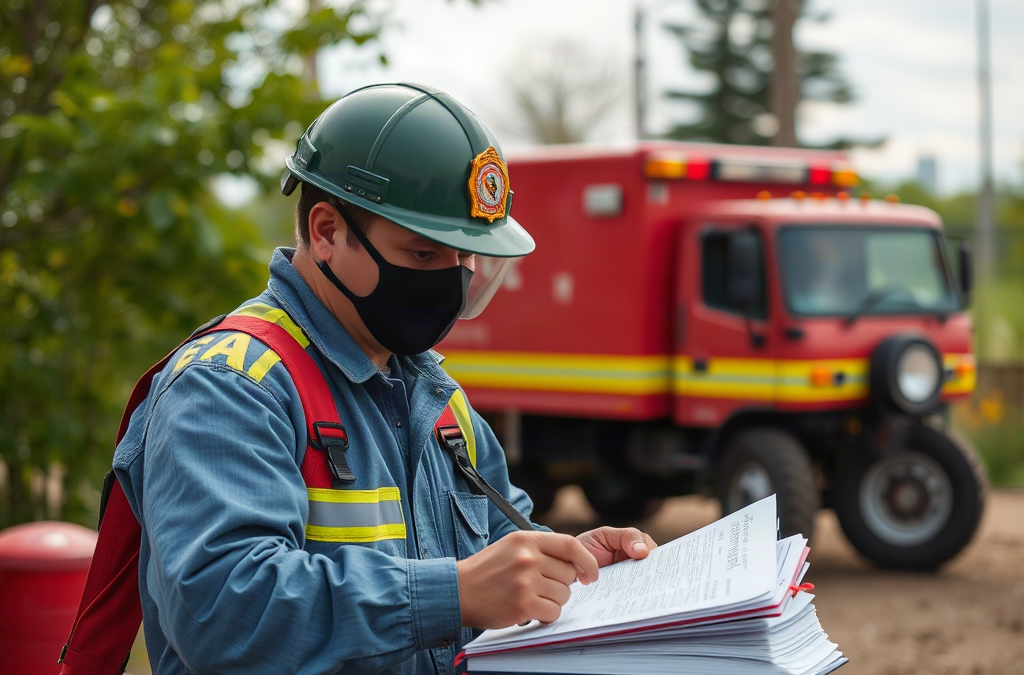
Emergency preparedness procedures for documenting critical actions should capture what happened, who acted, when the action occurred, what information supported it, and what result followed. Use a simple time-stamped incident log, assign one person to maintain it, record decisions and resource changes as they occur, and preserve photos, messages, receipts, and official instructions with the log. Write observable facts rather than guesses, distinguish confirmed information from reports, and note unresolved issues for the next shift. A concise record can protect continuity when responders change, reveal missed tasks, support reimbursement or reporting, and help improve future procedures without relying on memory after a stressful event.
What a Critical-Action Record Must Capture
Emergency documentation works when another person can understand the situation without being present. A useful record connects the condition observed, the action taken, the person or organization responsible, and the outcome. Writing “power outage handled” provides little operational value; writing “14:20, utility outage confirmed by phone; refrigerator moved to insulated containers; temperature check scheduled for 16:00” creates a traceable account.
The record should separate facts from interpretation. Facts include a visible hazard, a received message, a completed welfare check, a supply count, or a time-stamped call. Interpretation includes an assumption about how long an outage will last or why a person failed to respond. Both may matter, but they should not appear as if they carry the same certainty. Label uncertain information as unconfirmed, reported, estimated, or awaiting verification.
Document the actions most likely to affect safety, continuity, money, or later accountability. These often include evacuation or shelter decisions, medical assistance requests, utility shutoffs, access restrictions, contact attempts, movement of vulnerable people, use of shared supplies, and instructions received from authorities. A record for Emergency preparedness procedures for documenting critical actions should also show when an action was not completed and why. An omitted task can create more risk than a poorly worded completed task.
A practical entry usually contains five elements:

- Time: use a consistent local time and mark estimates as estimates.
- Observation: record what was seen, heard, measured, or received.
- Action: state what someone did or decided.
- Owner: identify the person, team, agency, or service involved.
- Status: note completed, delayed, declined, unavailable, or pending verification.
Short entries are usually safer than elaborate narratives during an active emergency. The tradeoff is that brevity can hide context, so add a reference to a photo, message, receipt, map, or attachment when the detail may matter later.
How to Build a Usable Incident Log Under Pressure
A usable incident log has one obvious location, a fixed format, and a person responsible for maintaining it. Paper may be the best primary record during a power or network failure, while a digital copy can improve searchability and sharing once systems return. Choosing only a phone-based method creates a single point of failure if the battery, device, or service becomes unavailable.
Prepare a small documentation kit before an emergency. Include a notebook with numbered pages, several pens, a clock or time reference, a phone charging option, a flashlight, and a way to photograph or scan pages. A printed contact sheet and blank continuation pages are useful when the event lasts longer than expected. Avoid storing the only copy in a location that may be evacuated, flooded, or inaccessible.
The first log page should identify the location, date, people assigned to record information, and the event or operational period. Numbering pages discourages accidental loss and makes it easier to identify gaps. If multiple people write entries, require initials or another simple identifier. Do not make the form so detailed that nobody uses it; a compact log completed consistently is more valuable than a sophisticated form left blank.
Use a predictable entry sequence. Record the time before writing the action, then identify the source of information if it came from a call, message, official alert, neighbor, or direct observation. If a task requires follow-up, write the next check time and the person expected to perform it. A note such as “water delivery requested” is incomplete until it states who requested it, from whom, at what time, and whether delivery was confirmed.
Under pressure, people commonly document only major decisions and forget small actions that explain later conditions. A locked gate, relocated medication, disconnected appliance, or change in meeting point may affect safety even if it never becomes a headline event. The solution is not to record every conversation. Record changes to people, hazards, resources, access, instructions, and responsibilities.
For a small household or team, one person can maintain the master log while others send short updates. For a larger operation, separate activity records may be appropriate, but they need a shared time standard and a handoff process. A central log gives continuity; separate specialist notes preserve technical detail. The right balance depends on the number of actors and how quickly information changes.
Recording Decisions, Communications, and Handoffs
Decision records should show the information available at the time, not just the final choice. Emergencies develop with incomplete information, so a later reader needs to know whether a decision was based on a confirmed warning, a direct hazard, a failed communication attempt, or a precaution. This protects the integrity of the record and prevents hindsight from being mistaken for foresight.
For each consequential decision, document the decision-maker, time, reason, alternatives considered when relevant, and review condition. For example, “Shelter in place at 18:10 because exterior smoke was visible and the road was blocked; reassess if indoor air worsens or officials issue an evacuation order” is more useful than “stayed inside.” The entry does not need to defend every choice, but it should preserve the trigger that may require the decision to change.
Communication records need similar discipline. Log outgoing and incoming messages, failed attempts, instructions received, and acknowledgments. Record the exact wording of a critical instruction when practical, or identify where the original message is stored. A screenshot without a time or sender may be difficult to interpret later, while a log entry can connect it to the action that followed.
Handoffs are a frequent failure point. The departing person may remember pending tasks but fail to transfer them clearly, especially after fatigue or repeated interruptions. End each operating period with a short status check covering:
- actions completed and actions still open;
- people whose status is unknown or needs follow-up;
- supplies, equipment, or access changes;
- new hazards and information that remains unverified;
- the next decision time and the person assigned to it.
A verbal briefing alone is weaker than a verbal briefing tied to written entries. The incoming person should be able to point to the last completed item and identify the next pending item. If the handoff cannot happen in person, use a dated message or photograph of the relevant log page, then confirm receipt when possible.
Do not record sensitive personal information more broadly than necessary. A critical-action log may need to show that a person received assistance, but it may not need extensive medical details. Restrict access to records containing addresses, health information, financial data, or identification documents. Good documentation supports continuity without turning an emergency notebook into an uncontrolled archive of private information.
Protecting Evidence and Reviewing the Record
Preserving the record matters because emergency actions may later need to be explained, repeated, reimbursed, audited, or improved. Keep original paper pages intact, photograph them when conditions permit, and retain source messages, receipts, photographs, and relevant forms together. Digital files should use descriptive names and a consistent date-time format rather than a camera’s default sequence.
Evidence should be connected to an entry. A photograph of damage is more useful when the log states when it was taken, where it was taken, and what decision it informed. Receipts should show which emergency need they relate to. A screenshot of an alert should retain the sender and timestamp if available. Do not edit original images or messages to make them easier to read; create a separate annotated copy if explanation is needed.
Review the record after immediate danger has passed, but do not rewrite it as though the event unfolded neatly. Corrections should preserve the original entry and show what changed, when it changed, and who made the correction. If an entry says a contact was confirmed but later evidence shows only a voicemail was left, amend the status rather than silently replacing the original wording.
A review should examine whether the record answered operational questions: Which actions were completed? Which were delayed? Where did information originate? Which instructions conflicted? When did supplies or access become constrained? Did the next person know what remained open? These questions reveal process weaknesses more reliably than judging the quality of prose.
Use the findings to make a small number of specific changes. A household might add a printed contact list after discovering that phones were unavailable. A volunteer group might assign a backup recorder after one person became occupied with transport. A building team might add a field for elevator status after residents were moved without a clear accessibility record. Improvements should address observed failure points, not create paperwork for its own sake.
Documentation can also become a burden. Excessive writing may distract from evacuation, first aid, hazard control, or communication. During immediate danger, protect people first and record the essential facts as soon as doing so is safe. A delayed but accurate entry is preferable to a detailed note that interferes with a life-safety action.
For operational terminology, incident documentation examples, and public emergency communication guidance, consult current materials from local emergency management offices, relevant national government agencies, and recognized disaster-response organizations. Match any template to the hazards, privacy requirements, and reporting duties that apply to your location rather than treating a generic form as authoritative.
Frequently Asked Questions
What is the simplest format for an emergency action log?
Use columns for time, observation or source, action, responsible person, and status. Add a follow-up time when the issue is unresolved.
Should emergency records be handwritten or digital?
Keep a paper option for power, battery, or network failures and use digital copies for backup, searching, and sharing when systems are available.
What should be documented first during an emergency?
Record life-safety decisions, hazards, evacuations or shelter actions, welfare checks, official instructions, resource changes, and unresolved tasks before routine details.
How can a log avoid recording unreliable information?
Identify whether each item is directly observed, reported, estimated, or confirmed. Keep unverified reports visible but label them clearly.
How long should critical-action records be kept?
Retention depends on the organization, event, privacy obligations, insurance needs, and local requirements. Preserve records long enough to complete follow-up, reporting, claims, and after-action review.
Conclusion
Strong emergency records are built around traceability, not polished writing. Capture the time, observed condition, action, responsible party, source of information, and current status while keeping safety decisions ahead of paperwork. Use paper and digital options together when practical, protect sensitive details, and connect photographs, messages, receipts, and forms to the entries they support. At each handoff, identify unfinished work, uncertain information, changed resources, and the next review point. After the event, correct errors transparently and turn recurring gaps into specific changes to contacts, forms, equipment, or assignments. Practicing the logging method during a drill makes it easier to use when communication is fragmented and attention is limited.
Related Content
- From Chaos to Calm: Mastering Emergency Preparedness at Home
- What’s the most effective way to fortify my home during a crisis?
- 5 Essential Steps to Disaster Preparedness: Are You Ready
- Why Disaster Preparedness Matters: The Risks of Not Being Ready for an Emergency Situation
- How to Build a Disaster Kit in Under an Hour




