
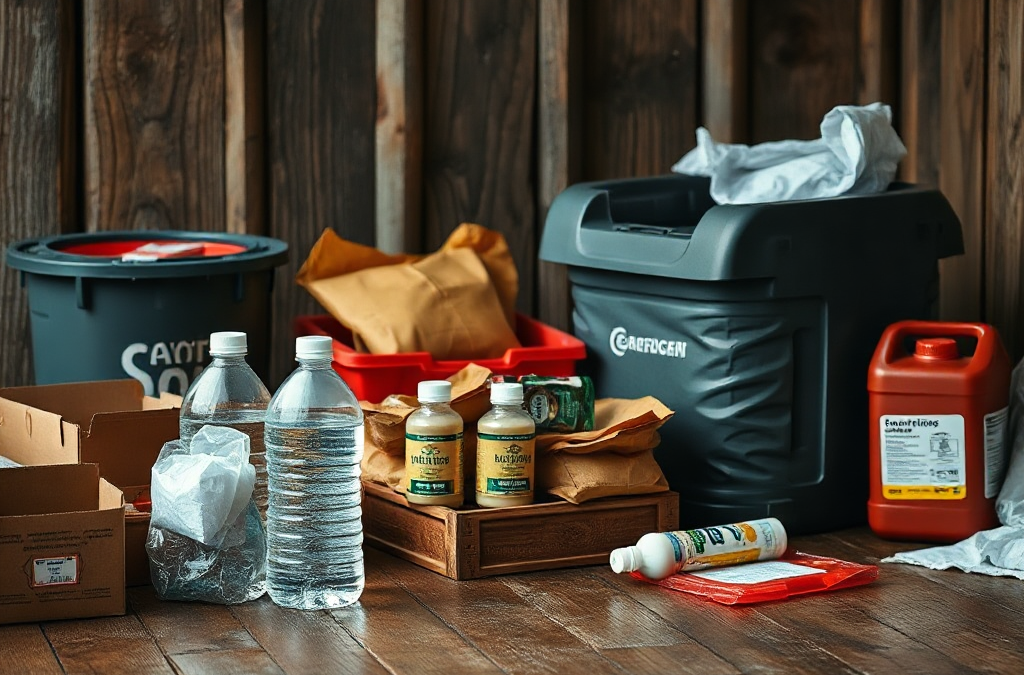
Emergency preparedness means more than storing supplies because households also need usable information, practiced skills, communication methods, and a realistic way to recover after disruption. Water and food may cover immediate needs, but they cannot replace knowing how to shut off utilities, manage medications, receive alerts, contact relatives, or make safe decisions when normal services fail. A workable approach assigns responsibilities, tests equipment, records essential information, and adapts for children, older adults, disabilities, pets, and transportation limits. The strongest preparation is not the largest stockpile; it is a system people can use under stress, inspect regularly, and improve after a drill or small local emergency.
Why Supplies Alone Leave Dangerous Gaps
Stored food, water, batteries, and first-aid materials are useful only when they are accessible, suitable, and connected to a plan. A household may own several containers of drinking water yet still struggle if the containers are in a hot attic, if nobody knows how much is available, or if one person cannot lift them. Supplies address particular physical needs; preparedness also addresses decisions, coordination, information, and changing conditions.
Consider a winter power outage. A pantry may provide meals, but the household still needs a safe heating decision, a way to receive local updates, lighting that does not create a fire hazard, and a method for checking on someone who relies on powered medical equipment. A portable generator can add capability while introducing carbon monoxide and fuel-storage risks if it is operated incorrectly. Buying the item without learning its limits creates a false sense of security.
Stockpiling also has a maintenance problem. Batteries age, prescriptions expire, stored water may be neglected, children outgrow clothing, and dietary needs change. A large supply can be less useful than a smaller inventory that is labeled, rotated, and matched to the people who will use it. Use Emergency preparedness means more than storing supplies as a working principle: every purchase should connect to a capability, and every capability should be tested.
A practical household review asks four questions:

- Can we access and use this item without outside help?
- What condition makes it necessary, and what could make it fail?
- Who is responsible for checking or operating it?
- What is the backup if the item is lost, damaged, empty, or misunderstood?
These questions expose gaps that shopping lists miss. A radio without spare batteries, a vehicle without fuel planning, or a contact list stored only on a dead phone each solves part of a problem while leaving the operational risk intact.
The Skills and Information a Household Must Practice
Basic skills turn stored equipment into usable protection. Household members should know how to locate water shutoffs, electrical panels, fire extinguishers, first-aid materials, flashlights, and important documents. They should understand which actions are safe for their property and which situations require emergency services or professional assistance. The goal is not to make everyone an expert; it is to prevent confusion during the first minutes of an incident.
Information deserves the same attention as physical supplies. Keep paper copies of phone numbers, medical details, insurance contacts, prescriptions, pet-care instructions, and meeting locations where household members can find them. Digital copies may be helpful, but they should not be the only version. A locked phone, depleted battery, damaged network, or forgotten password can make an otherwise complete record unavailable.
Practice should resemble the conditions people may face. Try finding the shutoff valve with the lights off, assembling a light source without using a phone flashlight, or preparing a meal without the usual appliance. During a drill, notice whether instructions are understandable to a child, visitor, or person who did not make the original plan. A plan that depends on one organized adult is fragile when that person is away, injured, or unable to communicate.
There is a useful difference between memorizing procedures and rehearsing them. Reading how to use a fire extinguisher is not the same as identifying the correct extinguisher, checking its condition, and knowing when leaving is safer than attempting to put out a fire. Similarly, owning a first-aid kit does not establish competence. Training from a recognized provider may be appropriate for first aid, CPR, or other skills, while manufacturer instructions and local authorities should guide equipment use.
Common failure signs include unlabeled supplies, conflicting instructions, missing access keys, and family members giving different answers about where to go. Correct those issues with short practice sessions rather than an elaborate annual event. After each exercise, record one improvement, such as moving documents to a reachable location or adding large-print instructions. For more household-specific planning, Emergency preparedness means more than storing supplies should include the abilities and limitations of every person who may need assistance.
Communication, Mobility, and Household Coordination
Communication planning matters because emergencies separate people, interrupt networks, and create conflicting information. Decide how household members will contact one another, where they will meet if home access is lost, and who outside the area can relay messages. A short text may succeed when voice calls are difficult, but no single method should be treated as guaranteed. Write down alternatives and make sure each person knows when to stop trying one channel and switch to another.
Location-specific decisions are more useful than a vague instruction to “leave if necessary.” Identify at least one nearby meeting place and one location farther away, then account for walking routes, road closures, mobility devices, pets, and public transportation. A person who uses a wheelchair may need a route without blocked curb cuts; a pet owner may need a carrier and a destination that accepts animals. These details determine whether a plan works outside a spreadsheet.
Household roles should be assigned without assuming that one person will always be present. One adult might monitor official alerts, another might gather medications, and an older child might bring the paper contact card. Assign backups and explain the trigger for each action. During a fast-moving event, people should not waste time deciding who is supposed to find the keys or call a relative.
A useful comparison is between a fixed plan and a decision plan. A fixed plan says exactly where everyone will go, which can be simple but may fail when a route or facility is unavailable. A decision plan identifies priorities and alternatives: remain indoors when authorities advise sheltering, leave when an official evacuation order or immediate danger requires it, and use the safest accessible route rather than the familiar route. Official alerts should take precedence over assumptions based on past events.
Test communication under realistic limits. Turn off home Wi-Fi for a brief exercise, use the paper contact list, and ask each person to explain the meeting arrangement. Check whether relatives understand that repeated calls can be less useful than a concise message. Review language, hearing, vision, and cognitive needs as well. A communication method that works for one household member may not work for another, so accessibility is an operational requirement rather than an optional add-on.
Turning Preparedness Into a Maintained System
Preparedness becomes dependable when it is maintained like a household system rather than stored as a one-time project. Start with the disruptions most plausible for the location and the consequences that would be hardest to manage. A short power interruption, severe weather warning, water-service failure, wildfire smoke event, or extended road closure may require different actions. Prioritizing every possible disaster equally can produce an expensive collection of supplies without a clear order of use.
Build the system in layers. The first layer covers immediate safety: alerts, lighting, essential medication access, basic first aid, and a way to obtain safe water. The next layer supports several days of reduced services, including food that household members will actually eat, sanitation supplies, charging options, and practical cooking arrangements. A later layer addresses recovery, such as copies of records, insurance information, cash access, repair contacts, and a process for documenting damage. The layers can expand as time and budget allow.
Budget constraints make prioritization more valuable than chasing a perfect kit. A household with limited funds may gain more from a reliable flashlight, stored water, medication coordination, and a paper contact list than from specialized equipment that no one has tested. Compare the cost of an item with its maintenance burden, training requirement, storage conditions, and likely usefulness. A bargain device that needs an uncommon battery may be less practical than a simpler model supported by supplies already in the home.
Set a recurring review tied to an existing routine, such as a seasonal household inspection. Check expiration dates, battery condition, clothing sizes, food preferences, vehicle needs, and contact details. Confirm that stored items remain reachable if a garage is blocked or a room is unsafe. Look for signs that the approach is working: people can locate key items quickly, explain the communication plan, and perform basic tasks without a single coordinator. Failure signs include forgotten responsibilities, inaccessible supplies, expired information, and drills that reveal no assigned backup.
After a real disruption or practice exercise, revise the plan based on observed friction. If cooking took too long, change the meal approach. If nobody heard the alert, improve notification settings or add another source. If a neighbor needed assistance, coordinate a reciprocal check-in where appropriate. A maintained system stays modest, specific, and adaptable. The purpose is not to predict every event but to reduce avoidable delays when normal routines stop working.
Frequently Asked Questions
Why are emergency supplies not enough?
Supplies cannot replace communication, practiced procedures, accessibility planning, or decisions about sheltering and evacuation. They are one part of a functioning preparedness system.
What should a household practice first?
Practice finding emergency contacts, essential medications, lighting, utility shutoffs, and exits. Then test the plan under a realistic constraint, such as no internet or limited lighting.
How often should preparedness supplies be reviewed?
Review them at least seasonally and whenever household members, medications, vehicles, pets, or local risks change. Replace expired or inaccessible items promptly.
How can people prepare on a limited budget?
Prioritize safe water, lighting, medication access, paper contacts, basic sanitation, and food that is already familiar. Add equipment only after confirming that someone can operate and maintain it.
What makes a household plan fail?
Plans commonly fail when they rely on one person, one communication channel, inaccessible supplies, outdated information, or assumptions that every emergency will unfold the same way.
Further Reading
Authoritative Sources
- Make a Plan
ready.govProvides federal guidance for household communication, shelter, evacuation, and individual needs
- How to Prepare for Emergencies
redcross.orgOffers practical preparation information for households, including emergency contacts and basic supplies
- Emergency Preparedness for Children
cdc.govHelps families account for children’s health, routines, and support needs during disruptions
Conclusion
A capable emergency setup connects supplies with people, information, skills, and decisions. Review the risks that could interrupt your household first, then confirm that everyone can find essential items, receive official instructions, communicate through an alternate method, and reach an agreed location. Add accessibility needs, medications, pets, transportation limits, and recovery documents instead of treating them as afterthoughts. Keep purchases modest until the basics are tested; an unused device or inaccessible stockpile adds less value than a simple system people understand. Schedule seasonal checks, practice one realistic scenario, and change the plan according to what caused delay or confusion. That process turns emergency preparation from a storage task into a repeatable household capability.
Related Content
- The Role of Community in Successful Preparedness: Essential Strategies and Benefits
- How to Detect Unsafe Water Quickly
- How to Prepare for Civil Unrest: Essential Steps and Precautions
- How to Choose the Right Gear for Your Survival Kit
- The Ultimate 2025 Preparedness Supplies List: 10 Effective Tips to Stay Ready




