
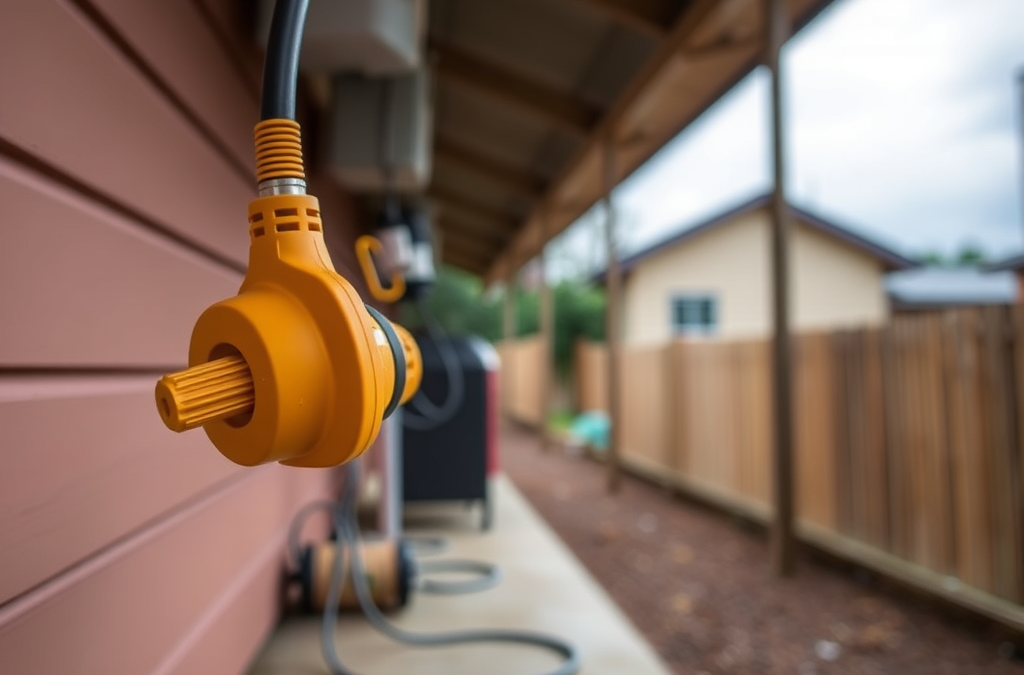
Extension cords overheat during emergency power use when the connected load draws more current than the cord can safely carry, especially through thin conductors, excessive length, damaged insulation, loose connections, or tightly coiled sections. A portable generator or battery inverter may supply enough power to run several appliances, but the cord still has its own ampacity and voltage-drop limits. Heat rises when high-wattage devices such as heaters, pumps, refrigerators, or cooking appliances share one cord or power strip. Use a heavy-duty cord rated for the appliance, keep it fully extended and dry, inspect plugs and receptacles, and stop immediately if the cord feels hot, smells of melting plastic, shows discoloration, or trips protection.
What Makes an Extension Cord Heat Up
Extension-cord heating comes from electrical resistance. Current moving through the cord encounters resistance in its copper or aluminum conductors, and that resistance converts some electrical energy into heat. A small amount of warmth may occur under load, but a cord that becomes noticeably hot is signaling excessive current, poor contact, inadequate conductor size, or a combination of those conditions.
The cord’s printed rating matters more than the power source’s headline wattage. A generator labeled for several thousand watts does not make a lightweight household cord suitable for every connected appliance. A 16-gauge indoor cord, for instance, may be acceptable for a modest lamp or charger but a poor choice for a high-draw appliance operating for hours. The correct comparison is the appliance’s running and starting demand against the cord’s rating, length, and intended environment.
Loose or damaged connections create a separate heating point. When a plug blade fits poorly, a receptacle is worn, or a connection is contaminated, current is forced through a smaller effective contact area. The resulting resistance can heat the plug or outlet even when the cable itself seems appropriately sized. Dark marks, softened plastic, crackling, or an odor resembling hot insulation should be treated as failure signs, not minor inconveniences.
A common mistake is judging safety by whether the appliance continues to run. An overloaded cord can deliver power while its insulation gradually softens. Check the cord rating, the appliance label, and the actual connection points rather than relying on normal appliance operation. The same inspection principles apply to why extension cords overheat during emergency power use when the source is a generator, inverter, or temporary battery system.

Emergency Loads That Push Cords Beyond Their Limits
High-wattage heating appliances are usually the quickest way to expose an undersized extension cord. Portable heaters, hot plates, kettles, toaster ovens, hair dryers, and some sump pumps demand far more current than phone chargers, lamps, or a modem. A cord that feels fine with a refrigerator and a few lights may become dangerously warm when a heater is added.
Motor-driven equipment adds another complication: starting current. Refrigerators, freezers, furnaces, well pumps, and some power tools can briefly draw more current when their motors start than they use while running. The cord must tolerate that event without excessive voltage drop or heating. If a refrigerator struggles to start, clicks repeatedly, or causes lights to dip, moving it to a longer light-duty cord is not a reliable fix; a shorter, properly rated cord or a suitable direct connection may be needed.
Shared cords create hidden overloads during outages. Someone may connect a freezer, a coffee maker, a television, and a space heater to one multi-outlet strip because the source has several available outlets. The strip or extension cord becomes the bottleneck. Even when the combined wattage appears close to the source capacity, continuous operation, motor starts, and poor ventilation can make the cord run hotter than expected.
Prioritize loads by consequence and electrical demand. Refrigeration, medical equipment with appropriate backup arrangements, communications, and necessary pumps may deserve power before comfort appliances. Do not assume a lower-voltage device is automatically low demand; current depends on both voltage and wattage. A practical load review should identify each device’s running watts, possible startup surge, operating duration, and whether it truly needs continuous power.
- Keep resistive heaters and cooking appliances on a properly rated, dedicated connection whenever possible.
- Avoid combining motor loads and high-wattage heating loads on one extension cord.
- Use the appliance manual or nameplate rather than guessing from its size.
The failure mode to avoid is treating a power strip as a load-management device. It only provides additional receptacles; it does not increase the safe current capacity of the cord feeding it.
Length, Coils, Connections, and Outdoor Conditions
Longer cords have more conductor resistance, which increases voltage drop and heat under load. A cord may carry a small device across a long distance without trouble, yet perform poorly with a pump or heater. If a device receives reduced voltage, its motor may draw abnormal current or fail to start, while the cord continues warming. A shorter cord with adequate conductor size is generally a better choice than adding length for convenience.
Leaving a cord tightly coiled during heavy use can trap heat. The cable’s surface cannot release warmth efficiently when multiple layers are bundled together, particularly under rugs, behind equipment, or inside a storage tote. The coil itself does not magically create extra electricity, but it can raise the operating temperature enough to damage insulation when current is sustained. Fully extend the cord and keep it visible, away from coverings and heat sources.
Outdoor emergency setups add moisture, abrasion, and temperature concerns. A cord intended only for indoor use may not have the jacket durability or grounding features needed outside. Wet grass, puddles, metal edges, vehicle traffic, and generator exhaust areas create hazards beyond overheating. Keep connections elevated and protected from precipitation without enclosing a running generator or blocking ventilation around the cord.
Connections deserve closer attention than many users give them. A plug that is partly inserted, a splitter hanging from its cord, or an adapter with a loose fit can develop localized heat. Feel for unusual warmth only when it can be done safely, and disconnect the source before examining a questionable connection. Never handle damaged insulation or exposed conductors as though a low-power appliance makes them harmless.
One weak assumption is that a thicker-looking cord is always correctly rated. Jacket thickness, marketing labels, and decorative packaging do not replace the printed gauge, amperage, voltage, outdoor rating, and certification information. Compare a cord’s marked specifications with the connected load, then account for length and continuous operation. If the markings are missing or unreadable, replacing the cord is safer than estimating its capacity.
How to Check a Cord Before and During Use
A pre-use inspection can catch the conditions that turn temporary emergency power into a fire or shock hazard. Unplug the cord from the source before examining it. Look along the entire jacket for cuts, crushed areas, flat spots, exposed wire, melted sections, and repairs made with tape. Inspect both plug ends for bent blades, looseness, discoloration, or heat damage.
Match the cord to the job before connecting anything. Confirm that its voltage and current ratings meet or exceed the appliance requirement, that its length is no greater than necessary, and that it is approved for the setting. A grounded appliance needs a functioning grounding path; removing the grounding pin or using an improvised adapter changes the protection system and should not be used as a workaround.
After the load has operated for a while, check for warning signs without placing yourself near exposed electrical parts. The cord should not become hot enough to cause discomfort, smell like melting plastic, buzz, smoke, or show new discoloration. Pay special attention to plugs, sockets, and points where the cord bends. A breaker or inverter shutdown may indicate overload, but the absence of a trip does not prove the setup is safe.
If overheating appears, switch off the appliance and disconnect the power source when it is safe to do so. Do not drape a hot cord over snow, place it in water, cover it with fabric, or continue using it at a lower appliance setting unless the manufacturer specifically permits that arrangement. A damaged cord should be removed from service and replaced; household tape is not a substitute for proper insulation repair.
Use a simple priority sequence during an outage:
- Stop the load if the cord, plug, or receptacle is hot, damaged, smoking, or discolored.
- Separate high-wattage appliances instead of adding another splitter.
- Replace an unknown or undersized cord with one carrying clear, suitable ratings.
- Reduce total demand and test essential devices individually before reconnecting other loads.
This process is more reliable than waiting for a smell or visible smoke. Early warmth, intermittent operation, or repeated source shutdowns are useful evidence that the arrangement needs correction.
Safer Power Distribution During an Outage
The safest arrangement usually minimizes temporary connections. If an appliance has a suitable connection directly at the generator, inverter, or approved transfer equipment, that may reduce cord length and contact points. Permanent home wiring should be connected to a generator only through properly installed transfer equipment; plugging a generator into a wall outlet can energize wiring in unintended ways and is not a safe substitute for an approved setup.
For portable use, build the distribution around the highest-demand appliance rather than the smallest device. A freezer may need a cord selected for motor starting and outdoor service, while a phone charger can use a much lighter cord. Keeping those loads on separate, appropriate paths makes troubleshooting easier and reduces the chance that a low-demand device hides an overloaded branch.
Battery power stations introduce similar limits even when they appear quieter or cleaner than fuel generators. The inverter has a maximum continuous output, a surge limit, and sometimes a temperature-based shutdown. Extension cords still produce voltage drop and heat, and the station’s display may show total watts without identifying which connection is warming. Place the power station where its ventilation openings remain clear and follow its manual for extension-cord use.
Do not use indoor extension cords outdoors, run cords through doorways where they can be crushed, or place them where people will trip and pull plugs partly loose. Keep fuel-burning generators outside and well away from doors, windows, and vents because carbon monoxide is a separate life-threatening hazard. Electrical safety and ventilation safety must be managed together; solving one does not solve the other.
A useful comparison is convenience versus control. One long cord and several adapters may seem faster, but a few shorter, clearly rated cords make each load visible and easier to isolate. If the needed appliance exceeds the available cord or source rating, the appropriate answer is to reduce the load, obtain correctly rated equipment, or use a qualified electrician for a permanent solution—not to improvise with thinner cords or chained extensions. For additional planning context, review why extension cords overheat during emergency power use before the next outage rather than during a rushed connection.
Frequently Asked Questions
Can a heavy-duty extension cord still overheat?
Yes. Excessive combined wattage, a long run, a damaged plug, a loose receptacle, or a tightly covered coil can cause overheating even when the cord is heavy-duty.
Should an extension cord be fully uncoiled during generator use?
Yes, especially for sustained or high-current loads. Full extension improves heat release and keeps damage or hot spots easier to detect.
Can I connect two extension cords to reach an appliance?
Chaining cords increases resistance and connection points. Use one cord of suitable length and rating whenever possible, particularly for pumps, refrigerators, and heaters.
Why does the plug get hot while the cord stays cool?
A loose, worn, corroded, or partially inserted connection can create localized resistance at the plug or receptacle. Stop using it and inspect or replace the damaged component.
Is a power strip safer than an extension cord for emergency loads?
Not automatically. A power strip does not increase the capacity of the cord feeding it and is unsuitable for many high-wattage appliances. Check every component's rating and avoid stacking adapters.
Further Reading
Authoritative Sources
- Ready.gov
ready.govOfficial household preparedness guidance, emergency plans, and supply checklist resources.
- FEMA
fema.govFederal emergency management information, disaster planning resources, and recovery guidance.
- American Red Cross Emergency Preparedness
redcross.orgPractical emergency preparation, safety, and response guidance for households.
- CDC Emergency Preparedness and Response
cdc.govPublic health guidance for disasters, emergency response, and recovery conditions.
Conclusion
Extension-cord safety during an outage depends on controlling current, heat, distance, and connection quality at the same time. Select a cord whose marked rating matches the appliance, account for motor starting demand and continuous operation, and keep high-wattage devices from sharing a marginal cord or power strip. Fully extend the cable, keep it dry and visible, and inspect plugs and receptacles before energizing the setup. Warmth, odor, discoloration, buzzing, or repeated shutdowns justify immediate disconnection and replacement or redesign. A generator or battery station may have ample output, but that capacity does not upgrade an undersized cord. Plan separate, clearly rated paths for essential loads before the next emergency so decisions are based on equipment ratings rather than guesswork.
Related Content
- Be Prepared With Outdoor Survival Equipment
- The Ultimate Guide to a Self Reliant Preparedness Plan You Can Trust in 2025
- The Ultimate Guide to Disaster Preparation Tips: 10 Effective Strategies for 2025
- Readiness for Major Events: Effective Planning Strategies and Common Mistakes
- The Best Way to Store Emergency Medical Supplies




