Select Page
Don’t Wait for the Storm: Proactive Steps for Effective Disaster Preparedness

Don’t Wait for the Storm: Proactive Steps for Effective Disaster Preparedness

When it comes to disaster preparedness, waiting until the storm clouds gather is not an option. Planning ahead can make all the difference between chaos and calm in a crisis. Understanding your risks, assembling an emergency kit, creating a family disaster plan, staying informed about alerts, leveraging community resources, and conducting regular drills can help you navigate through any calamity that may come your way.

*Understanding the Risks: Know Your Threats**

Before you can prepare effectively, it’s crucial to identify the threats specific to your region. Are you at risk of hurricanes, earthquakes, wildfires, or flooding? Each of these disasters requires different strategies and supplies. Research local history and climate patterns—knowing what you’re up against allows you to tailor your preparations accordingly. For instance, coastal residents should prioritize flood plans while those in seismic zones need to secure heavy furniture to prevent tipping during an earthquake.

*Building Your Emergency Kit: Essentials for Survival**

An emergency kit is your lifeline when disaster strikes; it should be packed with essentials that can sustain you and your family for at least 72 hours. Start by including non-perishable food items such as canned goods and energy bars along with bottled water—plan for one gallon per person per day. Don’t forget medications like prescriptions or first-aid supplies. Flashlights with extra batteries, a battery-operated radio for updates, multi-tools, hygiene products, and important documents (like ID and insurance policies) should also find their way into your kit. Regularly check expiration dates and rotate supplies to keep everything fresh.

*Creating a Family Disaster Plan: Communication and Evacuation**

A well-thought-out family disaster plan is essential for effective communication during emergencies. Sit down together as a family to discuss potential scenarios—who will do what if evacuation becomes necessary? Designate meeting points outside the home and perhaps even in neighboring towns if local areas become unsafe. Make sure everyone knows how to contact each other; consider using text messaging as calls may not go through due to network overloads during crises. A solid plan reduces panic when time is of the essence.

*Staying Informed: The Importance of Alerts and Updates**

In today’s digital age, information flows rapidly—but only if you’re plugged in! Sign up for local emergency alerts from government agencies or weather services that provide real-time updates on impending threats. Download safety apps tailored to your region—they often include features like live maps showing evacuation routes or shelter locations during an emergency situation. Keeping abreast of developments ensures you’re never caught off guard when seconds count.

*Community Resources: Local Support and Networking**

Never underestimate the power of community support when trouble arises! Engage with local organizations dedicated to disaster response; they often offer training sessions or workshops on preparedness topics ranging from first aid courses to home safety checks. Building relationships within your community creates a network of assistance where neighbors look out for one another in times of need.

*Regular Drills and Updates: Practicing Your Preparedness Plan**

Just as fire drills are essential in schools, conducting regular practice drills at home reinforces readiness among family members. Schedule these exercises at least twice a year—you’ll not only hone skills but also unveil gaps in your plan that need addressing before an actual emergency occurs. Stay updated on new survival techniques or evolving guidelines from experts; preparedness isn’t static—it evolves alongside new challenges.

Disaster preparedness isn’t merely about stockpiling supplies; it’s about fostering resilience through knowledge and action. By taking proactive steps today, we can face tomorrow’s storms with confidence—and that’s truly empowering!


Ready for Anything: Essential Steps for Emergency Preparedness

Ready for Anything: Essential Steps for Emergency Preparedness

In a world teeming with uncertainties, the ability to respond effectively during emergencies can be the difference between chaos and calm. Understanding the importance of emergency preparedness is essential—not merely as a precaution but as a proactive strategy that empowers individuals and families to navigate crises with confidence. Whether facing natural disasters like hurricanes, wildfires, or man-made events, being prepared can save lives and protect property.

*Assessing Risks: Identify Potential Emergencies in Your Area**

The first step in your journey toward preparedness is assessing the risks specific to your geographical area. Are you in a flood zone? Is your region prone to earthquakes or severe storms? Conduct thorough research into local hazards. Engage with community resources or consult governmental agencies that provide insights about historical emergencies. Once you have identified potential threats, you can tailor your preparedness efforts to address those unique challenges effectively.

*Building Your Emergency Kit: What to Include**

An essential component of emergency preparedness is assembling an emergency kit. This kit should be comprehensive yet portable, ensuring you can take it if evacuation becomes necessary. Begin by including items such as non-perishable food and water—aim for at least one gallon per person per day for three days. Don’t forget important documents (like identification), first aid supplies, medications, flashlights with extra batteries, and multi-tools or Swiss army knives. Personalize your kit further by adding comfort items like blankets or games for children; these little touches can make a significant difference during stressful times.

hungry children in refugee camp distribution of humanitarian food HtMcedaBs scaled

*Creating a Family Emergency Plan: Communication and Evacuation**

Once you’ve built your kit, focus on crafting a family emergency plan that outlines how everyone will respond during various scenarios. Effective communication is crucial—designate meeting places both near home and outside of the immediate area where family members can regroup if separated. Discuss how you’ll communicate if phone lines are down; consider using text messages or social media updates as alternatives when traditional methods fail. Planning escape routes from home ensures everyone knows where to go should evacuation become necessary; practicing these routes together helps solidify understanding and builds confidence.

*Staying Informed: Utilizing Alerts and Resources**

In our digitally connected age, staying informed is easier than ever—but it’s crucial not to overlook this aspect of preparedness. Sign up for local alert systems that notify residents about impending dangers such as severe weather warnings or public safety announcements. Monitor trusted news sources for real-time information on emergencies affecting your community. Additionally, familiarize yourself with local resources such as shelters or community centers that may open during crises; knowing where help is available can alleviate stress when every second counts.

*Regularly Reviewing and Updating Your Preparedness Plan**

Finally, remember that preparedness isn’t a one-time task but an ongoing commitment that evolves over time. Regularly review your emergency plan and update it based on changes in family dynamics—new members joining the household or kids growing older may necessitate adaptations in communication plans and escape routes. Revisit your emergency kit at least twice a year; check expiration dates on food items, replace batteries annually, and ensure everything remains functional.

By taking these steps towards comprehensive emergency preparedness today, you’re not just preparing for tomorrow’s unknowns—you’re instilling peace of mind within yourself and loved ones amidst uncertainty. After all, readiness truly leads to resilience!

Essential Navigation Skills for Outdoor Survival

Essential Navigation Skills for Outdoor Survival

Hey there, fellow adventurers! If you’re anything like me, the great outdoors calls to you like a siren song. But before you set off on your next epic journey, there’s one crucial set of skills you have to have under your belt—navigation. I can’t tell you how many times I’ve been out there trying to find my way back home, and let me tell you, those moments can be a little scary. That’s why I want to share some essential navigation skills that will help keep you safe and oriented. Buckle up, let’s dive in!

Understanding Your Map

The Different Types of Maps

First off, we need to talk about maps. There are plenty out there, but not all of them are created equal. You have topographic maps, which are like the superheroes of the navigation world. They give you a detailed view of the terrain, like elevation and landforms, which is super handy for hiking. Then there are road maps, which are great for driving but won’t help you much when you’re scaling a mountain.

Next, you’ve got digital maps, found on your phone or GPS devices. They’re convenient, but you know what? They can be a bit finicky—like when you’re deep in the woods, and your signal drops. That’s why I always have a paper map as backup. No battery needed, just good old-fashioned paper!

Lastly, let’s not forget about special interest maps, like birding maps or ski trail maps. These can be useful for niche activities, and if you’re really into one particular sport, having the right map can make all the difference. So, choose wisely!

Using a Compass

Getting to Know Your Compass

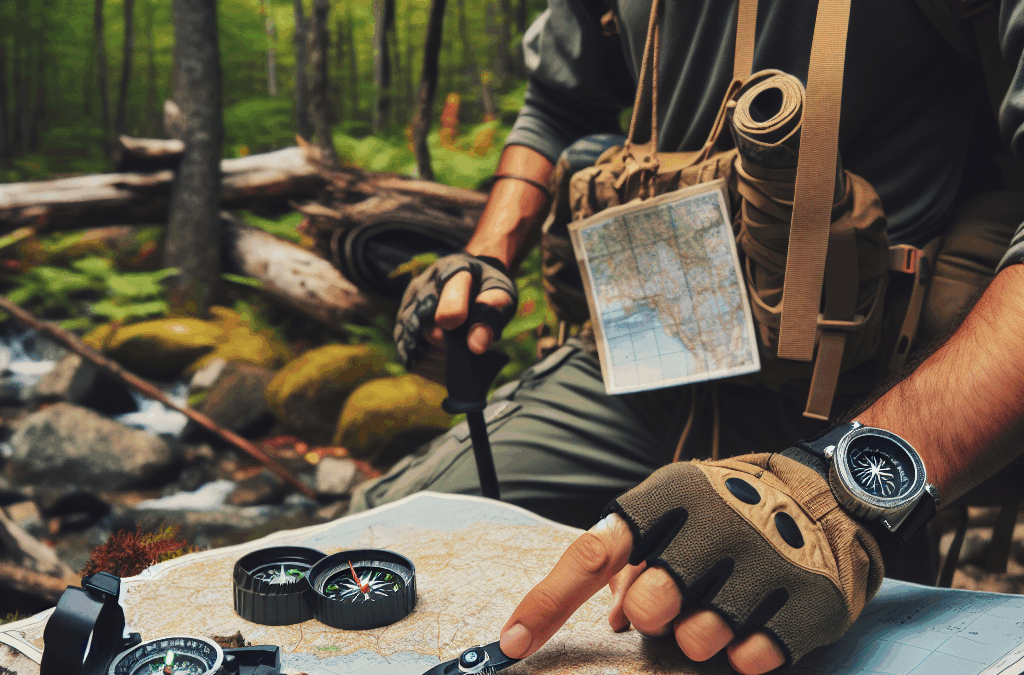
Alright, so now that we’ve got the map down, let’s talk about compasses. This little gadget is a game-changer. First things first, you’ve gotta understand how to read one. Most compasses have a housing, needle, and a baseplate, and they work together to point you towards magnetic north.

But wait, what’s magnetic north? It’s not the same as true north—there’s often a little discrepancy you’ve got to be aware of. This means you’ll want to familiarize yourself with your area’s magnetic declination. You can usually find this info on your map.

And hey, practice makes perfect. I always take my compass out with me, even on short hikes. It’s like a dance; you need to get used to the movement and flow. Trust me, once you get the hang of it, you won’t want to leave home without it!

Reading Terrain

Identifying Land Features

Next up is understanding the land around you. Learning to read the terrain can seriously up your navigation game. Look around! Observing landmarks—like rivers, mountains, or unique rock formations—can help keep you oriented. I often use these as reference points; they’re like the nature version of street signs.

Don’t forget about elevation changes! Climbing up a hill can give you a whole new perspective. I can’t tell you how many times I’ve reached a summit and been able to spot my destination from up there. It’s like seeing a video game map unfold before your eyes.

Lastly, pay attention to the slope of the land. Steep terrain can be tricky and may require different navigation tactics. If you’re planning a tough hike, consult the elevation profile on your map—it’s like a sneak peek at what’s to come. Trust me, it makes a huge difference!

Tracking Your Position

Using Land Navigation Techniques

Now let’s get into tracking your position as you go along. One of my favorite methods is dead reckoning. This means you’re estimating your current position based on your previous position and the direction you’ve traveled. It sounds complex, but it’s really just a simple mental calculation.

Copy of PREPARE Mag ad 970 x 250

Another method I love is terrain association. This is about matching the features around you to your map. If I’m passing by a creek or a specific rock formation, I check if it matches up on my map. This technique can really help keep your bearings straight.

Finally, I can’t stress enough the importance of regularly checking your location. You don’t want to end up too far off-course, especially in unfamiliar territory. A quick glance at your map and compass every now and then can make all the difference in your adventure.

Emergency Navigation Skills

Creating Backup Plans

Alright, let’s get real. Emergencies happen, and it’s always smart to have backup plans. First, I always carry a whistle. If I get lost, a whistle can carry much farther than my voice. Plus, it keeps my hands free for other tasks.

Next, always have a designated meeting point. If you’re hiking with friends and you get separated, knowing where to regroup can save the day. I like to choose a landmark that’s easy to spot and won’t be missed.

Last but not least, practice makes you prepared. Make it a routine to navigate in different conditions—day, night, different weather. The more you expose yourself to various situations, the more confident you’ll become. And trust me, that confidence will serve you well!

Frequently Asked Questions

1. What should I always carry for navigation?

Great question! Always have a map, a compass, and a backup navigation tool—like a GPS or a smartphone app. These three together can cover you in most situations!

2. How do I choose the right map for my trip?

Consider the area you’ll be exploring. Topographic maps are great for hiking, while road maps are better for driving. If you’re heading to a national park, often they provide free maps at the visitor center.

3. What if my compass doesn’t seem to work?

First, check for any metal objects nearby that could distort the needle. If that isn’t the issue, it could be time for a new compass or to recalibrate your current one. Always trust your instincts combined with other navigation tools!

4. How often should I check my surroundings while navigating?

I recommend checking regularly! Every 15 minutes or so is a good rule of thumb. It will help you stay on track and adjust as necessary. Plus, you’ll catch those beautiful views along the way!

5. Can I learn these skills without going into the wilderness?

Absolutely! You can practice in your local park, or even just your backyard. Try using a map and compass to find your way around. The more comfortable you are, the more prepared you’ll be for your next big adventure!

Copy of PREPARE Mag ad 970 x 250