
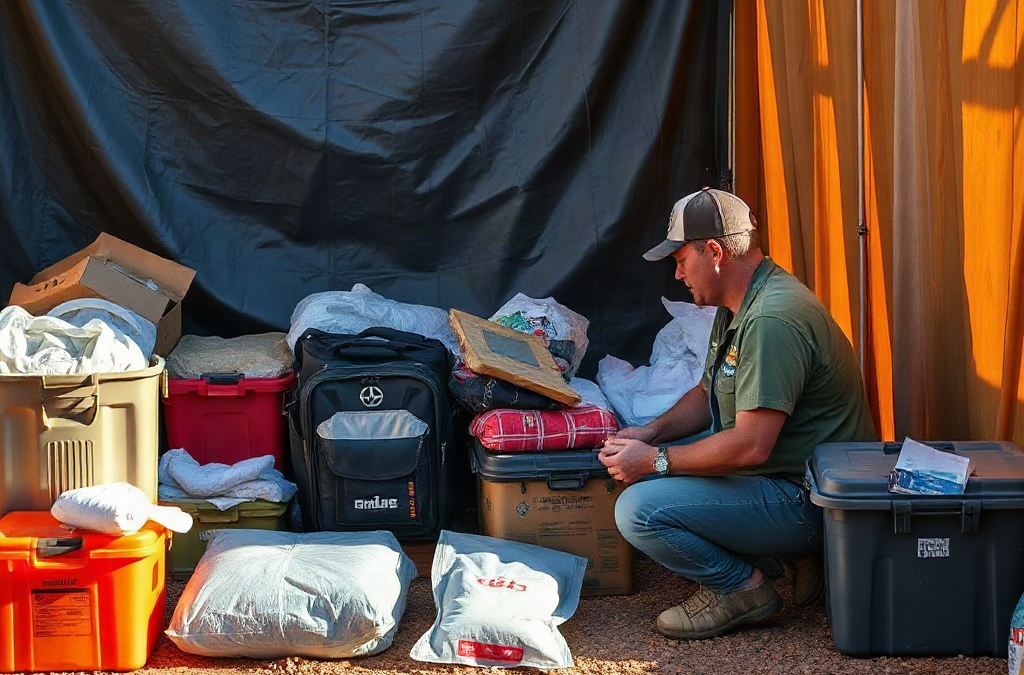
Emergency preparedness means coordinated action before danger because people, information, supplies, and decisions must work together before an incident limits time or access. A useful approach assigns responsibilities, identifies local hazards, establishes communication and meeting points, stores essential water and medication, and rehearses actions under realistic constraints. Coordination reduces confusion when family members are separated, power fails, roads close, or official instructions change. A stocked shelf without shared decisions can still leave people unsure what to do, while a simple plan that is known, tested, and updated may perform better. Prioritize actions that protect life, maintain communication, support evacuation or sheltering, and account for children, older adults, disabilities, pets, and critical medical needs.
Why Coordination Matters Before an Emergency
Emergency readiness is a team activity, even when the plan covers only one household. A storm, wildfire, flood, hazardous-material release, or extended power outage can disrupt normal assumptions at the same time: phones may be unreliable, transportation may be limited, and familiar routes may be unsafe. Preparatory coordination gives people a shared set of decisions to follow when stress makes improvisation slower and less reliable.
The practical difference appears in small details. One person may know where the first-aid supplies are, while another knows the utility shutoffs; neither fact is useful if the other household members do not know it exists. A coordinated arrangement records responsibilities, access information, contact methods, and fallback choices. It also states who makes decisions if the usual contact is unavailable. Emergency preparedness means coordinated action before danger because the time to negotiate basic responsibilities may disappear once conditions deteriorate.
Coordination does not require an elaborate binder or expensive equipment. A two-person household may need a shared contact card, medication list, evacuation route, and meeting location. A larger family may need a primary and alternate caregiver, transportation assignments, and a method for confirming that everyone is safe. The more complicated the household, the more valuable clear ownership becomes.
A common mistake is treating stockpiling as the entire task. Supplies can support a plan, but they do not decide whether to evacuate, identify who collects a child, or explain how a person using powered medical equipment will manage an outage. Begin with decisions and relationships, then purchase items that support those decisions.

Turn Hazards Into Shared Decisions
A useful plan connects likely hazards to specific actions rather than listing every imaginable catastrophe. Local conditions should shape the first questions: Does the area face floodwater, severe winter weather, wildfire smoke, earthquakes, extreme heat, or frequent outages? Each hazard creates different timing and movement problems. Flooding may require leaving before roads become impassable, while an outage may make sheltering at home reasonable if cooling, medication, and communication needs can be met.
For each serious hazard, decide what triggers action, where people go, how they reunite, and what makes the preferred option unsafe. An evacuation decision might rely on official instructions, visible smoke movement, rising water, or a loss of safe access. A shelter-in-place decision should identify the room, ventilation approach, supplies, and conditions that would require leaving instead. These choices should be written in plain language so a tired or anxious person can use them without interpreting vague statements.
Consider a household with one adult at work, a child at school, and a dog at home when a fast-moving storm damages roads. “Everyone come home” is not a complete plan. The family needs authorized pickup information, a school contact procedure, a pet arrangement, and an alternate meeting place if the home cannot be reached. The best option may change depending on whether the school is open, transit is operating, or authorities have restricted travel.
Weak assumptions often undermine otherwise sensible plans. Do not assume every person will have a charged phone, that a neighbor can always help, or that the nearest route remains open. Create alternatives without producing an unmanageable document. A compact priority sequence works well: protect immediate life safety, follow official directions, account for household members, secure essential medication and mobility needs, then address property and comfort.
Use the same topic-specific review at least periodically: what hazard is most plausible, what action comes first, who owns it, and what backup exists? That review turns coordinated action before danger from an abstract principle into a set of choices people can recognize.
Connect People, Information, and Supplies
Supplies are most useful when they are assigned to a purpose and linked to a person or decision. Water, shelf-stable food, flashlights, batteries, sanitation items, first-aid materials, chargers, copies of documents, and needed medicines address different disruptions. A household should know where each item is stored, how it is accessed, and which items must travel during an evacuation.
Separate stay-at-home resources from a portable departure kit. Heavy water containers and extra sanitation supplies may be practical for sheltering, while identification, medications, phone power, essential clothing, and pet supplies need to be easy to carry. Buying one oversized collection of equipment can create a transport problem. A smaller, labeled kit near an exit may be more valuable than a larger box buried in a garage.
Information is another resource that requires coordination. Keep paper copies of phone numbers, addresses, prescriptions, insurance information, emergency contacts, and meeting locations in a secure place. Digital copies can provide useful backup, but they should not be the only version when electricity or internet access may fail. Check privacy exposure before distributing sensitive documents, and give relevant information to trusted caregivers rather than posting it publicly.
Communication plans should include a primary method and alternatives. Text messages may work when voice calls are congested, but neither method should be assumed to function everywhere. An out-of-area contact can provide a central point for updates if household members cannot reach one another directly. Agree on what a brief status message means and when someone should stop waiting at a meeting location.
Needs beyond the average adult deserve explicit attention. Infants, older adults, people with disabilities, people who rely on refrigerated medication or powered equipment, and pets may require extra time, transport, or specialized supplies. A common failure is discovering these requirements during the emergency. Ask what must be carried, what needs electricity, who can assist, and what replacement or backup exists. Emergency preparedness means coordinated action before danger when supplies, responsibilities, and communication support the same decisions.
Test the Plan Under Real Constraints
A plan becomes credible when people practice enough of it to find friction. A short household exercise can reveal that the meeting place is inaccessible, the flashlight batteries are depleted, the contact list has old numbers, or one person cannot lift the intended go-bag. Testing is not a prediction of exactly what will happen; it is a way to expose assumptions while correction is still easy.
Begin with a modest scenario. Ask household members what they would do if the power failed during severe heat, an evacuation order arrived while someone was away, or a blocked road separated the home from the usual clinic. Let each person describe the first action without looking at the written plan. Differences in answers identify unclear language or missing authority. Then walk through the preferred route and the alternative.
Physical checks matter as much as conversation. Confirm that exits open, mobility aids can pass through them, smoke alarms function, fire extinguishers are accessible, and emergency lighting reaches key areas. Test whether a child can identify the meeting location and whether an older relative can use the backup communication method. A plan that works only for the fastest and strongest person is incomplete.
Compare a tabletop discussion with a full drill. Discussion is safer and less disruptive for evacuation or medical scenarios, while a limited practical test may be needed for equipment, transport, or communication. Do not simulate dangerous conditions unnecessarily. The goal is to check sequence, access, timing, and understanding, not to create avoidable risk.
Record failures without blaming individuals. If no one knows who carries medication, assign the task. If the alternate meeting place is too far away, select a realistic one. If the family cannot contact a relative, identify another channel. Signs of a working plan include quick agreement about first actions, visible access to priority items, and a clear way to report status. Signs of failure include contradictory instructions, inaccessible supplies, and dependence on one person who may not be present.
Maintain Readiness Without Waste
Maintenance keeps coordination accurate after routines change. People move, children change schools, prescriptions expire, pets develop new needs, and phone numbers become obsolete. A plan that was correct last year may create delay now. Review it after a move, major household change, new medical equipment, severe local event, or change in work and school schedules.
Use a simple maintenance cycle rather than waiting for a major occasion. Check communication details, replace expired or damaged supplies, rotate food and water where appropriate, recharge devices, inspect batteries, and confirm that everyone knows the meeting locations. Mark essential items with dates or ownership so the review is quick. The purpose is not to accumulate indefinitely; it is to keep the few high-consequence elements dependable.
Budget limits require prioritization. First address life-safety equipment, essential medication access, reliable lighting, water, communication information, and a workable evacuation or shelter decision. Add convenience items later. A household choosing between duplicate specialty gear and a needed prescription-management backup should resolve the medication issue first. Preparedness should reduce vulnerability, not create financial strain or storage clutter.
Do not confuse official information with rumors or familiar routine. During an incident, use relevant local authorities and emergency-management channels for instructions, then compare those instructions with the household plan. The plan should support official direction, not compete with it. If authorities order evacuation, a preferred shelter-at-home arrangement may no longer apply.
Keep the final version short enough to use. A contact card, one-page decision sheet, and labeled supply locations may outperform a long document no one opens. For more detail on applying the principle to household choices, see Emergency preparedness means coordinated action before danger. Review the plan with every person who may need to act, then make one concrete improvement this week.
Frequently Asked Questions
Why does preparedness require coordination?
Emergencies can separate people, disrupt communications, and restrict travel. Shared responsibilities and fallback decisions reduce confusion when normal routines fail.
What should a household decide first?
Identify likely local hazards, immediate protective actions, evacuation or shelter locations, communication methods, and responsibilities for dependents, pets, and essential medical needs.
Are emergency supplies enough without a written plan?
No. Supplies do not establish who acts, when to leave, how people reunite, or how specialized needs are supported. Store items where the assigned person can reach them.
How can a family test its readiness?
Run a short scenario discussion, check routes and equipment, and ask each person to explain the first action and backup option without relying on one knowledgeable household member.
How often should an emergency plan be updated?
Review it periodically and whenever contact details, residence, school or work routines, medications, mobility needs, or pets change.
Further Reading
Authoritative Sources
- Ready.gov: Make a Plan
ready.govProvides federal guidance on household communication, shelter, evacuation, and individual needs
- American Red Cross: Make an Emergency Plan
redcross.orgOffers practical planning considerations for households, pets, contacts, and reunification
- FEMA: National Preparedness
fema.govExplains preparedness as coordinated capability across people, organizations, and hazards
Conclusion
Effective readiness is measured by whether people can make and carry out shared decisions before conditions become chaotic. Map the hazards that matter locally, assign responsibilities, document primary and backup communication, and separate portable supplies from resources intended for sheltering. Give extra planning time to children, older adults, disabilities, pets, and medical or power requirements. Then test one realistic scenario and correct the specific failure it reveals. A modest plan that household members understand and revisit is more dependable than an impressive inventory no one can coordinate. Make the next improvement concrete: update the contact card, label a kit, confirm a meeting place, or practice the first five minutes of an evacuation or outage response.




